
JARLINK Magnifying Glasses with LED Light
3.9Editor score
Fourteen interchangeable lenses
Adjustable LED illumination
Lightweight hands-free design
Finding the right magnifier for electronics is essential for anyone working on delicate circuit boards or small components. A good tool provides clear visuals without strain. This guide helps you choose the best option for your specific needs and budget.
We compared ten top-rated products based on clarity, ease of use, and durability. Each entry offers unique features like digital screens or hands-free lenses. Our analysis ensures you get accurate information to make an informed decision for your repair work.
Every pick highlights specific strengths like magnification power or LED lighting. We include pros and cons to show real trade-offs. Prices fluctuate often so check current listings before purchasing to ensure you get the best value for your investment.
3.9Editor score

4.5Editor score

4.4Editor score
As an Amazon Associate we earn from qualifying purchases.
This side-by-side comparison lists all ten selected products with their key specifications. Use this table to quickly identify the best match for your electronic repair or inspection tasks.




The Elikliv Microscope stands out as a top choice for electronics work due to its robust digital capabilities. With a 4.3 inch HD display it offers a clear view of circuit boards and small components without straining your eyes. This model combines high magnification with modern digital features effectively.
We may earn a commission when you buy through this link, at no additional cost to you.
Its 1000X magnification allows you to inspect fine solder joints and trace paths with incredible detail. The eight LED fill lights ensure the work area is well lit even in dim environments. Connecting to a PC lets you share live images with others or record detailed videos for analysis.
While it is highly capable there are some trade-offs to consider. The battery provides up to three hours of continuous use which is decent but may require charging during long sessions. You also need to purchase a memory card separately to save photos and videos.
If you need a versatile tool for detailed inspection and recording this microscope is an excellent investment. It suits both hobbyists and professionals who value clarity and portability. We recommend it as the best overall option for most electronics enthusiasts.
The LCD screen provides real-time images that reduce neck strain compared to traditional loupes. You can adjust the focus easily to capture sharp details of micro-components on any circuit board.
Connecting to a computer expands the viewing area significantly. This feature is ideal for documentation and teaching as you can show precise details on a larger monitor for better analysis.
We may earn a commission when you buy through this link, at no additional cost to you.
The TOMLOV DM9 offers a premium experience with its large seven inch screen and high resolution capabilities. It is designed for those who demand the best clarity for inspecting intricate electronics or coin details. The built-in 16GB card means you can start capturing findings immediately.
We may earn a commission when you buy through this link, at no additional cost to you.
Its 1200X magnification allows you to see minute textures and markings clearly. The metal base provides stability which is crucial for hands-on soldering tasks. You can adjust the lighting to reduce glare ensuring that every detail is visible on the display.
Despite its strengths it is not the most portable option due to its size and weight. It works best on a dedicated desk where you can utilize the stable stand fully. The learning curve for focus adjustment might be slightly higher than basic models.
For users seeking the highest quality viewing experience this model is unmatched. It supports professional documentation and detailed hobby work alike. We recommend it for those who prioritize screen size and storage capacity over portability.
The metal base supports the microscope firmly reducing vibration during use. This stability is key for tasks like soldering where a steady view is required to avoid mistakes.
Included memory card storage allows you to save 12MP photos directly. This convenience ensures you do not lose valuable inspection records without needing extra accessories.
We may earn a commission when you buy through this link, at no additional cost to you.
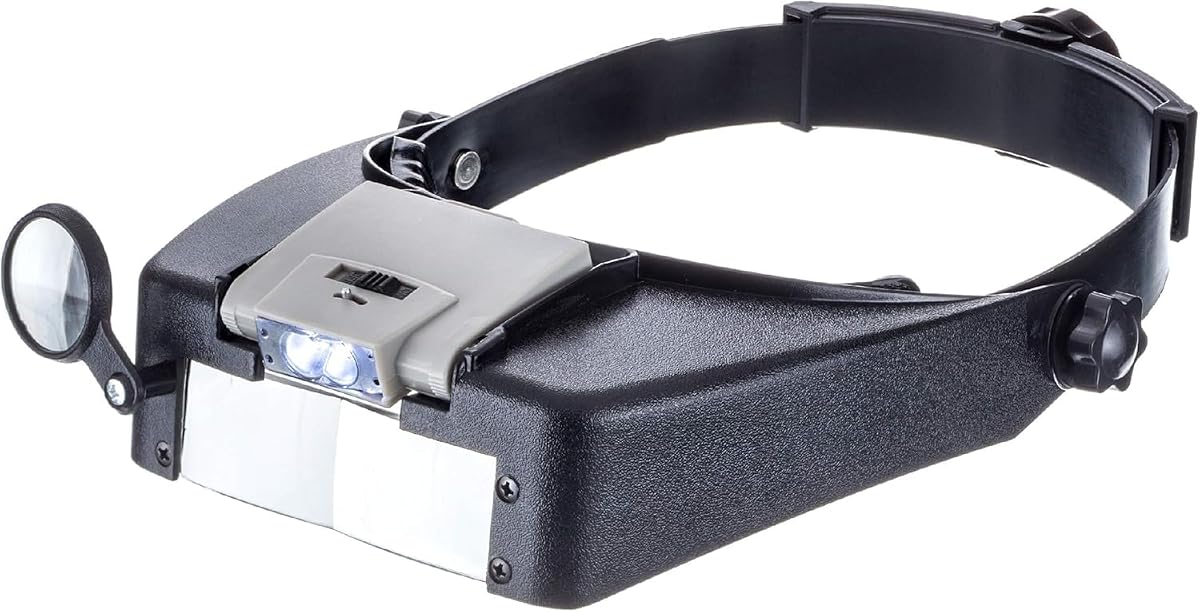
The JARLINK Magnifying Glasses provide an affordable solution for those needing basic magnification without digital features. Its fourteen interchangeable lenses offer flexibility for different tasks ranging from sewing to electronics repair. The hands-free design allows you to work with both hands effectively.
We may earn a commission when you buy through this link, at no additional cost to you.
You can switch between magnification levels quickly to suit your project needs. The built-in LED lights ensure visibility in darker areas. This simplicity makes it a great choice for quick inspections or extended crafting sessions.
It does have limitations compared to digital microscopes such as lack of recording capability. The single-eye view might take some getting used to for some users. Proper alignment is key to getting a clear image.
If you want a cost-effective tool for various close-up tasks this option is highly recommended. It is easy to store and use for anyone needing extra visual aid. We suggest it for hobbyists on a tight budget.
The elastic headband fits most head sizes securely. This comfort helps during long work sessions without causing fatigue or distraction.
With lenses from 3X to 15X you can handle diverse projects. This range covers everything from reading tiny text to detailed jewelry inspection.
We may earn a commission when you buy through this link, at no additional cost to you.
This handheld model offers a balance between portability and digital functionality. The three inch IPS display provides sharp visuals for inspection tasks. Its dual lens system allows switching between standard shooting and magnification modes easily.
We may earn a commission when you buy through this link, at no additional cost to you.
The 500X zoom is sufficient for most electronic component checks. Auto focus helps maintain sharp images without constant manual adjustment. Connecting to a PC is seamless for further analysis on a bigger screen.
Some users may find the auto focus requires close proximity to the object. Battery performance can vary based on usage intensity. It is a solid choice for quick inspections away from a desk.
For those who need to inspect electronics on the go this is a reliable tool. It offers good value for its compact size and features. We recommend it for fieldwork or casual hobby use.
Switching between lenses adds flexibility to your workflow. You can use one for general viewing and the other for deep inspection of small parts.
The USB connection supports plug-and-play functionality. This makes sharing data with colleagues or saving images straightforward without complex software.
We may earn a commission when you buy through this link, at no additional cost to you.
This headband magnifier focuses on comfort and ease of use for extended periods. The soft padded headband and leather cover ensure a secure fit. It is designed to be worn comfortably over prescription eyeglasses for many users.
We may earn a commission when you buy through this link, at no additional cost to you.
The four replaceable lenses cover a range suitable for close work like soldering. The LED lights offer adjustable angles to minimize shadows. Recharging via Type-C is convenient and modern.
Magnification is lower than digital models which limits use on very tiny components. Charging takes time but provides several hours of use. It excels in comfort for standard repair tasks.
Ideal for users prioritizing long wear comfort this is a strong choice. It simplifies tasks requiring steady hands and clear vision. We recommend it for general electronics assembly and repair.
The soft padding reduces pressure points during long sessions. This feature helps prevent headaches and ensures focus remains on the task at hand.
Using Type-C eliminates the need for disposable batteries. You can charge quickly and store the unit ready for the next use.
We may earn a commission when you buy through this link, at no additional cost to you.
The YOCTOSUN model is known for its optical clarity and practical features. It includes five scratch-resistant lenses that are easy to swap. The rechargeable battery helps reduce ongoing costs compared to battery-operated alternatives.
We may earn a commission when you buy through this link, at no additional cost to you.
Rubber nose pads ensure a comfortable fit even for long periods. Two brightness levels allow adaptation to different environments. It is a reliable tool for detailed crafting and repair.
Magnification stops at 3.5X which is enough for most standard tasks but not extreme detail. Build quality is solid though not premium. It offers great value for the price.
For users needing a dependable and affordable solution this is excellent. It is easy to use and requires minimal setup. We recommend it for hobbyists and home repair needs.
The lenses provide clear and sharp images without distortion. This quality ensures accurate observation of small details during your work.
You can wear it as glasses or use the headband. This flexibility adds to the convenience of the tool during various activities.
We may earn a commission when you buy through this link, at no additional cost to you.
This handheld magnifier offers strong illumination with its eighteen LED lights. The ability to switch between warm and cold light modes helps reduce eye strain. It is ideal for those needing a large viewing area.
We may earn a commission when you buy through this link, at no additional cost to you.
The simple design makes it easy for anyone to use without confusion. The three modes ensure you always have the right brightness. It is particularly effective for reading fine print and inspecting circuits.
Battery usage is notable since it requires three AAA batteries. It is not as compact as other handheld options. However the viewing experience is excellent.
For users who prefer physical handheld tools this is a top choice. It offers reliability and brightness for general tasks. We recommend it for quick checks and reading.
The stepless dimmable lights offer control over intensity. This feature helps adapt to any lighting condition effectively.
The handle design fits naturally in hand for extended use. This comfort reduces fatigue during inspection tasks.
We may earn a commission when you buy through this link, at no additional cost to you.
This head magnifier is unique with its stereo lenses that provide realistic depth perception. This feature is vital for tasks requiring accurate spatial judgment like soldering. The flip-in design offers versatility for different work scenarios.
We may earn a commission when you buy through this link, at no additional cost to you.
The 4.5X magnification is ideal for detailed work without distortion. The adjustable headlamp ensures the work area is well lit. It is a professional grade tool designed for accuracy.
While it is a bit pricier the quality justifies the investment for precision tasks. It may be overkill for casual users. However professionals will appreciate the clarity.
For those needing accurate depth judgment this is the best option. It simplifies complex assembly tasks. We recommend it for serious electronics repair.
Stereo lenses allow you to judge distance accurately. This capability is crucial for precise soldering and component placement.
The knob adjustment ensures the headband stays in place. This stability is key for maintaining focus on detailed tasks.
We may earn a commission when you buy through this link, at no additional cost to you.
The Satechi ReadMate offers a clean design for desktop use. Its 5X magnification is useful for viewing small text or parts. The three LED lights enhance visibility with a single touch.
We may earn a commission when you buy through this link, at no additional cost to you.
The unit sits stably on a desk freeing up your hands. A carrying case allows you to transport it safely. It is a straightforward tool for general inspection needs.
Because it is designed for a desk it lacks portability. The magnification is fixed which limits versatility compared to other options. However it is reliable for home setups.
For those needing a stationary viewing tool this is an excellent choice. It is easy to use and store. We recommend it for home offices or workbenches.
The touch LED system makes lighting easy to control. This intuitive design simplifies the workflow during tasks.
The stand ensures the magnifier stays steady. This feature allows for consistent viewing without hand shaking.
We may earn a commission when you buy through this link, at no additional cost to you.
This glasses-style magnifier offers high magnification for detailed inspection. The range up to 20X allows you to see very small parts clearly. The lightweight frame ensures comfort during long sessions.
We may earn a commission when you buy through this link, at no additional cost to you.
Dual LED lights with adjustable angles reduce shadows effectively. This feature is vital for precise work like soldering. It is a practical tool for delicate electronics.
High magnification requires the lens to be close to the object. This can be tricky to manage at first. However with practice it is highly efficient.
For professionals needing high detail this model is superior. It combines optical clarity with ergonomic design. We recommend it for intricate repair work.
The optical lenses reduce distortion for accurate observation. This clarity helps users see small details clearly.
Adjustable angles help illuminate specific areas. This ensures no shadows obscure your view of the work.
We may earn a commission when you buy through this link, at no additional cost to you.
Choosing the right magnifier for electronics involves several key factors to ensure precision and comfort.
Magnification determines how large small components appear. For soldering and circuit inspection a range between 5X and 20X is usually sufficient. Higher magnification may reduce the field of view and depth of field.
Select a model that offers enough zoom for your specific tasks without sacrificing visibility.
Digital microscopes feature LCD screens that allow for comfortable viewing and recording. Traditional loupes are lighter and do not require batteries. Consider if you need to save images or if a handheld tool is better.
Digital options offer more features while optical ones provide simplicity and portability.
Adequate lighting is critical for dark soldering work. Look for adjustable LED lights that reduce glare and shadows. Some models offer warm and cold light options to reduce eye strain.
Ensure the lighting can be angled to illuminate your work area effectively without blocking your view.
You may wear the magnifier for long periods so comfort is key. Headbands should be padded and adjustable. Glasses-style models should fit over your prescription eyewear if needed.
Choose a design that does not cause fatigue during extended repair sessions.
Consider whether you need a desktop tool or a handheld device. Digital microscopes are often larger but offer more functionality. Handheld tools are easier to take to different locations.
If you work in a workshop a stand might be better but for fieldwork a handheld is ideal.
Many digital models allow connection to a PC for larger viewing. This is useful for documentation and detailed analysis. Check compatibility with Windows or Mac systems.
PC connectivity expands the viewing area and aids in sharing results with others.
Power options vary between rechargeable batteries and standard ones. Rechargeable models reduce waste and long-term costs. Ensure the battery lasts long enough for your typical work sessions.
Look for models with efficient power consumption to avoid interruptions.
Tools used for electronics repair should be sturdy. Look for metal bases or robust frames that withstand regular use. A protective case can extend the life of the device.
Invest in a product with good build quality to ensure it lasts over time.
Position the magnifier so the lens is at the correct distance from your work. For digital models adjust the height to keep the image sharp on the screen. For loupes ensure the lens is close enough to the object to see clearly.
Adjust the lighting angles to minimize glare and shadows on your circuit board. Use the brightness settings to suit the ambient light in your workspace. Proper lighting reduces eye strain significantly.
Clean the lenses regularly with a soft cloth to maintain clarity. Store the device in a case when not in use to protect it from dust and damage. Follow the manufacturer guidelines for battery maintenance.
For most electronics tasks such as soldering and inspecting PCBs a magnification between 5X and 20X is ideal. This range allows you to see small components without losing too much field of view. Higher magnification may be needed for very tiny surface-mount components.
Digital microscopes offer features like screen viewing and recording which can be useful for documentation. However optical loupes are often more portable and require no power. The best choice depends on whether you prioritize features or convenience.
Many headband and eyewear models are designed to be worn over prescription glasses. Check the product specifications for compatibility and adjustability. Some models have adjustable lenses to accommodate different vision needs.
Most modern magnifiers include built-in LED lights that provide illumination in low-light conditions. Ensure the device has adjustable brightness to suit your environment. This feature is essential for working in poorly lit areas.
Most digital microscopes come with a USB cable for direct connection to a PC or Mac. Install any necessary drivers or software to view the live feed. This allows you to save images and record videos of your work.
Clean the lenses with a soft microfiber cloth to prevent scratches. Check the battery status regularly and recharge or replace as needed. Store the device in a case to protect it from dust when not in use.
We have reviewed ten top options that cater to different needs and budgets. The Elikliv Microscope and TOMLOV DM9 stand out for digital features while the JARLINK offers a great budget alternative. Each tool has unique benefits for electronics work.
When selecting your magnifier consider your primary tasks and working environment. Prioritize comfort and lighting for long sessions. Ensure the magnification level matches your repair needs for best results.
Prices and availability can change so always check current listings before buying. Use this guide to find the perfect match for your workflow. Investing in a quality magnifier improves precision and efficiency in your projects.