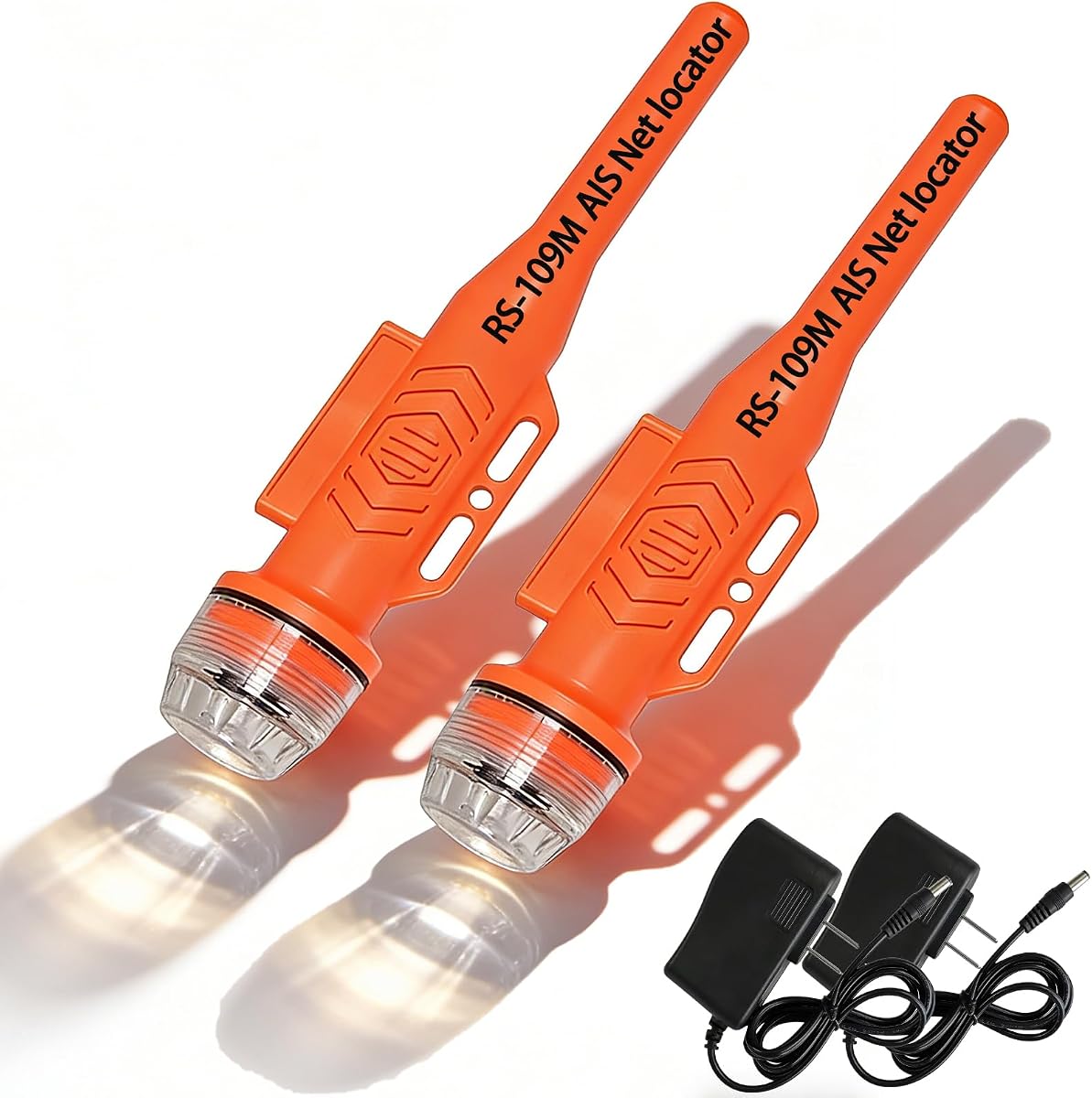
RS-109M Marine Net Locator
4.0Editor score
IPX7 Waterproof Housing
10 Nautical Mile Range
Extended Battery Life
Automatic Identification Systems are vital for modern marine navigation and safety on the water. These devices broadcast vessel identity and location to nearby ships and shore stations, greatly reducing collision risks in busy or low visibility waters.
We evaluated ten leading AIS transponder models based on their transmission power, display quality, connectivity options, and overall reliability. Our analysis focuses on how each unit integrates with existing marine electronics and supports critical safety features like DSC and collision alarms.
Each product pick highlights specific strengths for different boating needs, from personal use to commercial fleets. Please note that pricing and availability can change frequently, so verify current details on the vendor page before making your final purchase decision.
4.0Editor score

4.5Editor score
4.8Editor score
As an Amazon Associate we earn from qualifying purchases.
The following table provides a side-by-side comparison of all ten selected AIS transponders. Review the key specifications for each unit to determine which model best aligns with your vessel type and operational requirements.




The Icom MA-510TR stands out as a robust AIS transponder designed for serious boaters. With a vibrant 4.3-inch color display, it offers clear visibility even in bright sunlight, ensuring you never miss critical vessel data.
We may earn a commission when you buy through this link, at no additional cost to you.
Its integrated GPS navigation eliminates the need for external modules, simplifying installation. The device supports DSC calling when paired with compatible VHF radios, enhancing your ability to communicate effectively during emergencies.
While the unit is feature-rich, it does rely on external VHF compatibility for full DSC functionality. However, the silent mode and collision alarm features provide essential safety without drawing unnecessary attention in sensitive areas.
This model is ideal for captains who prioritize reliable data and ease of integration. If you value a comprehensive interface and strong safety alarms, the MA-510TR is a highly recommended choice for your navigation setup.
The large color screen ensures that navigation data remains legible in all lighting conditions, reducing eye strain during long voyages.
Built-in collision and anchor watch alarms alert you to potential risks automatically, allowing you to focus on steering the vessel safely.
We may earn a commission when you buy through this link, at no additional cost to you.
The NF-189 B921 serves as a reliable Class B transceiver for those needing basic AIS functionality. It operates on both 12V and 24V systems, making it suitable for a wide range of vessel electrical setups.
We may earn a commission when you buy through this link, at no additional cost to you.
Its compact design allows for discreet installation in tight spaces, which is often a priority on smaller pleasure crafts. While specific display details are not highlighted, its core function remains centered on accurate transmission.
One limitation is the lack of an integrated screen, meaning you will need an external plotter or chartplotter to visualize the data. However, for users who already have sophisticated navigation screens, this unit acts as a solid transmitter.
This device is best suited for boaters who need a reliable, no-fuss transmitter without the complexity of extra features. If you value flexibility in power input and a small footprint, this model fits well.
Supporting both 12V and 24V inputs ensures that this unit can be adapted to different boat sizes and electrical configurations easily.
The compact size and standard power requirements mean installation is straightforward, even for those with limited experience in marine electronics.
We may earn a commission when you buy through this link, at no additional cost to you.
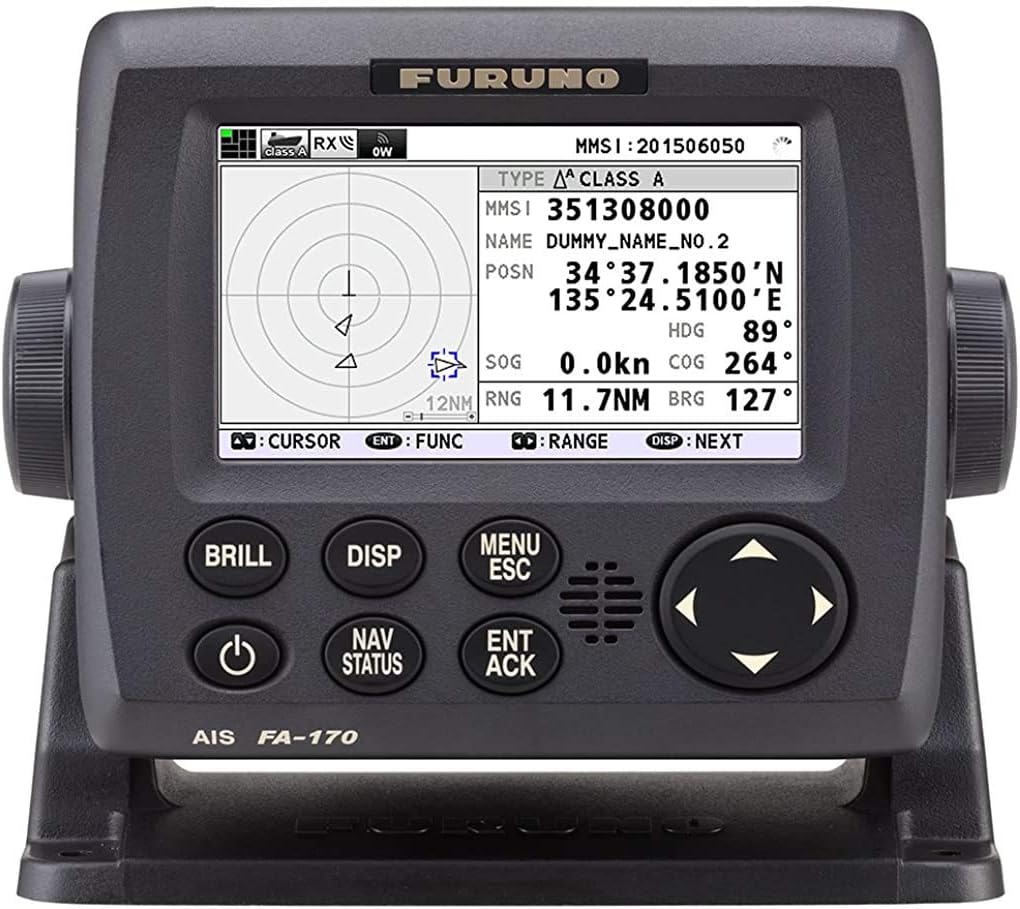
The Furuno FA170 is a premium Class A transponder designed for commercial vessels and serious maritime professionals. It offers superior transmission power and accuracy compared to standard Class B units, ensuring visibility on all AIS networks.
We may earn a commission when you buy through this link, at no additional cost to you.
One of its standout features is the ability to store up to 2,048 AIS targets and SARTs. This capacity is crucial for busy waters where tracking multiple contacts is essential for collision avoidance and situational awareness.
The unit provides a detailed Dangerous Target list when risks are detected, offering proactive alerts rather than just passive data. While the setup involves multiple ports and technical configuration, the safety benefits for larger fleets are significant.
This device is ideal for professionals who need robust, regulatory-compliant equipment. If your operation demands the highest level of vessel identification and safety monitoring, the FA170 delivers exceptional value and performance.
With storage for over two thousand targets, the FA170 ensures that you never lose track of critical vessels even in high-traffic shipping lanes.
The Dangerous Target list automatically highlights vessels on a collision course, giving you extra time to react and avoid accidents.
We may earn a commission when you buy through this link, at no additional cost to you.
The RS-109M Marine Net Locator is a specialized device designed to track fishing nets and buoys rather than serving as a main ship transponder. It combines GPS precision with AIS signaling to help boaters locate their gear quickly.
We may earn a commission when you buy through this link, at no additional cost to you.
Its IPX7 waterproof rating ensures it survives submersion, making it perfect for marine environments where equipment gets wet regularly. The high-sensitivity GPS module provides quick updates so you know exactly where your gear is at all times.
One key advantage is the real-time battery level transmission, which keeps you informed of remaining power before you head out. While it is not a full vessel transponder, its specific utility for net owners makes it a smart investment.
This tracker is perfect for commercial or recreational fishermen who need to monitor their nets. If your priority is locating submerged gear accurately without paying for a full ship system, this device offers great value.
By tracking nets effectively, you reduce the risk of losing expensive equipment to currents or accidental drops during fishing operations.
Transmitting battery levels ensures you are never caught off guard by a dead signal, allowing for proactive battery changes.
We may earn a commission when you buy through this link, at no additional cost to you.
The Raymarine T70424 bundle combines a fixed-mount VHF radio with AIS capabilities, offering a complete communication solution for your vessel. Raymarine is known for reliability, and this set ensures you have both voice and data tools ready.
We may earn a commission when you buy through this link, at no additional cost to you.
By bundling the VHF radio with the AIS system, you simplify the installation process and ensure compatibility between components. The Ray90 VHF component provides clear voice communication which is essential for daily safety operations.
While the bundle is convenient, it means you are tied to Raymarine's ecosystem for future upgrades. However, the quality of the electronics and the cohesive design make this a strong choice for captains wanting a hassle-free setup.
This bundle is best for boat owners looking to upgrade both their radio and AIS systems simultaneously. If you value a unified system from a trusted manufacturer, this package offers peace of mind and performance.
Having VHF and AIS from the same brand reduces wiring complexity and ensures that all components work together seamlessly.
With both tools included, you are prepared for any situation that requires either voice calls or digital AIS alerts.
We may earn a commission when you buy through this link, at no additional cost to you.
The ACR RESQLINK AIS is a personal locator beacon designed for individual safety rather than ship-to-ship communication. It sends distress alerts on VHF frequencies to nearby vessels and satellites, ensuring help is on the way if you fall overboard.
We may earn a commission when you buy through this link, at no additional cost to you.
A standout feature is the Return Link Service, which confirms to the wearer that rescue teams have received the signal. This psychological reassurance is valuable during emergencies, giving you confidence that your distress call has been noted.
The device is small and can be easily clipped to a life jacket or worn as part of your gear. Since it has no subscription fee and a long battery life, it provides reliable protection without ongoing costs.
This beacon is essential for anyone spending time on the water alone or in remote areas. If your priority is personal safety and ensuring you can be found quickly in an emergency, the RESQLINK is a vital addition to your gear.
When activated, the beacon sends signals immediately to local AIS receivers and satellites, speeding up the rescue response time significantly.
The compact size and clip system make it easy to carry, ensuring your safety device is always close at hand when needed.
We may earn a commission when you buy through this link, at no additional cost to you.
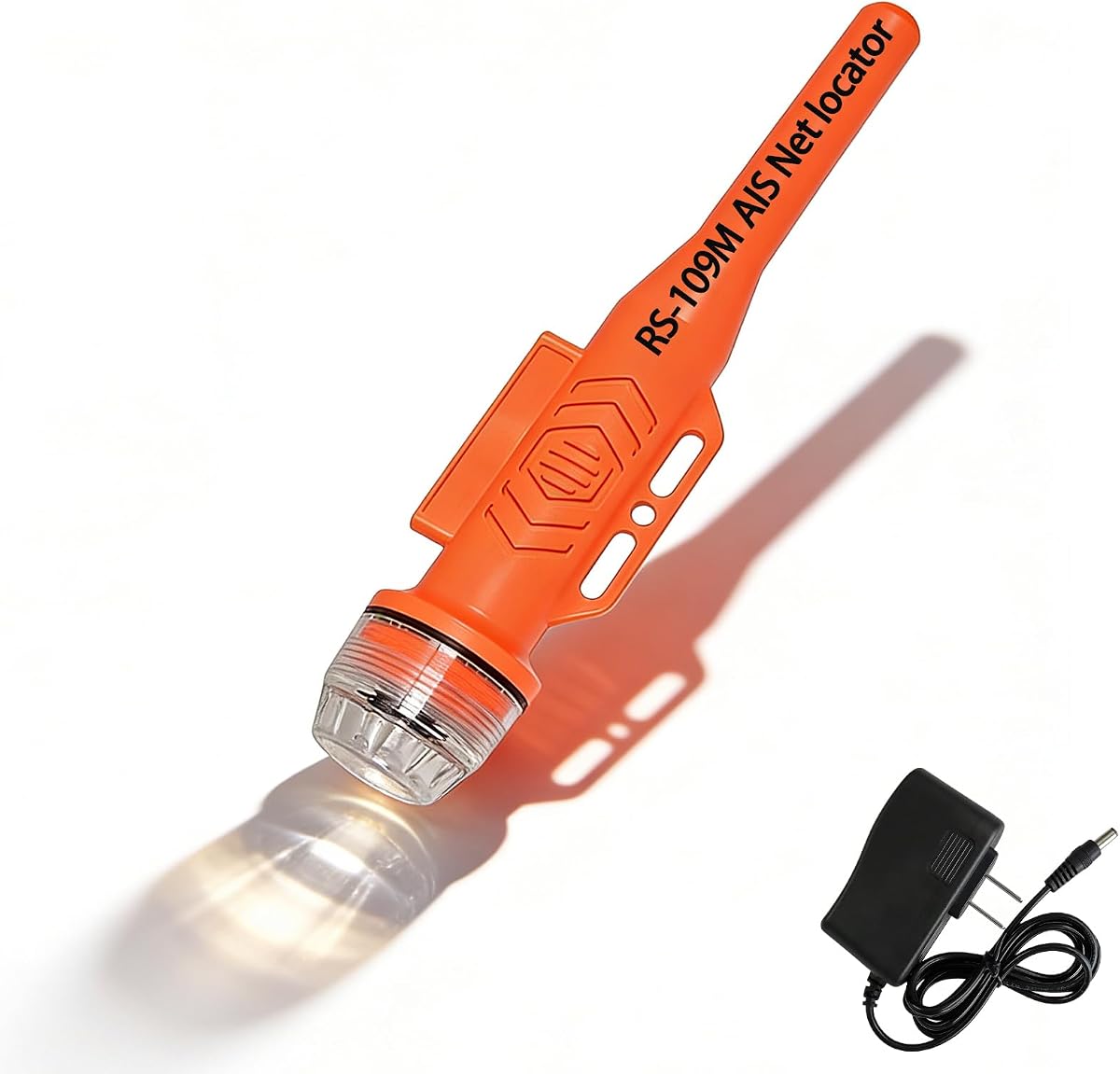
The single unit version of the RS-109M Tracker offers the same robust features as the pack but for single gear deployment. It is designed to help you track a specific net or buoy with high accuracy and reliability over long distances.
We may earn a commission when you buy through this link, at no additional cost to you.
Its high-sensitivity GPS module ensures that you get quick location updates even in challenging sea conditions. The IPX7 waterproof housing protects the internal electronics from water damage, ensuring longevity in harsh marine environments.
With a battery life of up to two weeks, this tracker reduces the need for frequent maintenance checks. This extended power makes it ideal for long voyages where you want to monitor gear without constant intervention.
This model is perfect for captains who need to track a single critical item. If you require a reliable, waterproof locator for one buoy or net, this device provides the accuracy and endurance you need.
The fully sealed housing meets strict waterproof standards, ensuring the device remains functional even after prolonged submersion in salt water.
The high capacity battery supports continuous signal transmission, reducing downtime and ensuring your gear is always tracked.
We may earn a commission when you buy through this link, at no additional cost to you.
The Icom M94D is a versatile handheld VHF radio that includes a built-in AIS receiver. This combination allows you to see vessel traffic on the screen while maintaining clear voice communication with others nearby.
We may earn a commission when you buy through this link, at no additional cost to you.
Its 6W RF power ensures strong signal range even from a handheld unit, and the loud audio output makes calls intelligible in noisy environments like engine rooms. The battery life supports up to 10 hours of typical use.
Safety features include a Float and Flash function, which activates if the radio is dropped overboard, signaling its location precisely. Additionally, simplified GPS navigation helps you store waypoints for fishing spots or destinations quickly.
This radio is ideal for skippers who want a portable communication device with added safety features. If you need a handheld unit that does more than just talk, the M94D offers great utility for small craft.
The built-in AIS receiver allows you to track traffic even when you are away from the main navigation station.
With Float and Flash technology, the radio can help rescuers locate you if it is accidentally lost overboard.
We may earn a commission when you buy through this link, at no additional cost to you.
The Icom M510 EVO is a fixed-mount VHF radio designed to integrate smoothly with modern marine networks. Its built-in AIS feature allows you to manage communication and tracking from a single dedicated unit on your console.
We may earn a commission when you buy through this link, at no additional cost to you.
Supporting NMEA 2000 ensures that this radio can communicate data with other instruments on your boat easily. This connectivity streamlines navigation by allowing AIS data to appear on your existing multifunction displays.
While it is a fixed mount unit which requires permanent installation, the ease of use and connectivity make it a strong candidate for newer boats. The EVO series is known for its modern interface and robust construction.
This model is best for captains who want a clean, integrated communication setup. If you value seamless data sharing between your radio and navigation systems, the M510 EVO delivers the performance and features you expect.
NMEA 2000 support ensures that all your navigation systems talk to each other, reducing clutter and improving data accuracy.
As a fixed unit, it provides a stable interface for managing calls and AIS data without handling a portable device constantly.
We may earn a commission when you buy through this link, at no additional cost to you.
The Raymarine AIS700 is a Class B transceiver designed to work specifically with Raymarine multifunction display systems. It ensures that your navigation screens have real-time traffic data, helping you maintain situational awareness.
We may earn a commission when you buy through this link, at no additional cost to you.
It uses the latest S-TDMA networking technology to provide longer range and faster performance compared to older units. This means you can detect vessels earlier and react faster to potential hazards in your area.
Installation is simplified by a built-in antenna splitter which allows you to share an existing VHF antenna. This reduces wiring needs and keeps your helm station looking clean while maintaining strong signal transmission.
This device is ideal for Raymarine users who want reliable AIS performance. If you are already invested in the Raymarine ecosystem, the AIS700 offers seamless connectivity and modern networking features.
The S-TDMA technology ensures that your AIS signals do not get congested, providing more reliable and faster updates.
The built-in splitter reduces the need for extra antennas, simplifying the setup process for your helm station.
We may earn a commission when you buy through this link, at no additional cost to you.
Selecting the right AIS transponder requires understanding your specific needs and existing equipment. This section breaks down the key factors you should evaluate before making a purchase.
The most critical decision is between Class A and Class B transponders. Class A units are designed for commercial vessels and offer higher transmission power and faster update rates. They are mandatory for larger ships. Class B units are generally sufficient for recreational boaters, offering lower cost and adequate range for most pleasure craft needs.
Choose Class A if you operate large vessels or require mandatory regulatory compliance. Otherwise, Class B is usually the most cost-effective and functional choice for personal use.
Some transponders require professional installation due to complex wiring or antenna requirements. Others are designed as plug-and-play units that connect easily to existing systems. Consider your technical skills and whether you want to handle the installation yourself or hire a pro.
If you prefer a quick setup, look for units with simple connectors and built-in antenna splitters to minimize wiring work.
Units with integrated displays allow you to view AIS targets directly on the device. Headless units require an external chartplotter or screen to visualize data. Decide whether you want a standalone device or one that integrates with your existing navigation hardware.
Select a unit with a display if you do not have a multifunction screen. If you already have a plotter, a headless unit saves space and cost.
Modern transponders offer various connection methods including USB, NMEA 2000, and SeaTalk. Ensure the unit you choose has the ports needed to communicate with your VHF radios, plotters, and chartplotters.
Match the connectivity options to your current setup to avoid needing extra adapters or complex bridging solutions.
Most marine electronics operate on 12V or 24V DC systems. Check the voltage requirements of the transponder to ensure compatibility with your boat's electrical system. Some units offer flexible voltage input, which can be helpful for varying boat types.
Always verify the power rating to prevent damage to the unit or your boat's battery system.
Marine environments are harsh with exposure to salt water, sun, and vibration. Look for units with high IP waterproof ratings (like IPX7) to ensure the device withstands splashes or submersion. Durability is key to longevity in a marine setting.
Prioritize models with robust housing and proven resistance to environmental factors to reduce failure rates.
Beyond basic transmission, consider additional safety features like collision alarms, anchor watch, and distress signaling. These features can alert you to risks before they become critical. Some units also offer return link services for emergency beacons.
Evaluate which safety alerts matter most to your boating habits and choose a model that supports those specific functions.
Reliable brands often provide better customer support, warranty terms, and firmware updates. Stick with manufacturers known for marine electronics to ensure quality and longevity. Reviews and community feedback can help gauge the reliability of specific models.
Investing in a well-reviewed brand can save you from troubleshooting issues and ensure you have support when needed.
Once installed, ensure you configure the MMSI number correctly so your identity is transmitted accurately. This number is essential for other vessels and coast guard stations to identify you in AIS data.
Regularly update the firmware if supported by the manufacturer to keep navigation features and bug fixes current. This ensures you have the latest compatibility with other systems on the water.
Keep the antenna connector clean and free of corrosion to maintain a strong signal. Periodically check all wires for wear or damage and replace them if you notice any fraying or exposed conductors.
Most AIS transponders do not require a monthly subscription. Once you purchase the hardware, you can transmit and receive signals freely. However, specific personal beacon services or advanced tracking apps might have optional data plans for extra features.
Class A transponders are designed for commercial vessels with higher power output and faster update rates. Class B units are for recreational boaters and offer lower power. Both transmit position data, but Class A is more robust for regulated commercial use.
Standard handheld VHF radios do not transmit AIS data unless they are specifically designed with built-in AIS receivers. Most units only receive AIS to show traffic on the screen. You typically need a dedicated transponder for full transmission capabilities.
You set the MMSI number via the transponder's menu or software interface. This unique identifier is required for all AIS transmissions. Once entered, you usually cannot change it without factory resets or specific authorization depending on the model.
If the antenna is disconnected, your AIS transmitter will not send signals effectively. Some units have internal alarms to detect antenna faults and alert you to the issue. Always ensure the antenna is securely connected for full functionality.
In most regions, AIS transponders are not mandatory for recreational boats. However, they are highly recommended for safety. Larger commercial ships are required to carry them, and having one helps them see you better in busy waters.
We have reviewed ten top transponders ranging from budget buoys to professional fleet units. The Icom MA-510TR and Furuno FA170 stand out for their advanced features and display clarity.
When choosing, prioritize the features that match your boat type. Ensure you have the correct power supply and compatibility with your existing navigation setup before buying.
Prices for these systems vary based on specifications and bundle contents. Always verify current availability and terms on the product page before finalizing your purchase decision.