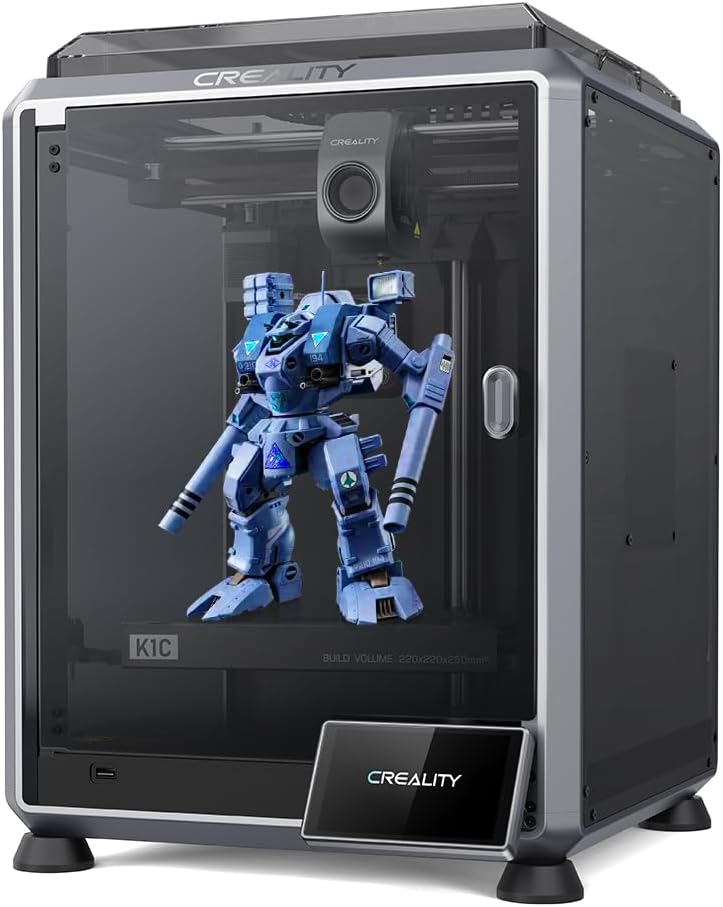
Creality K1C
4.3Editor score
300 degree nozzle
Clog free extruder
Carbon fiber support
This guide compares the best 3D printers for high temperature filaments like ABS and PC, evaluating heated chambers and hotends for engineering-grade performanc
Finding the right 3D printer for high temperature filaments requires careful consideration of chamber heat and nozzle limits. Engineering materials demand stability and precision that standard machines cannot provide without specialized features. This guide helps you navigate the complex landscape of modern FDM technology to find the perfect fit for your needs.
We analyzed ten top models based on their ability to handle challenging materials like ABS and ASA. Our comparison focuses on enclosed designs, active heating systems, and extrusion reliability. Each product was selected for its proven track record in delivering consistent results with demanding thermoplastic polymers used in professional settings.
Every pick in this list shows specific capabilities regarding maximum nozzle temperature and chamber insulation. We highlight key strengths and weaknesses to help you make an informed decision quickly. Please note that prices change frequently so verify current costs before purchasing your next machine for serious engineering projects.
4.3Editor score

4.7Editor score

4.4Editor score
This side-by-side comparison highlights the critical specifications for handling high temperature materials across all ten models. You will see differences in chamber heating, nozzle limits, and build volume to guide your selection process effectively.



The Bambu Lab P2S Combo stands out as a top performer for high temperature printing with its adaptive airflow system. It reaches a solid 50 degree Celsius chamber temperature which is sufficient for most engineering thermoplastics. The inclusion of the AMS 2 Pro with drying capabilities ensures filament quality remains consistent throughout the process.
We may earn a commission when you buy through this link, at no additional cost to you.
Its adaptive airflow system automatically balances cooling and heat retention to keep overhangs crisp while maintaining warmth for the part. This feature significantly reduces warping issues common with ABS and ASA materials. The high-speed precision engine with active flowrate compensation ensures sharp corners and smooth layers even at fast speeds.
While the standard setup is impressive, users working with extremely abrasive filaments might need to consider nozzle upgrades over time. The multi-color functionality requires the combo version which increases the initial investment compared to the single unit. However the convenience of automated drying and swapping often offsets this cost for professional users.
This printer is ideal for engineers and makers who need reliable results with PC and ABS without spending hours troubleshooting. If you value speed and automated calibration alongside thermal management this model offers the best balance available today.
The adaptive airflow system dynamically adjusts fan speeds to maintain optimal thermal conditions for different layers of your print.
The AMS 2 Pro unit includes built-in drying up to 65 degrees to remove moisture before printing for better adhesion.
We may earn a commission when you buy through this link, at no additional cost to you.
The Creality K1C offers an impressive entry point for users needing to print high temperature filaments without breaking the bank. Its direct extruder and upgraded nozzle assembly support temperatures up to 300 degrees Celsius which covers most engineering needs. The machine is specifically designed to handle carbon fiber reinforced materials which usually jam other printers.
We may earn a commission when you buy through this link, at no additional cost to you.
Key strengths include the clog-free direct extruder with a titanium alloy heatbreak that blocks heat creep effectively. The steel-stripped copper nozzle is durable and easy to swap for maintenance or upgrades. Auto calibration features like Z-offset and leveling ensure you get started quickly without manual paper tests.
The lack of an active heated chamber means you may need to build an enclosure for printing ABS successfully in colder rooms. While it lacks the thermal consistency of premium models it handles the extrusion of tough materials exceptionally well. Users should be prepared for minor tuning if they move beyond basic PLA or PETG.
Buy this model if you need a fast and robust printer for carbon fiber or nylon without paying for unnecessary features. It delivers strong value for hobbyists entering professional-grade workflows who can tolerate some manual enclosure work.
The hardened nozzle and reinforced extruder allow you to print carbon fiber filaments without damaging the internal parts.
With 600 mm/s speed and 20,000 mm/s squared acceleration you can finish prototypes much faster than standard machines.
We may earn a commission when you buy through this link, at no additional cost to you.
The FLASHFORGE Creator 5 Pro represents a serious industrial solution for high temperature printing with its 65 degree active chamber. This level of thermal control makes it one of the best choices for Polycarbonate and Nylon parts that require stable interlayer adhesion. The four independent extruders allow you to switch materials without purging which saves time and waste.
We may earn a commission when you buy through this link, at no additional cost to you.
Its adaptive air circulation system protects prints from drafts while the fully sealed enclosure maintains consistent temperature throughout the build. The HEPA13 internal filter ensures the environment remains clean and safe by capturing volatile particles. Users will appreciate the rigid frame that keeps vibrations low even at high acceleration rates.
The multi-extruder system is a major advantage for complex projects requiring supports or dual materials in one print. However the size and cost mean it is not suitable for casual hobbyists with limited space. You must have a dedicated area for this machine to operate effectively without obstructing movement.
Choose this printer if you run a workshop or small business needing reliable high throughput for engineering parts. The combination of thermal management and multi-material flexibility makes it a powerful tool for professional development.
The active chamber heating maintains a stable temperature up to 65 degrees to ensure consistent results year round.
Four independent extruders allow tool changes without purging which reduces waste and prevents color contamination.
We may earn a commission when you buy through this link, at no additional cost to you.
The Bambu Lab P1S is a robust enclosed printer designed for reliability with standard engineering materials. It handles ABS and ASA well thanks to its closed design which retains heat better than open frames. While it does not support carbon fiber out of the box it is still very capable for general thermoplastic needs.
We may earn a commission when you buy through this link, at no additional cost to you.
Key strengths include the quick setup time of 15 minutes and the auto bed leveling that ensures a solid first layer. The high-speed acceleration allows you to produce parts faster than traditional printers without losing detail. It integrates seamlessly with the Bambu ecosystem for a smooth workflow.
Users wanting to print carbon fiber will need to modify the nozzle or bed a specialized model like the K1C. The separate AMS requirement means you pay extra to unlock multi-color features which might not fit tight budgets. Still the base performance and build quality are excellent for most users.
Buy this model if you want a reliable and fast printer for common engineering plastics without extensive tinkering. It is a great step up from basic open-frame machines for serious makers.
The fully enclosed body improves print performance for advanced filaments by maintaining stable thermal conditions.
Seamless workflow with Bambu Studio and Handy allows remote monitoring and control from your phone.
We may earn a commission when you buy through this link, at no additional cost to you.
The Bambu Lab A1 is designed primarily for ease of use and precision making it ideal for beginners. Its full auto calibration and active flow rate compensation ensure high-quality prints without manual intervention. While it is not intended for high temperature enclosure printing it excels in speed and accuracy for standard materials.
We may earn a commission when you buy through this link, at no additional cost to you.
Key strengths include the quiet operation which makes it suitable for living spaces or shared offices. The 1-Clip quick swap nozzle system makes maintenance easy and allows for versatile printing options. The integration with AMS lite enables multi-color printing which adds creativity to standard projects.
The low build volume and lack of enclosure mean it is not suitable for printing ABS or PC reliably. Users looking to work with high temperature engineering filaments should consider other options from the same brand. However for precision modeling with standard plastics it is unmatched.
Buy this if you prioritize quiet operation and automated features for standard filament types in a home setting. It is a fantastic machine for hobbyists who want consistent results without technical complexity.
Full auto calibration takes care of all processes ensuring optimal performance for every print without hassle.
Active motor noise canceling allows for a quiet printing environment that suits offices and homes.
We may earn a commission when you buy through this link, at no additional cost to you.
The FLASHFORGE AD5X offers a versatile setup with its 300 degree nozzle and large build volume. It supports a wide range of filaments including ABS and PETG which makes it a flexible choice for diverse projects. The IFS technology allows for simultaneous multi-color printing which is great for detailed models.
We may earn a commission when you buy through this link, at no additional cost to you.
Key strengths include the fully automatic leveling system that guarantees a perfect first layer every time. The high speed of 600mm/s ensures you can prototype quickly without waiting hours for a single print. The generous build volume gives you space for creating larger objects in one go.
However the open frame design means it struggles with high temperature materials like ABS unless you build an enclosure. The multi-color setup may also require some calibration time to ensure color shifts are smooth. Users needing strong thermal stability will need to add external support.
Buy this model if you need a fast and large printer for standard and multi-color projects without complex engineering. It is a solid choice for creative hobbyists who value speed and volume over thermal enclosure.
Independent Filament System technology allows you to print with up to four different colors simultaneously.
The 220x220x220mm build volume offers ample space for larger models or multiple smaller objects.
We may earn a commission when you buy through this link, at no additional cost to you.
The Anycubic Kobra S1 Max is a powerhouse for large scale engineering prints with its 65 degree heated chamber. The 350 degree hotend supports very demanding materials like PC-CF-GF which are tough on standard machines. Its large build volume allows you to print oversized prototypes or functional parts without splitting them.
We may earn a commission when you buy through this link, at no additional cost to you.
Key strengths include the CoreXY system which maintains high precision and stability even at 600 mm/s. The AI monitoring system detects issues like spaghetti failures to reduce material waste and long duration print losses. The titanium alloy throat tube provides excellent thermal insulation to prevent clogging.
Users should be aware of the higher power consumption required to maintain the large chamber temperature. Also availability can be limited in some regions which might affect shipping times. Despite this it remains a strong contender for large industrial applications.
Buy this if you need a large format printer that can handle high temperature materials without sacrificing stability. It is ideal for workshops producing large functional components or structural parts.
Equipped with a 350C hotend and 120C heated bed to handle advanced engineering filaments.
Equipped with 720P camera and AI vision algorithm to monitor printing status in real time.
We may earn a commission when you buy through this link, at no additional cost to you.
The Flashforge AD5X Multicolor brings together speed and versatility with its 300 degree all-metal hotend. It handles Nylon and ABS effectively though carbon fiber requires an enclosed chamber kit. The CoreXY motion system ensures precision even at the 600mm/s maximum speed reducing vibrations.
We may earn a commission when you buy through this link, at no additional cost to you.
Key strengths include the 4-color direct printing via the IFS system which is great for artistic models. The magnetic PEI spring steel plate ensures perfect first-layer adhesion every time without extra adhesive. Dual-band Wi-Fi lets you monitor prints from anywhere using the app.
The standard build volume may feel small if you need to print large industrial components. Also the enclosed kit requirement adds a step for advanced material users. However for general multi-color needs it is a very capable machine.
Buy this if you want a fast multi-color printer for standard engineering materials and artistic projects. It is a solid choice for hobbyists needing a bit of professional speed and flexibility.
Auto-swap PLA PETG TPU and metal-fill filaments for vibrant gradients without manual intervention.
Dual-band Wi-Fi and Flashforge App let you monitor prints from anywhere with HD camera streaming.
We may earn a commission when you buy through this link, at no additional cost to you.
The Snapmaker U1 stands out for its fast tool swapping system that changes heads in just 5 seconds. This feature drastically reduces waste and time compared to traditional filament swapping methods. It supports true multi-material printing allowing you to mix rigid and flexible materials in one print.
We may earn a commission when you buy through this link, at no additional cost to you.
Key strengths include the automated toolhead offset calibration that ensures smooth and accurate prints. The 500 mm/s CoreXY speed maintains high accuracy across the build volume. It is compatible with a wide range of materials from PLA to engineering PC and ABS.
The smaller build volume might be a limitation for users needing large structural parts. Also the high price point places it firmly in the professional category rather than casual hobby use. However the speed and efficiency gains are significant.
Buy this if you need professional multi-material speed and precision for rapid prototyping. It is a top choice for small businesses and creators needing complex parts without waste.
The SnapSwap system changes toolheads in 5 seconds reducing waste by 5X and increasing productivity.
Combine rigid and flexible materials water-soluble supports and engineering materials in a single print.
We may earn a commission when you buy through this link, at no additional cost to you.
The FLASHFORGE Creator 5 Pro 4-Toolhead focuses on industrial efficiency with its near-zero waste system. It switches nozzles without flushing filament which drastically reduces operational costs and material waste. The active heated chamber up to 65C prevents warping in advanced filaments like ABS and PC effectively.
We may earn a commission when you buy through this link, at no additional cost to you.
Key strengths include the industrial CoreXY motion that delivers 600mm/s without sacrificing accuracy or stability. The dual HEPA 13 and activated carbon system captures particles and fumes ensuring a safe environment. It is fully enclosed and designed for continuous production runs.
The complexity of setup might be challenging for those new to industrial printers. Also the higher investment means it is best suited for professional settings with budget for hardware. However the operational savings and speed justify the cost.
Buy this if you run a production environment needing speed efficiency and safety for complex materials. It is an excellent investment for professional 3D printing labs.
Four independent toolheads switch nozzles without flushing filament to eliminate massive purge waste.
Dual HEPA 13 and activated carbon system traps ultrafine particles and fumes for a safe environment.
We may earn a commission when you buy through this link, at no additional cost to you.
Selecting a 3D printer for high temperature filaments requires attention to thermal features and nozzle limits. This guide breaks down the critical factors you should prioritize.
A heated chamber is essential for maintaining consistent temperatures and preventing warping in materials like ABS and PC. Look for a printer that offers active heating rather than just passive insulation for better results.
Prioritize printers with active heating up to 65 degrees Celsius for reliable engineering-grade performance.
Ensure the printer supports nozzle temperatures of at least 280 to 300 degrees Celsius to handle high-temperature polymers effectively. Standard nozzles may melt or degrade under these conditions if not designed correctly.
Check that the specified max nozzle temperature meets or exceeds the melting point of your target materials.
High temperature filaments often include abrasive fibers like carbon or glass that can quickly wear down brass nozzles. Look for hardened steel or ruby nozzles that resist erosion during repeated use.
Choose a model with a hardened nozzle or one that easily accepts wear-resistant upgrades.
A fully enclosed body helps retain heat and shield the print from drafts that cause layer separation. Solid walls and a tight seal are critical for consistent thermal conditions during long prints.
Select a printer with a robust fully enclosed design to minimize external temperature interference.
Direct drive extruders are generally better for high-temperature and abrasive filaments as they reduce the distance filament must travel. This minimizes the risk of heat creep and clogging in the hotend.
Prioritize a direct drive extruder to ensure smooth feeding of tough thermoplastic materials.
The build volume determines the maximum size of your prints without splitting them into multiple parts. Ensure the dimensions accommodate your largest intended project to avoid unnecessary post-processing.
Verify that the build volume meets your specific project size requirements before purchase.
Reliable auto-calibration features such as bed leveling and flow compensation simplify the setup for complex materials. This reduces human error and improves print reliability for demanding jobs.
Look for printers with robust automatic calibration to reduce manual adjustments and failed prints.
High temperature printing often releases fumes that can be harmful if inhaled over time. A system with HEPA or activated carbon filters ensures a safer indoor environment.
Choose a model with built-in air filtration to maintain a safe workspace during operation.
Start by ensuring your printer is placed in a stable and well-ventilated area away from direct drafts. Level the build plate using the machine's auto-calibration tools to ensure perfect first layer adhesion.
Use high-quality filament stored in a dry environment to prevent moisture from affecting the print. Preheat the chamber and nozzle according to the material specifications to avoid warping and clogging.
Perform regular maintenance by cleaning the nozzle and checking belts and screws for tightness. Update firmware regularly to benefit from new features and stability improvements provided by the manufacturer.
ABS generally requires a nozzle temperature of 230 to 260 degrees Celsius and a chamber temperature of at least 40 to 60 degrees. A heated chamber is critical to prevent warping. Most printers in this guide support these ranges.
PETG does not strictly require a heated chamber but it helps reduce warping on larger prints. You can print PETG successfully in an open frame by controlling the ambient temperature carefully. For best results use a chamber if available.
Hardened steel or ruby nozzles are recommended for carbon fiber filaments because they resist abrasion. Brass nozzles wear out quickly with abrasive materials. Check your printer supports upgrades for durable nozzles.
Warping occurs when the print cools too quickly. This is common with ABS and PC. Use a heated bed at the recommended temperature and ensure the chamber is warm enough to maintain stability during printing.
Many models in this guide support multi-color printing using add-ons like the AMS or independent extruders. These systems allow you to switch filaments automatically during a print without purging material.
If using standard brass nozzles with abrasive filaments you may need to replace them frequently. For hardened steel nozzles they last longer but still require inspection for wear. Regular cleaning helps extend nozzle life.
If you need to print functional parts with engineering materials like ABS or PC it is definitely worth it. These printers offer stability and quality that standard machines cannot provide for demanding applications.
We have reviewed ten top models that excel in handling high temperature materials with reliable heated chambers and strong nozzles. Each option offers unique features to suit different needs from hobbyists to professionals.
Prioritize active chamber heating and nozzle durability when selecting a machine for ABS or PC. These factors will save you time and frustration during production.
Remember to check current pricing before purchasing as these values may fluctuate. Choose the model that best fits your project size and material requirements.