
Edifier MR3
4.5Editor score
Hi-Res Audio Certified
18W RMS Output
Bluetooth Multi-Point
Finding the right Edm Studio Monitor is essential for producing professional tracks. You need accurate sound reproduction to ensure your mix translates well across different systems and environments.
We evaluated ten top-rated models based on frequency response, power output, and connectivity options. Each product was assessed for its ability to deliver clear imaging and balanced audio performance.
Each pick highlights key strengths and ideal use cases for various production needs. Keep in mind that availability and pricing may change frequently, so verify details before purchasing.
4.5Editor score
4.7Editor score

4.6Editor score
As an Amazon Associate we earn from qualifying purchases.
This side-by-side comparison highlights key specifications and features across all ten selected models to help you find the perfect match for your studio setup.


The PreSonus Eris E4.5 offers accurate sound for music production and multimedia listening. With a 4.5 inch woofer and silk dome tweeters, it delivers tight bass and clear highs.
We may earn a commission when you buy through this link, at no additional cost to you.
Its woven-composite woofers provide deep low end while maintaining tonal balance. The ultra-wide sweet spot ensures consistent stereo imaging from various angles. Multiple inputs including TRS and RCA support diverse setups.
While the bass is punchy, larger rooms might require an additional subwoofer. The compact size is ideal for desks but limits volume in spacious environments. Still, it is a reliable choice for near-field mixing.
Ideal for producers seeking studio-quality sound without overwhelming their workspace. Its precision-tune controls allow customization for room acoustics. This model remains a top contender for balanced audio monitoring.
Natural high-frequency response delivers superior stereo imaging from nearly any listening angle.
High and low frequency tuning controls let you adjust output to suit your specific space.
We may earn a commission when you buy through this link, at no additional cost to you.
The Yamaha HS8 is a powerhouse designed for critical listening and professional mixing. Its 8-inch woofer delivers deep low frequencies while the bi-amp system ensures clarity across the spectrum.
We may earn a commission when you buy through this link, at no additional cost to you.
Advanced magnetic circuit design enhances precision and reduces distortion. With 120 watts of power, it fills large rooms with precise audio. The flat frequency response is crucial for accurate sound editing.
Its large footprint requires ample desk space and consideration for placement. The price point is higher than entry-level models, reflecting its professional-grade performance. However, the accuracy justifies the investment.
Best for producers needing extensive low-end detail and high volume. Its sonic purity makes it a staple in professional studios. This monitor sets a benchmark for reliable audio reproduction.
Response from 38Hz to 30kHz captures the full spectrum of audio details for precise monitoring.
120 watts of bi-amp power ensures dynamic range and loudness without compromising clarity.
We may earn a commission when you buy through this link, at no additional cost to you.
The Edifier MR3 brings Hi-Res Audio certification at an accessible price point. It offers a flat response across a wide frequency range ideal for accurate monitoring. Bluetooth multi-point connectivity adds convenience for casual listening.
We may earn a commission when you buy through this link, at no additional cost to you.
Its 18W RMS output provides sufficient volume for small to medium rooms. The MDF cabinet reduces distortion, ensuring cleaner sound. Customizable modes and app-based EQ allow for personalized sound adjustments.
Power output is limited compared to higher-end models, which might restrict use in large spaces. The compact drivers focus on clarity rather than deep bass. For home studios, it is an excellent entry option.
Perfect for beginners or those needing versatile connectivity. Its accurate monitoring capabilities ensure mixes translate well. This model balances performance and value effectively for diverse needs.
Delivers precise and accurate monitoring from 52Hz to 40kHz for detailed sound reproduction.
Balanced TRS RCA and AUX inputs alongside Bluetooth multi-point offer flexible setup options.
We may earn a commission when you buy through this link, at no additional cost to you.
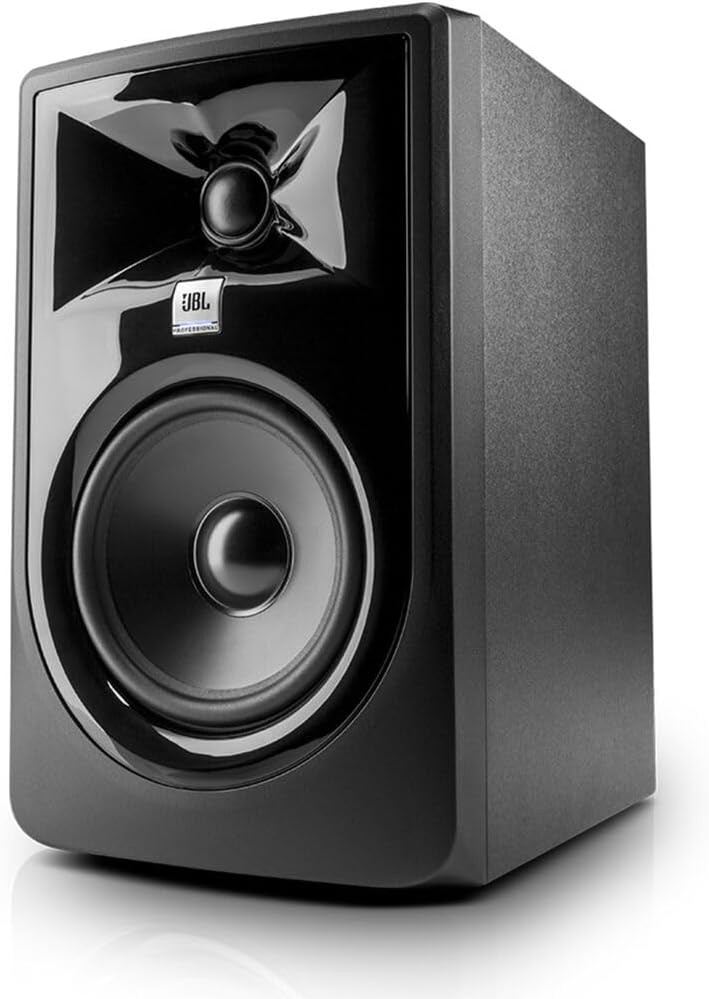
The JBL 305P MkII features a patented Image Control Waveguide for precise sound imaging. This creates a wide sweet spot ideal for various production tasks. Its dual 41-Watt amplifiers deliver refined audio with deep bass.
We may earn a commission when you buy through this link, at no additional cost to you.
Boundary EQ and HF Trim controls allow tailoring to room acoustics. The Slip Stream port enhances bass response for cinematic sound design. Built with a sturdy MDF enclosure, it ensures reliability and durability.
The fixed power output may limit adaptability in larger or acoustically challenging rooms. It is best used on stands for optimal performance which might add to setup costs. Still, it is a popular choice for producers.
Great for music production and podcasting needing immersive sound. The combination of accuracy and connectivity makes it versatile. This model is a solid investment for professional quality monitoring.
The waveguide delivers immersive sound with a wide sweet spot for accurate mixing.
Boundary EQ controls adjust low frequencies to suit any room layout and acoustics.
We may earn a commission when you buy through this link, at no additional cost to you.
The PreSonus Eris E7 XT features a 6.5 inch woofer and EBM waveguide for solid imaging. The waveguide yields a wide sweet spot ensuring consistent sound. It includes a valuable software suite to get started quickly.
We may earn a commission when you buy through this link, at no additional cost to you.
Acoustic tuning controls allow accurate mixing contour tailored to your specific space. The silk dome tweeters provide smooth highs without harshness. This model offers a robust balance of power and clarity for near-field use.
Buying single units might be costly for those needing pairs. While the bass is deep, it may lack the sub-bass extension of larger woofers. The included software adds significant value for new producers.
Ideal for creators needing a complete package out of the box. Its acoustic tuning ensures mixes translate well across systems. This monitor delivers performance above its price point effectively.
Innovative EBM waveguide creates a wide sweet spot for consistent stereo imaging.
Tuning controls like HF Trim and Acoustic Space let you adjust output to match your room.
We may earn a commission when you buy through this link, at no additional cost to you.
The Yamaha HS5 emphasizes sonic purity without coloring or altering the original sound. Its bi-amp system delivers dynamic range with a 5-inch woofer and 1-inch tweeter. This model is a staple in many professional studios.
We may earn a commission when you buy through this link, at no additional cost to you.
With a frequency response of 54Hz to 30kHz, it provides accurate monitoring for detailed work. The balanced XLR and TRS inputs ensure clean signal transmission. Its design is simple yet highly effective for mixing tasks.
It lacks bass boost options which can be limiting in untreated rooms. The basic feature set means less customization compared to modern digital models. However, its reliability and sound quality are unmatched.
Best for professionals needing a no-nonsense, accurate monitor. Its emphasis on truth in sound makes it ideal for mastering. This model continues to be a trusted choice for audio engineers.
Monitors emphasize sonic purity without any coloring or alteration of the original sound.
45W LF plus 25W HF bi-amp system ensures high-performance power amplification for clarity.
We may earn a commission when you buy through this link, at no additional cost to you.
The Ortizan C7 combines studio monitor performance with modern Bluetooth 5.3 connectivity. Its 24-bit DAC minimizes signal loss ensuring high fidelity. This model is perfect for content creation and casual listening alike.
We may earn a commission when you buy through this link, at no additional cost to you.
Carbon fiber drivers deliver precise mid-low frequencies while the silk dome tweeter ensures transparent highs. The balanced TRS input allows connection to professional equipment like mixers. A front headphone output provides convenience for private monitoring.
The compact size limits bass depth compared to larger monitors. Bluetooth can introduce slight latency for video editing tasks. For audio production, the wired options mitigate this concern effectively.
Ideal for hybrid setups requiring both wireless streaming and professional inputs. Its tuned flat curve ensures accurate monitoring. This model offers great value for versatile home studio needs.
Built-in 24-bit DAC captures digital audio directly minimizing signal loss for top performance.
TRS balanced input connects to professional gear like mixers for a small production system.
We may earn a commission when you buy through this link, at no additional cost to you.
The KALI Audio LP-6 V2 features a robust DSP system for a flat frequency response. Its bi-amped design delivers 80 watts of power for deep and clear sound. The updated boundary EQ ensures quality output in any placement scenario.
We may earn a commission when you buy through this link, at no additional cost to you.
Noise reduction upgrades minimize turbulence and hiss for pristine audio. The frequency range of 47Hz to 21kHz covers critical production needs. Max SPL reaches 115dB allowing for loud monitoring without distortion.
As a single unit, it may require buying pairs for stereo setups. The front port design needs careful placement to avoid wall proximity issues. Despite this, the sound accuracy is exceptional.
Great for producers needing high fidelity without breaking the bank. The noise reductions ensure a clean listening environment. This model delivers performance well above its price point.
Robust DSP system ensures flat frequency response with no alterations boosts or suppressions.
Front port design minimizes turbulence reducing noise and hiss for clear sounds.
We may earn a commission when you buy through this link, at no additional cost to you.
The Edifier MR5 features a 3-way active crossover system for detailed audio reproduction. With 110W RMS power, it fills mid-sized rooms with precise sound. LDAC wireless support ensures high-resolution streaming for versatile use.
We may earn a commission when you buy through this link, at no additional cost to you.
Physical rear knobs and app-based controls offer extensive room tuning options. The dimpled tweeter waveguide ensures consistent sound quality across a wider area. MDF cabinets reduce resonance for cleaner output.
Its size might be too large for smaller desks or confined spaces. Setting up the app and knobs requires time and technical familiarity. However, the control is extensive for professional needs.
Perfect for studios needing powerful sound with flexible connectivity. The tuning options adapt to any room acoustic. This model is a strong contender for detailed production work.
A 3-way active crossover system delivers accurate and detailed audio reproduction across frequencies.
Tailor sound to your space using physical knobs or app-based compensation presets.
We may earn a commission when you buy through this link, at no additional cost to you.
The Mackie CR4.5BT combines studio-quality sound with tone control and Bluetooth for versatile use. Its 4.5-inch woven woofer provides plenty of low end. A tone knob lets you shape sound from transparent to enhanced bass.
We may earn a commission when you buy through this link, at no additional cost to you.
The location switch optimizes between desktop and bookshelf modes for flexible placement. Bluetooth connectivity allows pairing with smartphones easily. Input options include TRS and RCA connectors for broad compatibility.
The tone control can color the sound away from strict accuracy. Bass may lack depth without a subwoofer for larger rooms. However, its versatility suits gaming and multimedia well.
Ideal for creators needing flexible sound options beyond strict monitoring. Its mix of connectivity and tone shaping is unique. This model is excellent for all-around entertainment and work.
Use the tone knob to boost bass or add high-end sparkle for different listening modes.
Flip the location switch to optimize sound for desktop or bookshelf placement.
We may earn a commission when you buy through this link, at no additional cost to you.
Choosing the right Edm Studio Monitor depends on your specific needs and environment. This guide highlights key factors to help you make an informed decision.
Look for a flat frequency response that covers the audible spectrum. This ensures your mixes translate well across different playback systems.
Prioritize models with a wide range and minimal deviation from neutrality.
Power output affects volume and dynamic range. Higher wattage allows for louder monitoring without distortion in larger spaces.
Select power levels that match your room size and listening habits.
Woofer size determines bass depth. Larger woofers like 8 inches offer deeper lows while smaller ones suit compact spaces.
Choose a size that balances bass needs with desk constraints.
Consider inputs like TRS RCA and XLR for professional gear. Bluetooth adds convenience for streaming without cables.
Ensure the model supports all your required connection types.
Built-in room correction or acoustic tuning controls help adapt sound to your space. These features are crucial for accurate mixing.
Look for EQ controls or DSP systems that allow customization.
MDF cabinets and sturdy construction reduce unwanted resonance. Durable materials ensure long-term reliability.
Choose models with solid enclosures for minimal distortion.
A wide sweet spot ensures consistent sound across different listening angles. This is vital for collaborative work or non-ideal seating.
Prioritize monitors with waveguides or designs that enhance imaging.
Balance cost with the features you truly need. Entry-level models often suffice for home use while pros may need higher specs.
Invest in quality that matches your production goals.
Place your monitors at ear level forming an equilateral triangle with your listening position. Keep them away from walls to reduce bass buildup.
Use balanced cables whenever possible to minimize noise and interference. Ensure all inputs are secure to prevent signal loss.
Regularly dust the cabinets and grille to maintain airflow and appearance. Avoid placing heavy objects on top to prevent damage.
A good Edm Studio Monitor delivers accurate flat sound across frequencies. Look for balanced response and clear imaging. Quality materials and proper power also matter.
Yes studio monitors provide uncolored audio essential for mixing. Standard speakers color sound which leads to poor translation. They ensure your tracks sound great everywhere.
Not necessarily as room size dictates the best choice. Larger woofers add bass but can overwhelm small spaces. Choose based on your specific environment.
Prioritize balanced TRS or XLR inputs for professional gear. Bluetooth is optional for convenience. Ensure your interface supports the chosen input types.
Position them at ear level with tweeters angled toward you. Form an equilateral triangle with your listening spot. Avoid placing them directly against walls.
Yes many monitors offer clear audio suitable for gaming. Models with tone control or Bluetooth add versatility. However focus on sound quality over gaming specific features.
The sweet spot is where stereo imaging is most accurate. Aim to sit directly in the center between speakers. Wider sweet spots help in collaborative setups.
Acoustic treatment improves monitor performance by reducing reflections. It helps achieve accurate mixing in untreated rooms. Start with basic panels for best results.
We explored ten top Edm Studio Monitor models ranging from budget to premium. Each option offers distinct strengths for various production needs.
Prioritize accurate frequency response and connectivity features that match your gear. Consider your room size when choosing woofer sizes.
Remember to check current prices and availability as these values change regularly. Choose the pair that best fits your workflow.