10 Best Flight Controllers For Hybrid Vtol And Vtol Drones in 2026
This guide compares the top flight controllers for hybrid VTOL and VTOL drones to help you choose the right autopilot system for your aerial builds and
As an Amazon Associate we earn from qualifying purchases. We may earn a commission when you buy through links on this page, at no additional cost to you. Read our affiliate disclosure.As an Amazon Associate we earn from qualifying purchases.Purchases through our links may earn us a commission, at no extra cost to you. Read our affiliate disclosure.
Selecting the right flight controller is crucial for hybrid VTOL and VTOL drone builds. These systems manage complex transitions between vertical lift and forward flight. A reliable controller ensures stability during takeoff, cruise, and landing phases. Without proper control logic, mixed-mode aircraft face significant risks during critical flight operations.
We evaluated ten top-rated flight controllers based on firmware support, sensor redundancy, and compatibility with VTOL configurations. Our analysis covers open-source options like PX4 and ArduPilot alongside specialized fixed-wing boards. Each product offers unique strengths for hobbyists and professionals seeking robust autonomous flight capabilities.
Each pick highlights specific features such as processor speed, IMU quality, and ESC integration. These details help you match hardware to your airframe requirements and budget constraints. Note that pricing and availability may change over time. Always verify current stock before purchasing critical avionics components.
Top 3 Picks for Best Flight Controllers for Hybrid Vtol and Vtol Drones
Best Budget
KK 2.1.5 Flight Control Board Flight Controllers VTOL V-Tail Self-Balancing Aerobatics For FPVRacings Drones Flight Controllers
Top 10 Best Flight Controllers for Hybrid Vtol and Vtol Drones in 2026 Compared
This table compares ten top flight controllers based on processor type, firmware compatibility, and VTOL support. Use it to quickly identify models that match your specific drone configuration and budget requirements for hybrid aviation projects.
Pixhawk 2.4.8 PX4 Open Source Flight Controller (Combo w/GPS)
ARM Cortex M4 processor
Open-source PX4 firmware support
Includes GPS navigation module
Fail-safe co-processor included
The Pixhawk 2.4.8 PX4 Open Source Flight Controller stands out as the top choice for complex hybrid VTOL builds. With a 4.8 rating from users, it delivers stable autonomous flight capabilities for fixed-wing and multirotor transitions. Its open-source nature allows deep customization for academic and commercial UAV projects requiring precise control logic.
Pros
Robust open-source firmware
Comprehensive sensor integration
Compatible with many airframes
High reliability for research
Includes GPS in combo
Cons
Setup may require technical knowledge
Larger form factor than stacks
We may earn a commission when you buy through this link, at no additional cost to you.
This flight controller features an advanced 32-bit ARM Cortex M4 core that processes sensor data efficiently during flight transitions. It supports PX4 autopilot, making it ideal for researchers who need secondary development capabilities. The included GPS module enhances navigation accuracy, ensuring reliable waypoint tracking during horizontal cruise phases of VTOL missions.
While powerful, the setup process can be challenging for beginners due to the extensive configuration options available. Users should prepare for initial calibration tasks like sensor alignment and ESC setup. These efforts are acceptable given the hardware's robustness and fail-safe co-processor that protects against sensor failures during flight.
For developers or advanced hobbyists building hybrid VTOL drones, this model is highly recommended. Its compatibility with various sensor modules ensures flexibility for future upgrades. The Pixhawk 2.4.8 provides the stability and computational power needed for reliable mixed-mode autonomous flight operations in diverse environments.
Advanced Firmware Compatibility for Custom Logic
Supports PX4 firmware enabling complex autonomous behaviors and custom mission planning for hybrid aircraft transitions.
Robust Hardware for Academic Research
High-performance processor and fail-safe co-processor ensure reliability for experimental autonomous vehicle development projects.
KK 2.1.5 Flight Control Board Flight Controllers VTOL V-Tail Self-Balancing Aerobatics For FPVRacings Drones Flight Controllers
Self-balancing aerobatics features
Designed for VTOL and V-tail
Ideal for hobbyist competitions
Affordable entry-level pricing
The KK 2.1.5 Flight Control Board is a top budget option for hobbyists seeking reliable control for VTOL and V-tail models. With a perfect 5.0 rating, it offers self-balancing and aerobatic flight capabilities. This board simplifies the control process for small-scale hybrid builds without demanding complex configuration steps or expensive hardware.
Pros
Specifically designed for VTOL
Excellent user rating
Simple and reliable operation
Cost-effective for entry builds
Self-balancing mode support
Cons
Limited advanced configuration options
No GPS support included
We may earn a commission when you buy through this link, at no additional cost to you.
This flight controller is explicitly designed for vertical takeoff and landing aircraft, ensuring stability during critical flight phases. It supports both experienced and technology-savvy individuals exploring flight control systems. The advanced control technology provides exceptional flying experiences with self-leveling and acrobatic flight options for varied skill levels.
One limitation is the lack of GPS support or advanced telemetry features found in higher-end boards. This makes it better suited for visual line-of-sight operations rather than long-range autonomous missions. These trade-offs are acceptable for hobbyists focused on mastering manual and semi-autonomous flight techniques efficiently.
For those seeking an affordable entry point into VTOL flight control, this board is highly recommended. Its simplicity reduces the learning curve for new pilots building their first hybrid drone. The KK 2.1.5 provides the essential stability and control needed for successful model aircraft competitions and photography projects.
Tailored VTOL and V-Tail Support
Specifically engineered for vertical takeoff and landing aircraft ensuring stability in different flight occasions for hobbyists.
Affordable Access to Advanced Control
Offers advanced flight control technology at a cost-effective price point for enthusiasts seeking customizable features.
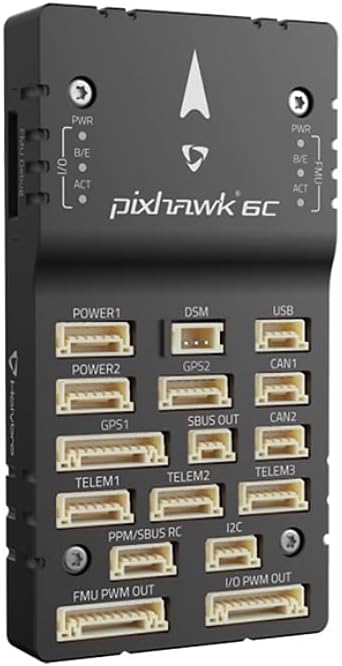
The Pixhawk 6C Flight Controller represents the peak of performance for demanding hybrid VTOL and autonomous vehicle applications. Equipped with a STM32H743 processor, it delivers massive computing power for complex algorithms. This premium unit ensures efficient development work and reliable operation in academic and commercial UAV environments.
Pros
High-performance computing core
Redundant IMU for safety
Pre-installed PX4 firmware
Advanced vibration isolation
Flexible PWM mode selection
Cons
Higher price point
Requires technical expertise
We may earn a commission when you buy through this link, at no additional cost to you.
Dual redundant IMUs with temperature control provide unmatched reliability during critical flight phases. Integrated heating resistors maintain optimal sensor temperatures for consistent readings. The advanced vibration isolation system filters high-frequency drone vibration, reducing sensor noise for precise flight control data in challenging conditions.
While the price point is higher, the hardware-switchable PWM signal mode and broad firmware compatibility justify the investment for professionals. Users may need technical expertise to configure settings like the 3.3V and 5V mode switches. These complexities are acceptable for researchers prioritizing precision and long-term development efficiency.
For academic research or commercial autonomous vehicle applications, this controller is the ideal choice. Its low-profile form factor and durable case options ensure versatility across different build requirements. The Pixhawk 6C provides the computational power and sensor reliability needed for safe and efficient autonomous operations.
Redundant Sensor Architecture for Safety
Features high-performance redundant IMUs with temperature control ensuring reliable readings under varying environmental conditions.
Vibration Isolation for Precision
Integrated vibration isolation system effectively filters high-frequency noise to guarantee precise sensor readings during flight.
COREWING F405 V2 Flight Controller Fit For RC Airplane Drone
F405 processor core
Fit for RC airplane drone
Compact board design
Supports standard receiver inputs
The COREWING F405 V2 Flight Controller is a compact solution designed for RC airplane and drone builds. While it lacks detailed VTOL specifics, the F405 processor offers reliable performance for fixed-wing applications. Its standard receiver inputs simplify installation for hobbyists building custom hybrid models requiring basic control features.
Pros
Compact board design
F405 processor speed
Standard receiver inputs
Fit for RC airplane drone
Cons
Limited VTOL documentation
No specific hybrid features mentioned
We may earn a commission when you buy through this link, at no additional cost to you.
This flight controller fits the requirements for RC airplane drone projects with a streamlined design. It provides a stable platform for basic flight stabilization and control inputs. The hardware supports standard connections, making it accessible for users transitioning from traditional multirotors to fixed-wing builds.
However, detailed guidance on hybrid transitions may require external research or community support. Users should verify firmware support for specific VTOL configurations before purchase. These limitations are acceptable if the pilot prioritizes basic fixed-wing stability over complex autonomous transition logic.
For hobbyists seeking a compact and affordable flight controller for RC airplane builds, this model offers good value. The F405 processor ensures fast processing for basic stabilization tasks. Always check community resources for firmware compatibility to ensure optimal performance during flight transitions.
Compact Design for Small Builds
Streamlined design fits compact RC airplane builds without adding excessive weight to the airframe structure.
Standard Connectivity Options
Supports standard receiver inputs for simplified installation in various RC airplane and drone configurations.
The PIX 2-12S Flight Controller supports Mavlink SBUS, PPM, and CRSF protocols for flexible receiver integration. Its STM32F405VGT6 controller ensures high-speed processing for VTOL and multirotor applications. This board includes comprehensive sensors like MPU6500 gyroscope and LPS22HB barometer for accurate altitude and attitude estimation.
Pros
STM32F405VGT6 controller
Wide power input range
Multiple receiver protocol support
For VTOL Multirotor use
Cons
Basic wiring may vary by batch
Requires careful calibration
We may earn a commission when you buy through this link, at no additional cost to you.
Support for 2 to 12S power supply makes it suitable for high-power drone configurations. The board integrates sensors that enhance flight stability. Basic wiring accessories are included to simplify setup. The design targets DIY autonomous driving systems and VTOL multirotor builds requiring precise control inputs.
Installation requires attention to power and signal connections to ensure compatibility with existing systems. Some batches may include absorbers for vibration damping. Users should verify receiver connections to avoid signal noise during transitions. These considerations are manageable with proper documentation and testing.
For builds needing wide power range and multiple protocol support, this flight controller is a strong choice. The sensor suite provides reliable data for stable flight. Ensure all connections are secure before powering on to maximize performance during critical flight operations.
Broad Protocol Compatibility
Supports Mavlink SBUS PPM and CRSF protocols for flexible receiver integration across various radio systems.
Integrated Sensor Suite
Includes MPU6500 gyroscope and LPS22HB barometer for precise altitude and attitude estimation during flight.
F405 Wing Flight Controller Compatible With Fixed Wing Drones Supports VTOL And Ardupilot APP Control(F405 Wing Flight Con)
Fixed wing drones VTOL capable
Supports Ardupilot firmware
APP control via smartphone
F405 processor stability
The F405 Wing Flight Controller is designed for fixed-wing drones with VTOL capabilities. It supports Ardupilot firmware for advanced customization and performance. Users can easily configure and monitor flight parameters via smartphone APP control. The lightweight compact design minimizes added weight while maintaining robust functionality for varied builds.
Pros
Supports Ardupilot firmware
APP control via smartphone
Optimized for fixed wing VTOL
Lightweight compact design
Cons
Requires Ardupilot setup knowledge
Limited to fixed wing focus
We may earn a commission when you buy through this link, at no additional cost to you.
This controller offers fast and stable flight experiences thanks to the F405 processor. It is ideal for both beginners and experienced pilots due to its user-friendly setup. Compatibility with various fixed-wing drone models provides flexibility for different project needs. The design balances performance with ease of use effectively.
App control adds convenience for quick parameter adjustments without a laptop. However, Ardupilot firmware requires initial setup and calibration efforts to ensure optimal performance. These steps are standard for advanced flight controllers and justify the added control flexibility provided by the system.
For pilots building fixed-wing VTOL drones, this controller is highly recommended. The combination of APP control and Ardupilot support streamlines configuration. Ensure firmware updates are applied before initial flight to leverage the latest stability improvements for hybrid operations.
Convenient APP Control for Monitoring
Enables users to easily configure and monitor flight parameters via smartphone APP control.
Dedicated Fixed Wing Optimization
Designed specifically for fixed-wing drones with VTOL capabilities to ensure versatile flight modes.
H743 Flight Controller with 60A 32 bit ESC 30×30 Stack
H743 processor 480MHz speed
Dual IMU sensors included
30x30mm stack form factor
Supports Betaflight and Ardupilot
The H743 Flight Controller with 60A ESC offers a high-performance stack for lightweight builds. Featuring an STM32H743 processor, it delivers reliable motor control for hybrid applications. The stack supports Betaflight, PX4, INAV, and Ardupilot firmware, providing flexibility for configuration. Dual IMUs enhance flight stability and reliability.
Pros
H743 processor 480MHz speed
Dual IMU sensors included
Compact stack design
Supports Betaflight and Ardupilot
Cons
Primary design targets racing FPV
VTOL tuning may require extra work
We may earn a commission when you buy through this link, at no additional cost to you.
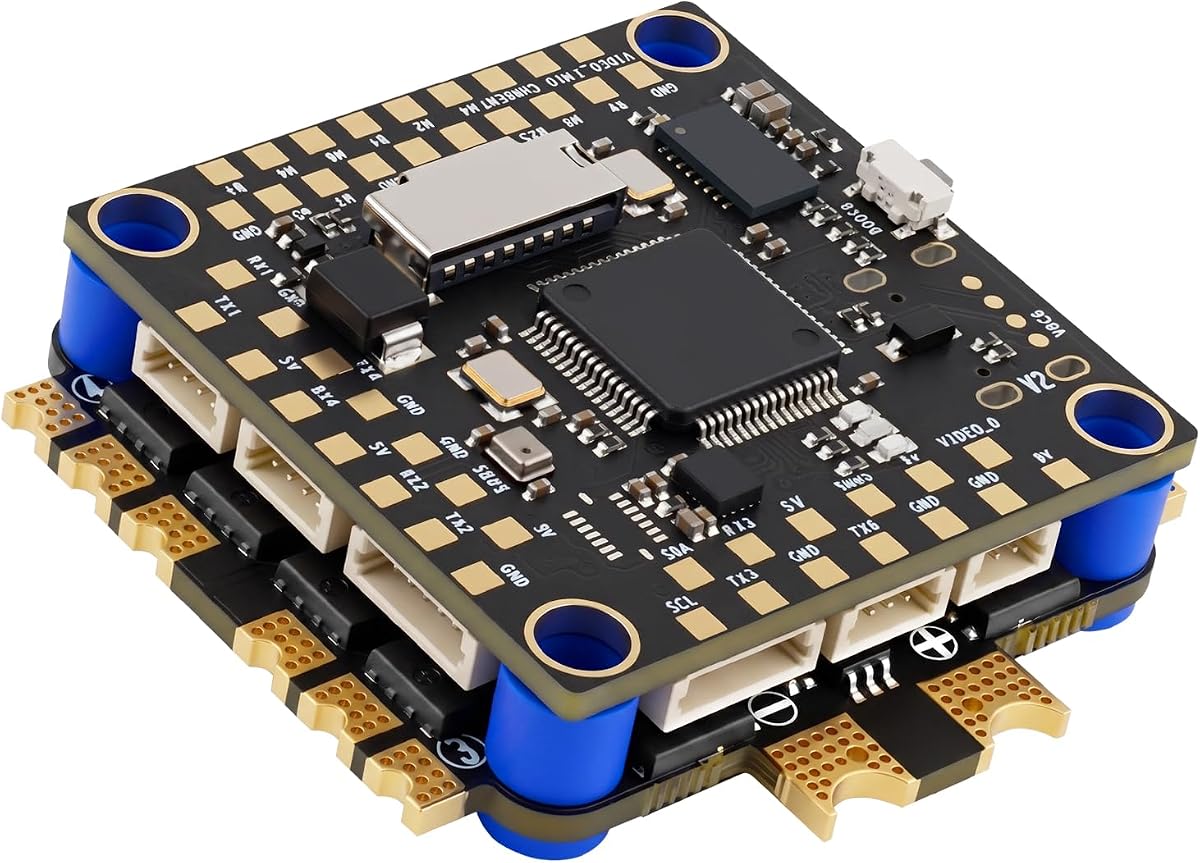
Powerful ESC performance supports 2S-8S LiPo batteries with continuous 60A current per channel. This ensures optimal power and responsiveness for demanding hybrid transitions. The stack is lightweight and compact with a 30.5×30.5mm mounting pattern fitting many frames. Expansion options like 7 UART ports and CAN support add versatility.
Although designed for racing drones, the firmware compatibility supports VTOL configurations with careful tuning. Users may need to customize settings for optimal transition performance. These adjustments are manageable for experienced hobbyists seeking a powerful and scalable solution for custom builds.
For pilots needing a versatile stack for FPV or hybrid builds, this model is recommended. The combination of processing power and ESC capacity ensures smooth flight. Verify firmware support for VTOL features before installation to maximize performance potential.
High Power ESC Support
Supports 2S-8S LiPo batteries with 60A continuous current per channel for optimal power and responsiveness.
Versatile Firmware Support
Compatible with Betaflight, PX4, INAV, and Ardupilot offering quick configuration options for setup.
H743 Flight Controller with 50A 8 bit ESC 30×30 Stack
H743 processor 480MHz speed
50A 4in1 ESC included
Dual IMU and compass sensor
Compact 30.5mm mounting pattern
The H743 Flight Controller with 50A ESC provides a compact stack for mid-range hybrid builds. It supports 2-6S LiPo batteries with 50A continuous current per channel. The dual IMU and compass ensure reliable flight performance. Compatible with Betaflight, INAV, PX4, and Ardupilot, it offers flexibility for various configurations.
Pros
H743 processor 480MHz speed
50A 4in1 ESC included
Dual IMU and compass sensor
Compact 30.5mm mounting pattern
Cons
ESC limits battery voltage range
Requires setup customization
We may earn a commission when you buy through this link, at no additional cost to you.
This stack simplifies installation with a lightweight design and 30.5×30.5mm mounting pattern. It features 7 UART ports and 10 PWM outputs for extensive connectivity. The integrated OSD helps monitor parameters during flight. These features make it a flexible solution for complex drone builds requiring precise motor control.
While the ESC supports lower voltage than the 60A variant, it remains suitable for many VTOL airframes. Users should ensure battery voltage does not exceed the 6S limit to protect the system. This trade-off is acceptable for builds prioritizing weight savings and standard flight capabilities.
For hobbyists seeking a balanced performance stack, this model is a solid choice. The integration of sensor and ESC simplifies wiring. Ensure firmware is configured for VTOL stability to maximize performance during flight transitions.
Powerful ESC with DSHOT Support
Delivers 50A continuous current per channel with high-frequency PWM DSHOT protocols for precise throttle response.
Compact Integration Design
Lightweight stack simplifies installation and enhances assembly efficiency with a compact form factor.
AERO SELFIE F405NC Flight Controller with 60A 8 bit ESC 30×30 Stack
F405NC processor 168MHz
Dual IMU BMI42688
30x30mm stack design
Supports Betaflight and INAV
The AERO SELFIE F405NC Flight Controller provides a reliable stack for lightweight builds. Featuring an STM32F405 processor and dual IMUs, it ensures stable flight control. The 60A 4IN1 ESC offers superior motor control for diverse configurations. This unit balances cost with functionality for FPV and racing enthusiasts.
Pros
Dual IMU BMI42688
Compact stack design
Supports Betaflight and INAV
Reliable ESC performance
Cons
Lower processor speed
Requires configuration tuning
We may earn a commission when you buy through this link, at no additional cost to you.
Configuration options are quick and easy thanks to versatile firmware support. Compatible with Betaflight, INAV, and Ardupilot, it simplifies setup for beginners and professionals. The stack includes comprehensive connectivity like 6 UART ports and OSD support for telemetry. Lightweight design ensures easy integration into various frames.
While the processor speed is lower than H7 series, it remains sufficient for most VTOL tasks. Users may need to tune PID settings for optimal transition smoothness. These efforts are acceptable given the affordability and sensor quality provided in this package.
For pilots seeking a balance of performance and value, this stack is highly recommended. Ensure firmware is properly configured for hybrid modes to leverage the flight capabilities. The F405NC offers reliable control for varied drone builds efficiently.
Dual IMU Stability
Features dual IMUs for stable flight control and reliable motor performance.
Firmware Flexibility
Compatible with Betaflight, INAV, and Ardupilot for quick configuration options.
AERO SELFIE H743 Flight Controller with 60A 32 bit ESC 30×30 Stack
H743 processor 480MHz speed
Dual IMU sensors included
Supports PX4 and Ardupilot
30x30mm stack form factor
The AERO SELFIE H743 Flight Controller offers a high-performance stack for demanding builds. Equipped with an STM32H743 processor and dual IMUs, it ensures reliable motor control. The 60A 4IN1 ESC provides superior performance for lightweight builds. Support for Betaflight, PX4, and Ardupilot simplifies setup.
Pros
H743 processor 480MHz speed
Dual IMU sensors included
Supports PX4 and Ardupilot
30x30mm stack form factor
Cons
Lower user rating
Requires careful calibration
We may earn a commission when you buy through this link, at no additional cost to you.
This stack includes comprehensive connectivity like 7 UART ports and CAN support for expansion. The compact design fits a wide variety of frames easily. Users should verify sensor calibration to maximize flight stability. The integration ensures efficient space management for complex hybrid systems.
While user ratings suggest some calibration challenges, the hardware capabilities remain strong. Proper configuration can mitigate issues related to stability. These trade-offs are acceptable for pilots seeking high-end processing power at an accessible price point.
For hobbyists building advanced FPV or hybrid drones, this stack is a strong choice. Ensure firmware updates are applied before initial flight. The H743 offers processing power needed for smooth transitions.
High-Speed Processing Core
Features an STM32H743 processor running at 480MHz for superior motor control and performance.
Expanded Connectivity
Includes 7 UART ports and CAN support offering vast expansion potential for sensors and telemetry.
We may earn a commission when you buy through this link, at no additional cost to you.
Buying Guide – How to Choose the Best Flight Controllers for Hybrid Vtol and Vtol Drones
Selecting the right flight controller requires understanding hardware capabilities, firmware support, and airframe compatibility. This guide outlines key factors to ensure stable hybrid performance.
Firmware Compatibility
Hybrid VTOL drones require flight controllers that support complex transition logic between vertical and forward flight. Look for controllers compatible with open-source firmware like PX4 or ArduPilot, which offer advanced hybrid configuration tools. These frameworks provide mission planning and stabilization algorithms specifically designed for mixed-mode aircraft.
Always verify that the controller's firmware version supports your specific VTOL transition profiles before purchase.
Processor Performance
Processing speed determines how quickly the flight controller can react to sensor inputs during critical transitions. High-end models like those with STM32H743 or Cortex M4 cores offer the necessary throughput for complex algorithms. Faster processors reduce latency, ensuring smoother transitions and better stability in turbulent conditions.
Select a processor that matches the computational demands of your autonomous or semi-autonomous flight plan.
Sensor Redundancy
Redundant sensors such as dual IMUs ensure reliability if one sensor fails during flight. High-end controllers often include temperature-controlled redundant IMUs to maintain accuracy in varying environments. This feature is crucial for professional or commercial VTOL builds where safety is paramount.
Prioritize controllers with at least one redundant IMU for reliable operation during critical phases.
Power Input Range
Hybrid VTOL builds often use high-power motors that require wide voltage support. Ensure the flight controller supports the battery range of your airframe, typically 2S to 12S. Proper power handling prevents failures during high-thrust vertical takeoff and landing phases.
Check the supported voltage range to ensure compatibility with your battery system.
Mounting Form Factor
VTOL airframes have specific space constraints for mounting hardware. Look for standard 30x30mm stack patterns to simplify integration with ESCs and receivers. Compact designs reduce weight and improve balance during the horizontal cruise phase.
Choose a form factor that fits your frame design to avoid balance issues.
Connectivity and Expansion
Additional ports like UART, CAN, and I2C allow connecting GPS, telemetry, and cameras essential for autonomous flights. Ensure the controller offers enough ports for your specific sensor and camera requirements. Expansion options future-proof your build for more complex operations.
Verify that the port count meets your needs for navigation and data logging.
ESC Integration
Some flight controllers come paired with ESCs in stack configurations to simplify wiring. A dedicated stack reduces cable clutter and weight on your VTOL frame. However, ensure the ESC supports your motor current draw for safe operation.
Decide between standalone controllers or stacks based on your wiring complexity preferences.
Vibration Isolation
Mechanical vibration from motors can distort sensor data during flight. Controllers with integrated vibration isolation or mounts ensure more accurate readings. This feature is vital for maintaining stability during delicate transition phases.
Consider models with vibration isolation systems for reliable sensor performance.
How to Use and Care for Your Flight Controllers for Hybrid Vtol and Vtol Drones
Install the flight controller securely using the provided mounting holes and vibration dampers. Ensure all sensors are aligned correctly according to the manufacturer's diagram to prevent flight instability during transitions.
Calibrate the flight controller before every flight session using the recommended software. Perform accelerometer, magnetometer, and ESC calibrations to ensure precise sensor readings and motor control for smooth VTOL operations.
Store the controller in a dry and cool environment when not in use. Protect it from dust and moisture to prevent corrosion on the ports and connectors that could lead to hardware failure during critical flight phases.
Frequently Asked Questions
What flight controller is best for hybrid VTOL builds?
The Pixhawk 2.4.8 is often considered best for hybrid VTOL builds due to its open-source firmware support and comprehensive sensor suite. It allows deep customization for transition logic required in mixed-mode aircraft.
Do I need a dedicated VTOL controller?
Not necessarily, but controllers supporting PX4 or ArduPilot are highly recommended for hybrid operations. These frameworks include specific VTOL mode configurations that simplify the transition process significantly.
How does firmware affect VTOL performance?
Firmware determines the algorithms used for stabilizing the aircraft during transition between hover and forward flight. Open-source options provide more flexibility to tune these parameters for specific airframes than proprietary firmware.
Can I use a standard racing controller for VTOL?
Standard racing controllers often lack the logic for smooth VTOL transitions. While possible with advanced tuning, they may not provide the safety and stability features required for complex hybrid configurations.
What is the importance of dual IMUs?
Dual IMUs provide redundancy if one sensor fails or gives erroneous data. This is critical for VTOL flights where sensor accuracy directly impacts stability during takeoff and landing phases.
How do I choose the right processor speed?
Higher processor speeds like 480MHz ensure quick reaction to control inputs during rapid transitions. For complex autonomous hybrid builds, investing in faster processors minimizes latency and improves flight precision.
Is GPS essential for VTOL controllers?
GPS is not strictly essential but highly recommended for autonomous VTOL missions. It enables precise waypoint navigation and return-to-home features that enhance safety during long-range operations.
How often should I recalibrate the controller?
Recalibrate the controller after any significant hardware changes or crashes. Regular calibration ensures accurate sensor readings which are vital for maintaining stability during critical flight transitions.
Final Thoughts on Choosing the Best Flight Controllers for Hybrid Vtol and Vtol Drones
Choosing the right flight controller for hybrid VTOL and VTOL drones depends on your specific needs for processing power, firmware support, and sensor redundancy. The top picks like the Pixhawk 2.4.8 and KK 2.1.5 offer distinct advantages for advanced developers and budget hobbyists alike.
Prioritize controllers that support robust open-source firmware to ensure you can customize transition logic effectively. Reliable sensors and proper vibration isolation are non-negotiable for safe mixed-mode operations.
Remember to verify current availability and pricing before purchasing since inventory fluctuates regularly. Review community feedback to ensure the hardware fits your airframe requirements. Safe flying awaits those who invest in reliable flight control technology.