
SUNLU Filament Dryer Box 2026 New Upgrade S1 Plus
4.3Editor score
Fast drying with built-in fan
Visual LCD display screen
Adjustable temperature range
Compare the top filament dryer box options for 3D printing. This guide reviews leading models with heating chambers and moisture control to improve your print
Filament dryers are essential tools for maintaining print quality by removing moisture from spools. A good box provides controlled heating and sealing to prevent common issues like stringing and layer adhesion failure during prints.
We compared ten leading models based on capacity, heating technology, temperature control, and user feedback. Each entry highlights key specifications and benefits to help you find the right solution for your setup and filament types.
Each pick shows specific features like dual chambers or touch screens alongside performance notes. Prices and availability can change frequently so please check the current listing details before making your final selection decision.
4.3Editor score

4.6Editor score

4.6Editor score
This side-by-side comparison highlights the key specifications and unique features of each model to help you evaluate capacity heating methods and control options for your specific printing needs.
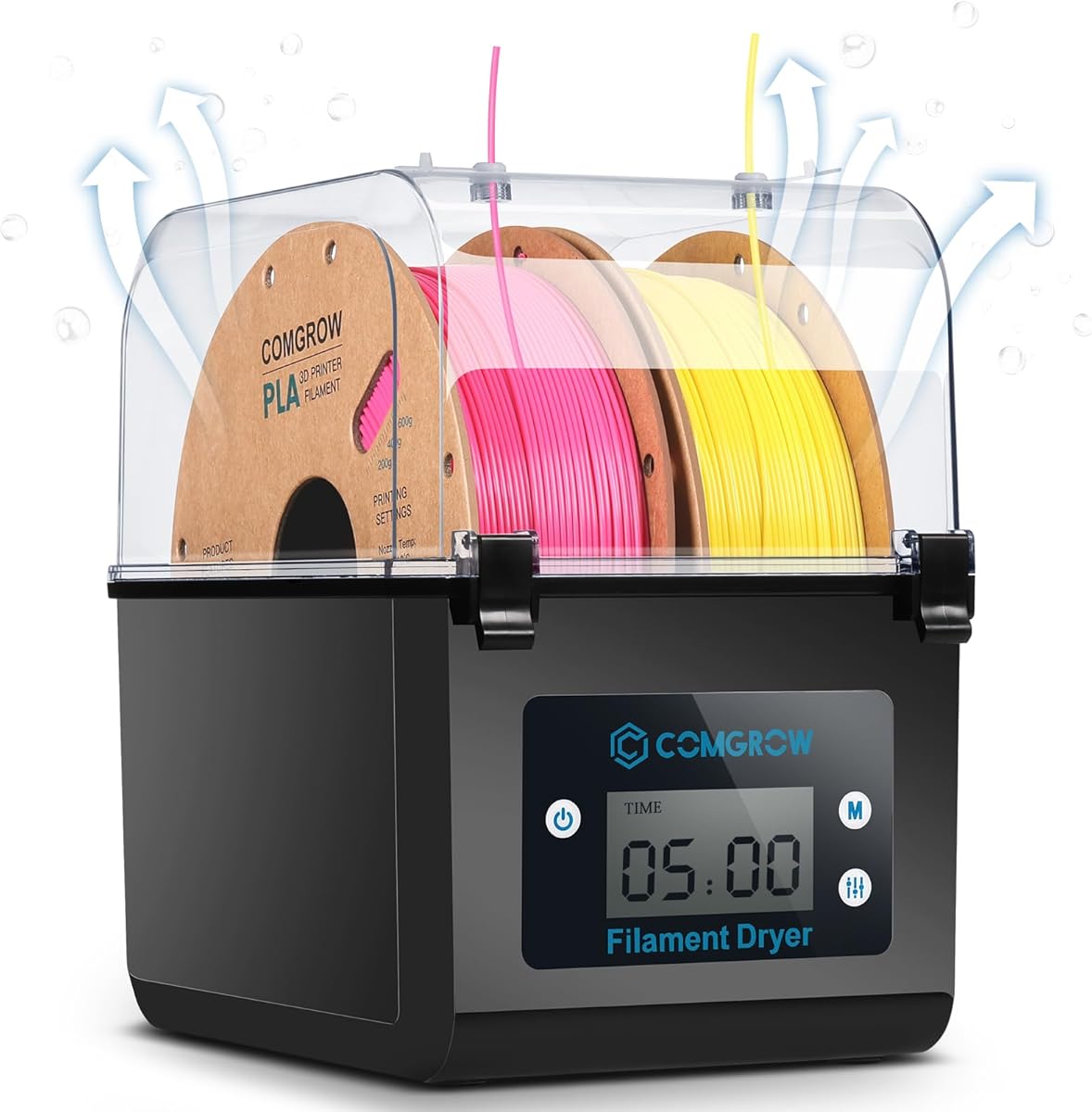


This model stands out for high volume users needing simultaneous drying and storage for multiple spools. It receives strong ratings for its ability to handle engineering filaments and maintain consistent humidity levels.
We may earn a commission when you buy through this link, at no additional cost to you.
The dual independent heating chambers allow you to dry different materials at their optimal temperatures without waiting. The 85 degree Celsius maximum ensures even tough filaments like Polycarbonate get properly dried.
While the price is higher than basic boxes the efficiency gains for professional shops justify the cost. The learning curve is minimal due to the intuitive touch interface and preset options.
Buyers with multiple printers or frequent high volume prints will find this system most useful. It represents a solid investment for maintaining filament integrity across a diverse material library.
Independent chambers allow simultaneous drying of PLA and ABS at different temperatures saving significant workflow time.
Silicone sealed enclosures maintain humidity levels during pauses keeping filament ready for the next print job.
We may earn a commission when you buy through this link, at no additional cost to you.
This budget friendly option provides essential drying features for standard filaments like PLA and PETG. It offers a balance of performance and cost that appeals to beginners and casual users.
We may earn a commission when you buy through this link, at no additional cost to you.
The fan design helps move air efficiently to remove moisture faster than passive heat alone. Users can track temperature and time clearly on the LCD screen without guessing.
Limitations include a lower max temperature which may not suit engineering materials. Noise from the fan is noticeable during operation but acceptable for most home setups.
Ideal for hobbyists wanting reliable drying without a major investment. It solves common stringing issues effectively for common materials.
The integrated fan actively circulates air reducing drying time compared to static heating boxes.
Dedicated buttons allow quick adjustments of time and temperature without complex menus.
We may earn a commission when you buy through this link, at no additional cost to you.
This premium model brings advanced features like independent chamber control and high temperature support for engineering materials. It is rated highly for reliability and consistent performance in demanding environments.
We may earn a commission when you buy through this link, at no additional cost to you.
Dual chambers allow simultaneous operation at different settings increasing throughput significantly. The energy saving modes help reduce electricity costs during extended drying cycles.
The main drawback is the cost which may be steep for casual users. It is best suited for professionals or labs that process large volumes of diverse filaments regularly.
High volume users seeking maximum flexibility and filament protection will appreciate the capabilities. It ensures consistent print quality even with moisture sensitive materials.
Reach 85 degrees Celsius to effectively dry difficult materials like PC and PA without degradation.
Single chamber modes save power while maintaining performance for single spool drying tasks.
We may earn a commission when you buy through this link, at no additional cost to you.
This model focuses on practical storage for two standard spools with effective sealing to keep moisture out. It offers straightforward controls and clear displays that make daily use simple.
We may earn a commission when you buy through this link, at no additional cost to you.
The silicone sealed outlet ensures filament stays dry during pauses or overnight storage. Users appreciate the reliable heating that keeps spools ready without complex configurations.
The lower max temperature limits use to standard plastics. Capacity is restricted to two rolls which may not suit larger studios needing more throughput.
Hobbyists with moderate needs will find this a dependable choice. It provides consistent protection for PLA and PETG filaments effectively.
Silicone cable sheaths maintain enclosure integrity while allowing filament feeding during operation.
Touch buttons and LCD make setting temps and times intuitive for first time users.
We may earn a commission when you buy through this link, at no additional cost to you.
This box offers passive storage protection using sealed design and desiccant support to keep filament dry. It is ideal for maintaining conditions without electricity or heat cycles.
We may earn a commission when you buy through this link, at no additional cost to you.
The built-in hygrometer lets you monitor humidity levels visually to ensure optimal storage. It is effective for long term storage when active drying is not required.
Lack of active heating means it is not for drying wet filament quickly. Users needing rapid moisture removal should look at heated models instead.
Best for storing spools between prints in low humidity environments. It complements active dryers by maintaining dryness after the fact.
Visual humidity reading removes guesswork so you can see when conditions are ideal.
No electricity needed makes it suitable for storage areas without power access.
We may earn a commission when you buy through this link, at no additional cost to you.
This dryer provides a larger capacity with a translucent lid for convenient viewing during operation. It is well rated for its ease of use and flexibility in time settings.
We may earn a commission when you buy through this link, at no additional cost to you.
The touch screen simplifies temperature and time adjustments for different filament types. Users can check the filament without opening the lid to maintain consistent conditions.
The footprint is larger which might challenge smaller workspaces. Single chamber limits throughput compared to dual chamber models.
Good for users needing to dry large batches of one material type. It offers reliable performance for common and engineering filaments.
Translucent lid allows real time monitoring without breaking the drying environment.
Customizable timers support everything from quick dry to extended restoration cycles.
We may earn a commission when you buy through this link, at no additional cost to you.
This model emphasizes fast heating with a 150W PTC element and one-key presets for common filaments. It is designed to speed up workflow with reliable safety features.
We may earn a commission when you buy through this link, at no additional cost to you.
One-key temperature setting reduces setup time significantly for frequent users. Safety alarms alert you to fan issues or overheating to protect equipment.
The two spool limit restricts volume for larger labs. Max temperature is suitable for most materials but not extreme engineering types.
Well suited for users prioritizing speed and convenience. It provides balanced performance for general purpose printing needs.
PTC heater reaches target temperatures quickly to minimize wait times before printing.
Thermal cutoffs and fan monitoring help prevent overheating and extend device life.
We may earn a commission when you buy through this link, at no additional cost to you.
This model uses 360 degree hot air circulation to ensure even drying across the spool. Power off memory keeps your settings after outages reducing rework.
We may earn a commission when you buy through this link, at no additional cost to you.
Twelve presets cover a wide range of materials reducing manual setup effort. The touch screen makes switching between Fahrenheit and Celsius simple.
It is a single chamber unit which limits simultaneous drying options. Max temperature caps at 70 degrees which suits most common needs.
A solid choice for those needing versatility in presets. It works well for mixed filaments without complex configurations.
Fan assisted 360 flow ensures even heat distribution to avoid cold spots.
Power outages do not erase your material and temperature settings for continuity.
We may earn a commission when you buy through this link, at no additional cost to you.
This version adds a real-time humidity monitor to track conditions inside the box directly. It supports dual spool drying which improves flexibility for small batches.
We may earn a commission when you buy through this link, at no additional cost to you.
Humidity tracking helps ensure filament is ready before printing reducing risk of defects. The dual spool design allows simultaneous processing of two materials.
It shares the same max temperature and single zone design as standard models. Users needing different temps for multiple spools will still need dual chambers.
Best for users valuing visibility into humidity levels. It simplifies monitoring without extra tools.
Real-time monitoring ensures optimal conditions for moisture sensitive filaments during storage.
Holding two spools allows efficient drying of multiple materials without multiple units.
We may earn a commission when you buy through this link, at no additional cost to you.
This unit brings dual chambers and a four spool capacity for high volume needs. It is designed for users requiring independent temperature control for different materials.
We may earn a commission when you buy through this link, at no additional cost to you.
Dual chambers allow simultaneous drying of different filaments at optimal settings improving overall throughput. The sealed enclosure keeps moisture out during pauses.
The higher price and footprint may limit adoption for smaller spaces. Performance is strong for labs needing consistent high quality results.
Ideal for professionals managing diverse materials regularly. It provides robust protection and drying efficiency.
Each chamber can run at different temperatures to handle multiple materials simultaneously.
Four spool storage supports high volume printing without frequent reloading.
We may earn a commission when you buy through this link, at no additional cost to you.
Choosing the right box depends on your filament variety, volume needs, and workspace constraints. This section outlines critical factors to consider before making a purchase.
Different filaments require different drying temperatures ranging from 45 to 85 degrees Celsius. PLA needs lower temperatures while engineering materials like PC or PA require higher heat to remove moisture effectively.
Ensure the selected model reaches the maximum temperature your filaments need without exceeding safe limits.
Boxes vary from single spool units to those holding four or more. Consider how many materials you keep dry simultaneously and the physical size of your workspace.
Larger capacity models are better for studios running multiple printers or diverse material libraries.
Dual chamber models allow independent temperature settings which is critical when drying different filament types at once. This flexibility reduces overall workflow time and improves efficiency.
If you frequently print mixed materials look for units with separate control zones.
Integrated hygrometers provide real-time visibility into internal conditions helping you confirm when filament is ready. This feature removes guesswork and improves consistency.
Select models with reliable humidity sensors if precision is a priority for your prints.
Effective sealing prevents moisture re-absorption during pauses and storage. Look for silicone gaskets or tight-fitting lids that maintain a dry environment.
A well sealed box protects filament between uses and extends shelf life.
Touch screens and preset options simplify operation and reduce setup time. User friendly interfaces help ensure correct drying cycles every time.
Choose models with intuitive controls that match your technical comfort level.
Energy saving modes or single chamber options can reduce electricity consumption over long drying cycles. This is beneficial for eco-conscious users or high frequency drying.
Consider how often you use the dryer and whether efficiency features align with your habits.
Durable construction and safety features like thermal cutoffs or fan monitoring protect your equipment and filament. These safeguards prevent overheating and extend device lifespan.
Prioritize models with robust build and safety protections for reliable operation.
Begin by checking your filament type and setting the recommended temperature using the model's presets or manual settings. Ensure the spool is placed correctly with the outlet aligned to the feeding port.
Close the enclosure tightly to maintain the sealed environment and start the drying cycle. Avoid opening the box frequently during operation as this releases heat and humidity needed for drying.
After use turn off the unit and allow it to cool before storing. Clean the interior periodically to remove dust and ensure vents remain clear for airflow and heater efficiency.
Yes most models are designed to feed filament directly from the enclosure to the printer. This allows the spool to remain dry during the print process reducing risk of moisture related issues.
Drying time depends on how wet the filament is and the temperature used. Most boxes offer timers up to several hours and standard cycles often range from two to eight hours.
While some models support long-term storage it is best to use them for active drying or pause storage. Permanent storage may require additional desiccants depending on the enclosure seal.
If filament is already dry you can use the box purely for storage. Ensure the unit maintains humidity during pauses to protect against environmental moisture.
Most boxes accept standard 1kg spools with 1.75mm or 2.85mm diameters. Larger 2kg spools may fit if the internal dimensions allow so check specs before buying.
Unplug the unit and wipe the interior with a dry cloth to remove dust. Avoid using liquids inside to prevent electrical damage and ensure all vents remain clear.
The best box depends on your material diversity and production volume. Top picks like the Creality Space Pi X4 offer dual chamber flexibility for labs while budget models like SUNLU S1 Plus serve hobbyists well.
Prioritize temperature range and sealing quality to ensure consistent results across your filament library. Safety features and humidity monitoring also contribute to reliable long-term performance.
Always check the current listing details and availability before purchasing since features and availability change frequently.