
Construction Adhesive
4.2Editor score
Extra nozzle included
Fast-curing resin
No expansion pressure needed
This guide compares the top ten chemical anchors for concrete to help you choose the right epoxy or adhesive system for your construction and repair needs.
Chemical anchors for concrete provide a reliable way to secure heavy loads without relying on mechanical expansion. They bond directly to the substrate, offering superior strength in cracked or hollow materials. Selecting the right system ensures safety and longevity for your projects.
We evaluated ten top-rated products based on curing time, load capacity, and ease of application. Our analysis covers epoxy and polyester options suitable for various conditions. Each entry highlights key features to help you match the product to your specific task.
Every pick includes detailed specs, pros, and cons to guide your decision. Ratings reflect real-world performance and user feedback from verified buyers. Note that availability and shipping terms may change, so check the linked product page for the latest information before purchasing.
4.2Editor score
4.5Editor score

5.0Editor score
This table provides a side-by-side view of the leading chemical anchor systems available today. We focus on core specifications like cartridge size, curing speed, and material compatibility to help you quickly identify the best fit for your drilling and fastening requirements.





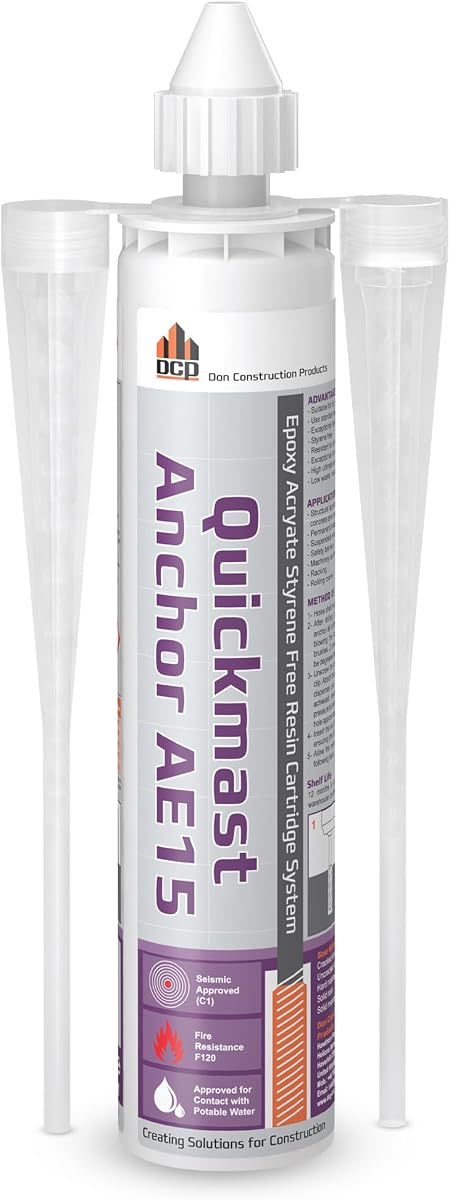
The DCP Quickmast AE15 stands out as a high-strength anchoring solution that balances performance with ease of use. With a 4.5 rating from verified buyers, it delivers secure fastenings in concrete for rebar, threaded rods, and similar applications. Its two-part acrylate epoxy formula ensures reliable bonds across diverse conditions, making it a top choice for professionals and DIYers alike.
We may earn a commission when you buy through this link, at no additional cost to you.
One of its standout features is the rapid curing time, achieving full load-bearing capacity in as little as 40 minutes depending on temperature. This allows you to progress through projects without long delays. The cartridge system is designed for standard caulking guns, ensuring a uniform mix and smooth application without specialized tools. It performs well in dry, wet, and even flooded holes, adding significant versatility to your toolkit.
While the working time of 4 to 10 minutes is ample for most tasks, it may feel tight in hot environments where the resin accelerates. This is a common trade-off with fast-curing epoxies, and planning your drilling and injection steps carefully can mitigate this issue. The bond strength is robust, but you must ensure the hole is clean to maximize performance.
Buy this if you need a versatile, high-strength epoxy for both light and heavy-duty applications. It excels in scenarios where moisture resistance and quick turnaround are critical. For most concrete anchoring needs, the AE15 offers the best balance of speed, strength, and reliability available today.
Its quick-curing feature allows you to move swiftly through projects, reducing downtime between drilling and installation. The uniform mix from the cartridge ensures consistent bonding across every anchor point, which is vital for structural integrity. This system is particularly useful when working on multiple anchors in a single session.
Achieve full strength in minutes, not hours, allowing you to continue work without long waits.
Apply confidently in dry, wet, or flooded holes without compromising bond strength or safety.
We may earn a commission when you buy through this link, at no additional cost to you.
This Construction Adhesive offers a fast-curing solution for anchoring heavy-duty fasteners in solid base materials like concrete, brick, and stone. With a 4.2 rating, it provides a powerful bond without the need for expansion pressure, making installation straightforward. The inclusion of an extra nozzle adds value and reduces downtime between jobs, which is a key benefit for frequent users.
We may earn a commission when you buy through this link, at no additional cost to you.
The polyester resin sets quickly, allowing you to finish tasks efficiently. You simply drill, clean, inject the resin, and insert the fastener before it cures. For hollow materials, you can insert a mesh sleeve to ensure a strong hold, expanding its usability beyond solid substrates. This adaptability makes it a practical choice for varied construction scenarios.
While it performs well for general anchoring, the lower rating compared to premium epoxies suggests it may not be ideal for the heaviest loads or most critical structural applications. Batch variations in resin consistency can also occur, so test before committing to large projects. However, for standard fixes and lighter loads, it delivers reliable results.
Choose this adhesive if you need a cost-effective option with added convenience features like the extra nozzle. It is perfect for jobs where efficiency and reliability matter but budget is a primary concern. The no-expansion-pressure design simplifies installation, reducing the risk of cracking delicate materials.
The extra nozzle ensures you have a backup ready for multiple applications, enhancing convenience and minimizing interruptions during work. This thoughtful addition saves time and keeps your project moving forward smoothly without waiting for replacement parts.
Install without stressing the substrate, reducing the risk of cracks in brittle materials.
Use with a mesh sleeve for reliable anchoring in hollow blocks, brick, or cavity walls.
We may earn a commission when you buy through this link, at no additional cost to you.
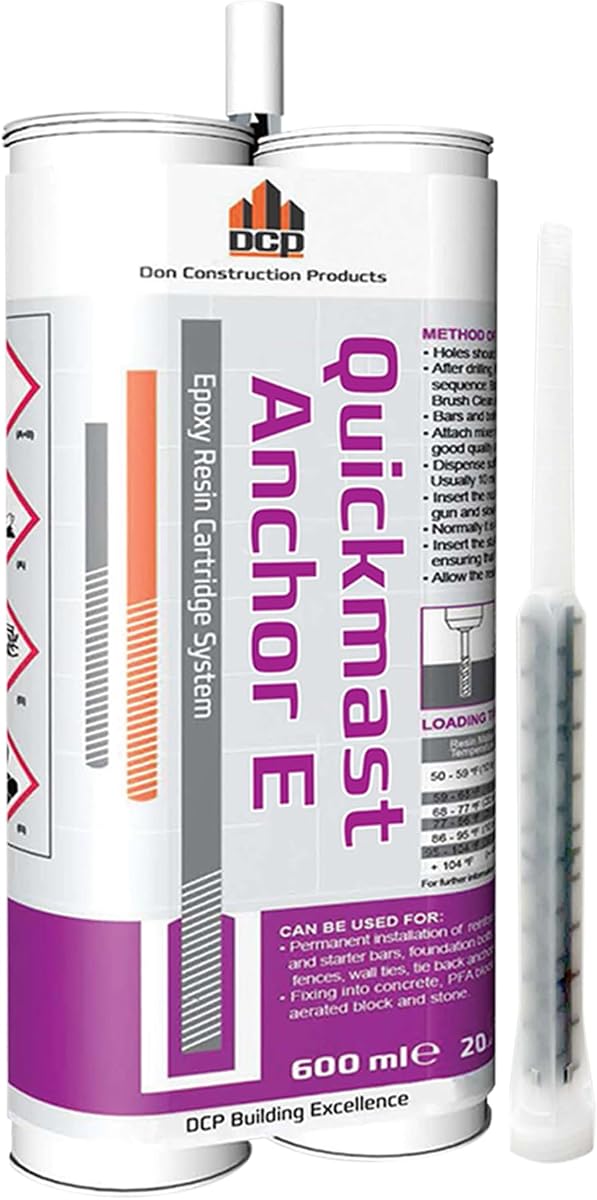
The Quickmast E 20.2 fl oz. kit stands out with a perfect 5.0 rating, offering a premium two-part anchoring system designed for the toughest fastenings. It includes a dedicated mixing gun, ensuring flawless dispense every time. The high-strength epoxy bonds securely to concrete and steel, making it ideal for rebar and threaded rods in demanding environments.
We may earn a commission when you buy through this link, at no additional cost to you.
A key feature is the 25:1 thrust ratio, which provides superior precision and less mess during application. You have 3 to 20 minutes to install the rebar or threaded rod, reducing the anxiety of quick setting anchors. The versatility extends to dry and damp holes, and the two-pack format offers excellent value for larger jobs.
The primary drawback is the higher cost compared to basic cartridges, but the inclusion of the gun justifies the investment for frequent users. Setup requires a dual cartridge gun, which might add steps if you are not already equipped. However, the accuracy and ease of dispense make these trade-offs acceptable for professional results.
This is the best pick for those who prioritize precision and volume, especially for heavy loads like railway tracks or ground anchors. The epoxy gun ensures consistent mixing and accurate placement, critical for structural integrity. If you have the budget, this system offers top-tier performance and convenience.
The flawless dispense with 25:1 thrust ratio achieves smooth and easy application every time, reducing mess and increasing accuracy on job sites. This precision ensures uniform resin distribution, which is essential for consistent bonding strength across all anchors in your project.
Get professional-quality results with a built-in epoxy gun designed for dual cartridges and accurate placement.
Enjoy 3 to 20 minutes to position your fasteners, allowing for adjustments without rushing.
We may earn a commission when you buy through this link, at no additional cost to you.
Akona Fast-Setting Anchoring Epoxy is designed for concrete floors, walls, and stairs, providing a high-strength bond that is moisture tolerant and resists chemicals. With a 4.4 rating, it sets in 12 minutes, allowing for quick progress. Its gray color blends well with existing surfaces, making it ideal for visible areas where aesthetics matter.
We may earn a commission when you buy through this link, at no additional cost to you.
The no-mess application tube simplifies use, ensuring you can apply the epoxy cleanly without extra tools. It is great for anchor bolts, dowels, and rebar in concrete and masonry. The chemical resistance adds durability, making it suitable for environments where exposure to solvents or moisture is expected.
While the initial set time is fast, full dry time is 16 hours, which may be slower than some epoxy options for load-bearing. The cartridge size is smaller, which could limit volume for large projects. However, for spot repairs and smaller jobs, its convenience and appearance benefits are significant.
Buy this if you need a reliable, easy-to-apply option for general anchoring where blending in is a priority. It works well for indoor and outdoor applications in standard concrete and masonry. For tasks requiring quick setup and a clean finish, it delivers solid performance.
Its gray color blends in seamlessly with existing surfaces, ensuring your anchors are less visible after installation and maintaining the clean look of the area.
The gray tint matches concrete surfaces, making anchors less noticeable in finished areas.
Resists solvents and moisture, extending the lifespan of the bond in harsh environments.
We may earn a commission when you buy through this link, at no additional cost to you.
This Fischer FIS A Anchor Rod is a perfect complement to chemical anchoring systems, providing a reliable M8 x 130 mm fastener for concrete applications. With a 5.0 rating, users appreciate its precision and durability. It is designed to work seamlessly with Fischer anchor adhesives for secure, long-lasting bonds in masonry and concrete.
We may earn a commission when you buy through this link, at no additional cost to you.
The pack of 10 offers excellent value for projects requiring multiple anchors, reducing the need for frequent reordering. The 130 mm length provides enough embedment for standard loads. The M8 thread is a common standard, ensuring compatibility with various fixtures and plates.
Since it is a rod only, you must pair it with a separate epoxy or adhesive system. This adds a step to your purchase but allows flexibility in choosing the right resin for your specific conditions. For those building a complete anchoring system, this rod ensures high-quality hardware.
Choose this if you need standard M8 rods for use with chemical anchors. It is ideal for structural connections where precision and strength are critical. For DIYers or professionals using Fischer epoxy, this provides a trusted hardware base.
This rod is ideal for use with Fischer epoxy systems, ensuring a secure bond in concrete and masonry that meets professional standards for load capacity.
Designed to exact M8 standards, these rods ensure consistent performance across multiple anchor points.
130 mm provides sufficient embedment for most light to medium-duty applications.
We may earn a commission when you buy through this link, at no additional cost to you.
SIKA AnchorFix-2 is a high-performance epoxy that creates a strong hold for threaded bars in concrete and masonry. With a 4.1 rating, it is noted for being certified safe for use in drinking water systems, making it ideal for residential and commercial plumbing installations. Its styrene and solvent-free formula ensures a safer environment for health and the planet.
We may earn a commission when you buy through this link, at no additional cost to you.
The cartridge fits most applicator guns, and the narrow tip allows for accurate placement. It cures quickly, helping you avoid lengthy downtime. However, hole preparation is critical; dust and debris must be cleaned using a blow pump and bristle brush to ensure optimal bonding.
While reliable, some users report a lower satisfaction rating due to prep requirements. The cost may be higher than generic options, but the safety certification justifies it for sensitive environments. For projects involving potable water or enclosed spaces, this is a top choice.
Buy this if you need an anchor that meets safety standards for water systems. It offers professional strength with a cleaner profile. The quick curing helps you finish jobs faster without compromising on bond security.
It is free of styrene and solvents, making it safer for your health and the environment during application and curing.
Certified safe for drinking water, allowing use in plumbing and potable water pipe installations.
Solvent-free composition reduces fumes and risks during application in enclosed areas.
We may earn a commission when you buy through this link, at no additional cost to you.
DCP Quickmast E offers a high-strength fastening solution for toughest jobs, from handrails to railway tracks. With a 4.7 rating, users value its enough working time, allowing 3 to 20 minutes to install rebar or threaded rods without re-drilling. The dual cartridge system ensures reliable mixing and application across large jobs.
We may earn a commission when you buy through this link, at no additional cost to you.
The 20.2 fl oz size reduces the need for frequent cartridge changes, saving time on large projects. It bonds well to concrete and steel surfaces, suitable for both dry and damp holes. The curing time varies from 3 to 24 hours, which is manageable for most workflows.
You will need a standard dual cartridge application gun to use this product. The full cure time is on the higher end, so plan accordingly for load-bearing requirements. However, the versatility and volume make it an excellent choice for contractors handling multiple anchors.
Select this if you need a robust epoxy for medium to heavy loads. It is ideal for jobs where working time is critical to ensure proper positioning. The high rating confirms its reliability for demanding construction tasks.
The dual cartridge system is suitable for standard dual cartridge application guns, allowing universal use across different job sites without special equipment.
Enjoy 3 to 20 minutes of working time to position anchors carefully.
Designed for heavy loads like railway tracks and ground anchors with durable bonds.
We may earn a commission when you buy through this link, at no additional cost to you.
This Epoxy Anchor is an internal threaded fastener designed for vibration-resistant applications like theater seating, machinery, and conveyor belts. It is made of zinc plated steel for corrosion resistance. With a 5/16-18 thread size and 2-3/4 inch length, it offers a reliable anchor for close edge installations.
We may earn a commission when you buy through this link, at no additional cost to you.
The vibration resistant characteristics make it suitable for conditions where mechanical anchors might fail. It is better for close edge or close installations than standard mechanical anchors. The ultimate tension in 4000 PSI concrete is 7272 lb, indicating a strong hold.
Since there are no user ratings, you should rely on the specs and application notes. It requires a 1/2 inch drill size and 2-5/8 inch embedment. While data is limited, the design suggests it is niche for high-vibration environments.
Choose this if you need an anchor that handles vibration well in industrial settings. It is perfect for machinery, ductwork, and material handling. For standard concrete, verify compatibility with your epoxy resin.
It features a vibration resistant design, making it ideal for dynamic loads where standard anchors may loosen over time.
Designed to withstand vibratory conditions in machinery, conveyor belts, and dynamic structures.
Better performance near edges compared to traditional mechanical anchors.
We may earn a commission when you buy through this link, at no additional cost to you.
Fischer Reaction Filters are designed to enhance the performance of chemical anchors in filled holes. With a 4.4 rating, they allow for higher load levels and are ideal for overhead mounting. The mini size filter is economical and allows processing down to -30 degrees Celsius, expanding usability in cold climates.
We may earn a commission when you buy through this link, at no additional cost to you.
These filters help prevent resin from leaking out of holes, improving the load level thanks to the use of mortar cartridges. This saves attachment points and ensures a secure bond. The economical design allows for efficient setups without unnecessary waste.
They are specialized accessories that require compatible Fischer mortar cartridges. The cost may be higher, but the performance gain in difficult holes justifies it. For cold environments or filled holes, these filters add significant reliability to the anchoring process.
Buy this if you need to anchor in challenging hole conditions. It is a great addition to your system for cold weather projects. The high load level ensures safety and durability.
Higher load level thanks to the use of two mortar cartridges, which saves attachment points and ensures reliable bonding in filled holes.
Process down to -30 degrees Celsius, allowing use in winter or cold climate projects.
Ideal for filled holes where standard epoxy might leak or fail to bond properly.
We may earn a commission when you buy through this link, at no additional cost to you.
PC Products 79003 is a professional grade, high-strength epoxy compliant for bulk applications. It meets various building codes, making it ideal for large projects. With a 4.3 rating, it stands out for its ability to work in dry, water-saturated, and water-filled conditions without roughing the hole.
We may earn a commission when you buy through this link, at no additional cost to you.
Unlike other epoxies, it can be used in smooth bore holes. This saves time during preparation. The 254 ml volume is suitable for smaller anchors, but bulk buyers may want larger sizes. Its two-component system ensures a strong bond for threaded rods and rebar.
The cost is moderate for a code-compliant option. You will need to pair it with a caulk gun. The water-filled capability is a major advantage for wet environments. For critical infrastructure or strict code projects, this is a top choice.
Choose this if you need an epoxy that meets IBC and AASHTO standards. It is perfect for underwater or saturated holes. For professional-grade reliability, this product delivers consistent results.
It meets building and engineering codes like IBC/IRC and AASHTO, ensuring compliance for critical and bulk applications.
Meets IBC/IRC and AASHTO standards for critical, regulated construction projects.
Use directly in water-filled or saturated holes without additional hole drying steps.
We may earn a commission when you buy through this link, at no additional cost to you.
Selecting the right chemical anchor requires considering several factors that affect performance and safety. This guide breaks down the essential elements to ensure you match the product to your specific concrete conditions and load requirements.
Curing time determines how quickly you can apply load to your anchors. Fast-curing options save time but require precise planning to avoid premature setting. Look for systems that balance work time and full cure duration based on your project timeline.
Choose products with clear curing specs to avoid project delays.
Ensure the epoxy bonds well with your specific base material like concrete, masonry, or stone. Some products are specialized for cracked or uncracked concrete. Check manufacturer documentation for compatibility with your substrate to ensure long-term stability.
Verify the anchor is designed for your substrate material.
The load capacity indicates how much weight the anchor can support safely. Always match the anchor strength to the heaviest expected load. For heavy machinery or structural components, choose high-strength epoxy rated for the specific forces involved.
Select anchors rated for your maximum load needs to ensure safety.
Cartridge size affects how many anchors you can install per cartridge. Larger volumes reduce the frequency of reloading but cost more upfront. For small jobs, standard sizes may suffice, while large-scale projects benefit from bulk or dual-cartridge systems.
Match cartridge volume to your project size to optimize cost and efficiency.
Some epoxies work in wet or flooded holes while others require dry surfaces. Consider the environment where you are anchoring, especially outdoors or in basements. Choose a system that handles moisture or water to prevent bond failure.
Pick a product suited for the wetness or dryness of your holes.
Look for systems that fit standard caulking guns or include mixing guns. Easy application reduces mess and time on site. Cartridge systems with nozzles ensure uniform mixing, which is critical for consistent bond strength.
Choose easy-to-use kits with standard gun compatibility for smoother installation.
Products with certifications like safe for drinking water or code compliance add safety and regulatory value. For public or commercial buildings, these certifications may be mandatory. Check for relevant engineering standards before purchasing for critical tasks.
Verify certifications to meet safety or building code requirements.
While price is not the only factor, consider value in terms of performance and durability. Premium options may cost more but save time and risk of failure. Balance your budget with the longevity and reliability required for your project.
Weigh cost against performance to ensure long-term value and safety.
Start by drilling holes to the correct diameter and depth as specified by the anchor manufacturer. Use a hammer drill with a carbide bit to ensure clean, accurate holes that match the anchor size and requirements.
Clean the hole thoroughly using a blow pump, bristle brush, or vacuum to remove all dust and debris. This step is critical because leftover material can prevent the epoxy from bonding properly to the concrete surface.
Inject the epoxy or adhesive into the hole starting from the bottom and filling it to about two-thirds or three-quarters full. Insert the rod or fastener gently without twisting excessively, ensuring the epoxy spreads evenly around the surface before it cures.
Epoxy anchors generally offer higher strength and better chemical resistance, making them ideal for heavy loads. Polyester anchors set faster and are often more budget-friendly for light to medium tasks. Choose epoxy for critical structural applications and polyester for quick repairs.
Yes, some chemical anchors are specifically designed for dry, wet, or water-filled holes. Check the product details for wet hole compatibility. If unsure, use a system certified for wet conditions to ensure proper bonding.
Waiting time depends on the product and ambient temperature. Some systems reach full load capacity in minutes, while others require hours. Always follow the manufacturer's recommended curing time for your specific conditions to avoid failure.
Most require a standard caulking gun or a dual-cartridge mixing gun. Some premium kits include the gun. Ensure you have the right tool for the cartridge size to achieve a uniform mix and smooth application.
Chemical anchors distribute stress better and are often stronger in cracked or hollow concrete. Mechanical anchors are simpler for solid concrete but can cause cracking. Choose based on your material type and load requirements for optimal results.
Always wear gloves, eye protection, and a mask when handling resin and hardeners. Work in a well-ventilated area to avoid inhaling fumes. Wash skin immediately if contact occurs and store products in a cool, dry place.
We compared ten top-rated chemical anchors for concrete, highlighting their strengths in curing speed, load capacity, and versatility. The DCP Quickmast AE15, Construction Adhesive, and Quickmast E kit lead the pack for overall performance and value across different job sizes.
Prioritize curing time, hole conditions, and load requirements when making your final choice. Whether you need a budget-friendly fix or a premium heavy-duty system, matching the anchor to your specific needs ensures safety and durability.
Remember to check current availability and product details before purchasing. Prices and specs may change, so verify compatibility with your tools and project scope to achieve the best anchoring results.