
Handheld Fish Finder Portable Fishing Kayak Fishfinder Fish Depth Finder Fishing Gear with Sonar Transducer and LCD Display
4.2Editor score
200 kHz sonar frequency
Up to 328 feet depth range
Portable design with neck strap
Finding the right tool to locate fish can significantly improve your time on the water. Affordable fishfinders now offer impressive technology that was once reserved for high-end models. This guide explores ten top picks to help you choose the best device for your needs.
We evaluated each product based on sonar performance, display quality, ease of installation, and overall durability. Our analysis focuses on real-world usability for kayak anglers, ice fishermen, and small boat owners who want reliable data without breaking the bank.
Each pick includes detailed specs, pros, cons, and usage tips to guide your decision. Prices and availability change frequently, so verify current details before purchasing. This list represents the best value options currently available in the market.
4.2Editor score
4.6Editor score

4.5Editor score
As an Amazon Associate we earn from qualifying purchases.
The following comparison table provides a quick overview of the key specifications and features for each of the ten products reviewed in this guide. Use this data to identify which device aligns best with your specific fishing style and budget constraints.


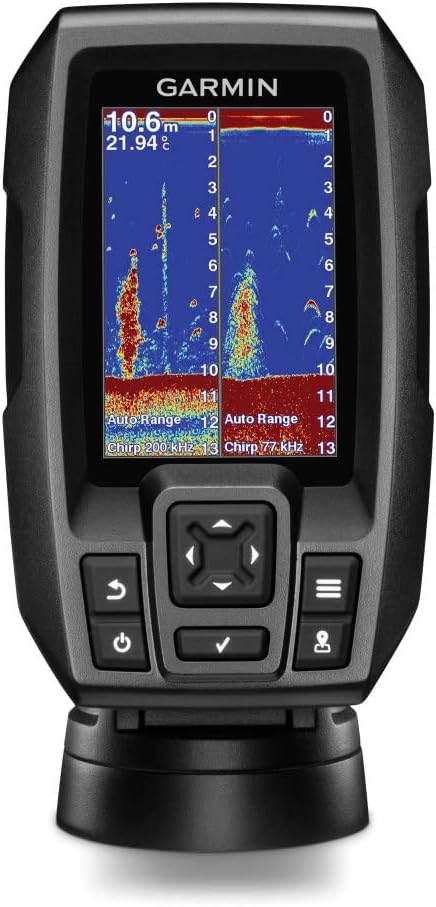
The Garmin Striker 4 stands out as a top choice for anglers seeking affordability without sacrificing core functionality. Its CHIRP Sonar technology delivers crisp, detailed images of underwater structure and fish arches, making it easier to identify targets. The included ClearVU scanning sonar adds another layer of detail, providing near-photographic images of what lies beneath the boat.
We may earn a commission when you buy through this link, at no additional cost to you.
Installation and operation are straightforward, with dedicated buttons for key functions. The 3.5-inch display is clear and visible in various lighting conditions. GPS waypoint mapping allows you to mark and return to productive fishing spots, which is a valuable feature for consistent success.
While the screen size is compact, it remains functional for most fishing scenarios. The device is water-resistant and built to withstand the rigors of the environment. Battery life is adequate for day trips, though users should monitor power levels during extended sessions.
This model is ideal for kayakers and small boat owners who need reliable sonar and basic navigation. It offers a balance of features and cost that is hard to match in its price range. For those new to electronics or looking for an upgrade from older models, the Striker 4 delivers solid value.
CHIRP Sonar sweeps frequencies continuously to create sharper images with better target separation than traditional sonar.
Mark favorite spots like docks or brush piles and navigate back to them with ease using the built-in GPS.
We may earn a commission when you buy through this link, at no additional cost to you.
This handheld fish finder offers an incredibly accessible entry point into sonar technology. Designed for portability, it is perfect for anglers who fish from kayaks, docks, or while ice fishing. The device provides basic depth and fish location data without the complexity or cost of larger units.
We may earn a commission when you buy through this link, at no additional cost to you.
Setup involves simply tossing the transducer into the water and turning on the display. It detects water depth, fish size, and bottom composition. The included neck strap keeps your hands free while managing lines or gear. It runs on standard AAA batteries, which are easy to replace on the go.
While the display is not as vibrant as high-end models, it provides sufficient information for finding fish. The sensitivity can be adjusted for different water conditions. This model is not intended for high-speed trolling but works well for stationary or slow-moving fishing.
Budget-conscious anglers will appreciate its low cost and ease of use. It is a great backup unit or first fish finder for beginners. For casual fishing where advanced mapping is not required, this portable unit delivers essential data reliably.
Weighing almost nothing, this unit fits easily in tackle boxes and comes with a neck strap for hands-free use.
Suitable for fresh and salt water, ice fishing, shore fishing, and kayak fishing scenarios.
We may earn a commission when you buy through this link, at no additional cost to you.
The Humminbird Helix 5 brings premium features to the affordable segment. Its Dual Spectrum CHIRP Sonar offers both wide coverage for searching and narrow modes for detailed scanning. The display is clear and responsive, allowing anglers to quickly interpret sonar returns even in bright sunlight.
We may earn a commission when you buy through this link, at no additional cost to you.
Integrated GPS navigation includes coverage for thousands of lakes and coastlines. You can create routes and view boat speed on the screen. AutoChart Live enables real-time mapping of depth contours and vegetation as you fish, which is a game-changer for exploring new waters.
Controls are intuitive, with a keypad designed for reliable operation in any weather. The unit supports premium chart options for even greater detail. While more expensive than basic models, it offers capabilities that rival much costlier systems.
This model is best for anglers who want advanced mapping and high-resolution sonar without a massive investment. It suits serious hobbyists or those upgrading from entry-level devices. The investment pays off in better navigation and fish-finding efficiency.
Switch between wide and narrow modes to balance coverage area with detailed target separation for fish and structure.
AutoChart Live allows you to map depths and bottom types as you move, creating custom maps of your favorite spots.
We may earn a commission when you buy through this link, at no additional cost to you.
Lowrance has designed the Eagle series for simplicity and reliability. The 4-inch IPS screen stays clear from wide viewing angles, making it easy to see data while in the boat. Auto-Tuning Sonar automatically optimizes settings so you can focus on fishing rather than adjusting menus.
We may earn a commission when you buy through this link, at no additional cost to you.
The included Bullet Skimmer transducer provides broad coverage suitable for kayaks and small boats. Installation is quick thanks to the twist-lock connector, which allows easy detachment for storage or transport. Fish icons are simple and clear, showing depth without needing complex interpretation.
While it lacks some advanced mapping features found in higher-end units, it performs well for finding fish and structure. The portrait design fits well in tight spaces on smaller vessels. Battery consumption is reasonable for day-use fishing trips.
This unit is ideal for anglers who want a straightforward, reliable fish finder without unnecessary complexity. It is particularly well-suited for recreational boaters and kayak users. The balance of performance and ease of use makes it a solid choice for the price.
The system automatically adjusts sonar settings to match water conditions, saving time and effort during your trip.
Connect and remove the display with a simple twist, making installation and storage faster and more convenient.
We may earn a commission when you buy through this link, at no additional cost to you.
The Vivid 4cv enhances the standard Striker with a brighter, more vivid display. Its color palettes make it easier to distinguish fish and structure on the screen. The CHIRP Sonar provides clear imaging, and the Vivid scanning sonar adds detailed views below the boat.
We may earn a commission when you buy through this link, at no additional cost to you.
GPS functionality allows waypoint marking and route creation. Quickdraw Contours mapping lets you see depth contours for the lakes you fish most. The included tilt/swivel bracket allows for easy positioning. The unit is straightforward to install and operate, even for first-time users.
The screen is smaller than larger models but remains readable in various conditions. Battery draw is low enough for extended use without external power. It is a well-rounded unit for those who want color imaging without a steep price increase.
For anglers who value visual clarity and simple navigation, this model is an excellent choice. It bridges the gap between basic sounders and advanced chartplotters. The color display significantly improves usability, especially in bright daylight.
Vivid color options highlight different returns on the screen, making fish and structure easier to identify quickly.
Create custom depth maps of local lakes to understand bottom contours and plan your fishing routes more effectively.
We may earn a commission when you buy through this link, at no additional cost to you.
The PiranhaMAX 4 offers flexible sonar options with its dual beam feature. You can switch between narrow and wide beams to get detail or coverage as needed. The display is clear and easy to read, with controls that are straightforward to navigate.
We may earn a commission when you buy through this link, at no additional cost to you.
Included is a tilt and swivel mount that allows quick adjustment of the viewing angle. The transducer is durable and designed for transom mounting. It provides reliable depth and fish readings across a variety of freshwater and saltwater environments.
While it lacks GPS and mapping, it focuses on delivering strong sonar performance. The unit is compact and fits well on smaller boats. Setup is quick, and it requires minimal maintenance once installed.
This model is perfect for anglers who prioritize sonar quality over navigation features. It is a trusted option for those seeking a durable, simple device. The dual beam capability adds versatility to finding fish in different water conditions.
Choose wide beams for broader coverage or narrow beams for more detail when targeting specific structure or fish.
Adjust the viewing angle quickly to suit your position on the boat without needing tools or complex setup.
We may earn a commission when you buy through this link, at no additional cost to you.
The LUCKY Kayak Portable Fish Finder is tailored for anglers who launch from shore or small vessels. It shows depth, fish location, and bottom details clearly. The transducer can be attached to the kayak hull or castable, offering flexibility in placement.
We may earn a commission when you buy through this link, at no additional cost to you.
Sensitivity can be adjusted across five levels to suit clear or turbid water. A fish alarm sounds when targets are detected, allowing you to focus on your line. The backlight ensures visibility in darkness, making it useful for night fishing sessions.
Battery life is solid, lasting several hours on a single set of batteries. The unit includes a neck strap for convenience. It is not designed for high-speed use but works well for drift or stationary fishing.
Kayak anglers will appreciate its compact size and targeted features. It is an affordable way to add sonar capability to a small boat. The fish alarm and backlight are practical additions for serious recreational fishing.
Receive audible alerts when fish or schools pass by the transducer so you can react immediately.
Adjust sensitivity to filter out noise in rough water or fine-tune for clear water conditions.
We may earn a commission when you buy through this link, at no additional cost to you.
This wireless fish finder eliminates the need for permanent installation. The sensor casts out to a distance of 262 feet and transmits data back to the handheld unit. This makes it ideal for shore fishing or when you do not want to drill holes in your boat.
We may earn a commission when you buy through this link, at no additional cost to you.
It displays depth, temperature, fish size, and bottom contour. The color LCD screen has selectable backgrounds for better visibility in different lighting. The sensor is rechargeable and floats on water, activating automatically when submerged.
Battery life depends on usage, but charging is straightforward. It works well for a variety of environments including lakes, rivers, and ice fishing. The setup is quick, making it a versatile option for anglers on the move.
Those who want flexibility without wiring will find this unit appealing. It is a good solution for those who fish in multiple locations. The wireless feature adds convenience while delivering essential sonar information.
Cast the sensor as far as you like and receive sonar data without needing a permanent boat mount.
Choose black or white backgrounds to improve readability in bright sunlight or dark conditions.
We may earn a commission when you buy through this link, at no additional cost to you.
This portable fish finder features a larger 2.4-inch colorful LCD screen for clear data viewing. It detects depth, temperature, fish size, and bottom contours. The wireless sensor covers up to 147 feet and includes an attractive lamp to draw fish to the area.
We may earn a commission when you buy through this link, at no additional cost to you.
It supports 21 languages and offers various operating modes. The fish alarm alerts you when fish pass by, displaying size and depth. It is rechargeable and designed for easy use across different fishing environments.
Setup involves turning on the unit and ensuring the sensor is in the water. The lamp feature can improve catch rates in certain conditions. It is suitable for kayak, shore, or ice fishing.
Anglers who value visual clarity and simple operation will find this unit useful. It is a convenient option for those who do not want complex electronics. The combination of display quality and wireless sensor makes it versatile for many scenarios.
The larger colorful screen makes it easier to read data even in bright conditions without straining your eyes.
The sensor's lamp can attract fish to the area, potentially improving your chances of catching more.
We may earn a commission when you buy through this link, at no additional cost to you.
This fish finder uses both sonar and radio frequencies to transmit data. The dual frequency system allows fine-tuning of sonar readings for clearer results. It displays depth, temperature, fish size, and bottom contour on a clear LED display with selectable backgrounds.
We may earn a commission when you buy through this link, at no additional cost to you.
Both the receiver and sensor are rechargeable and provide about six hours of runtime. You can mount the sensor on a boat, fishing rod, or float it to specific areas. It is designed for versatile use across different water environments.
Note that the sensor should be in water to turn on and display battery status correctly. The unit works well for ice fishing, lake fishing, and kayak use. It requires minimal setup and can be adapted to various fishing styles.
Anglers who want dual-frequency flexibility at an affordable price will appreciate this unit. It is a good choice for those who fish in varied conditions. The rechargeable batteries add convenience by reducing the need for disposable battery replacements.
Use 125 kHz Sonar and 433 kHz Radio frequencies to adjust sonar clarity for different water environments.
Attach the sensor to a boat, rod, or float it to reach specific areas with your fishing setup.
We may earn a commission when you buy through this link, at no additional cost to you.
Selecting the right fish finder involves considering several technical and practical factors. This guide outlines key aspects to help you evaluate options and choose a device that meets your fishing requirements and budget.
Sonar technology varies by model. Basic sounders provide single-frequency imaging, while CHIRP or DualBeam options offer better clarity and target separation. If you often fish in complex structure, look for models with CHIRP or dual beam capabilities to distinguish fish from debris.
Choose sonar technology based on your typical water conditions. For open water, standard sonar may suffice, but for rocky or weed-filled areas, advanced sonar improves accuracy.
Display resolution and size affect how easily you can read data. Color displays help differentiate fish arches and structure, especially in bright sunlight. Larger screens offer better detail but may require more space.
Prioritize a display with high visibility in your usual lighting. For kayak or small boat use, a compact but clear screen is often the best balance.
Portability matters if you fish from kayaks, shore, or multiple boats. Handheld or wireless models offer flexibility and do not require permanent mounting. Consider weight and battery requirements when evaluating portability.
If you move between fishing spots frequently, a portable unit with a neck strap or castable sensor is ideal for convenience.
Battery life determines how long you can fish without recharging or replacing power. Some units use AAA batteries while others are rechargeable. Long trips may require a device with extended battery life or external power options.
Check battery specifications before buying. Rechargeable units save money over time but require access to charging sources between trips.
Ease of installation is important for users without technical experience. Units with twist-lock connectors or wireless sensors reduce installation time and effort. Permanent mounts may require drilling and wiring.
Select a model with simple connections if you plan to remove or store the device regularly. Wireless options offer the easiest setup for temporary use.
GPS features allow waypoint marking and route creation. Some devices include basic lake maps, while others support premium chart options. Mapping helps you return to productive spots and understand water contours.
If navigation is important to you, choose a model with built-in GPS. Basic units may suffice for local waters where you already know the layout.
Water resistance ratings protect the device from splashes or temporary immersion. Look for IPX7 or higher ratings for reliable protection. This ensures longevity even if exposed to rain or spray.
Always check water resistance ratings to avoid damage. Proper care further extends device life in wet conditions.
Balance cost with essential features. The cheapest models may lack clarity or durability. Mid-range options often offer the best value with enough features for most recreational anglers.
Set a budget and prioritize must-have functions. Investing slightly more in sonar quality or display clarity can significantly improve performance.
To use a fish finder effectively, install the transducer securely so it remains flat and unobstructed. Ensure it is placed away from propellers to avoid interference. Connect power securely and turn on the unit before casting or deploying.
Calibrate the sensitivity to match water conditions. High sensitivity shows more detail but may include noise in turbid water. Adjust gain settings as needed for clear imaging. Review the manual for model-specific tuning steps.
Clean the display and transducer after each use with fresh water. Store the unit in a dry place to prevent moisture damage. Check battery levels regularly and charge or replace batteries before long trips to ensure reliable operation.
Traditional sonar uses a single frequency, which can result in less detailed images. CHIRP sonar sends a continuous sweep of frequencies, creating clearer images with better target separation. This allows anglers to distinguish fish from structure more easily, especially in complex environments.
Portable fish finders provide reliable depth and fish data when used correctly. Accuracy depends on sensor placement and water conditions. Handheld models are suitable for kayaks and shore fishing. Ensure the transducer is horizontal for optimal performance.
Yes, most modern fish finders work in both fresh and saltwater. Check the manufacturer's specifications for water type compatibility. Saltwater models may have corrosion-resistant components. Rinse the device with fresh water after saltwater use to maintain it.
Look for lightweight, portable units with easy installation. Wireless or castable sensors are ideal for kayaks. Ensure the display is visible from a sitting position. Check battery life to match your typical fishing duration.
Fish finders provide data on depth and structure, helping you locate fish more efficiently. They do not guarantee catches but improve chances by guiding you to productive spots. Combined with proper technique, they are valuable tools for anglers.
Most affordable fish finders offer depth ranges from 300 to 500 feet, suitable for freshwater and coastal use. For deeper offshore fishing, consider models with higher depth ratings. Match the range to the typical depth where you fish.
Battery life varies by model and usage. Units using AAA batteries last 4 to 6 hours. Rechargeable models offer similar runtime but require charging. Carry spare batteries for extended trips to avoid interruptions.
GPS is helpful for marking waypoints and navigating but not essential for finding fish. If you fish familiar waters, a basic sonar may suffice. GPS adds convenience for exploring new areas and returning to productive spots.
The ten fish finders reviewed in this guide represent a range of options for anglers seeking affordable technology. The Garmin Striker 4, LUCKY Portable Finder, and Humminbird Helix 5 offer standout performance across budget categories.
Prioritize features that match your fishing style. If portability is key, handheld units are ideal. For better imaging, consider CHIRP-enabled models. Matching needs to capabilities ensures satisfaction with your purchase.
Always check current availability and pricing before buying. Technology advances quickly, so review the latest models. Use this guide as a starting point for selecting a reliable, value-rich fish finder.