
Sirio SY 27-3
4.1Editor score
3 Element Yagi
Includes Coax Cable
26.5 to 30 MHz
Selecting the right CB Beam Antenna is crucial for enthusiasts who demand maximum range and signal clarity. Whether you operate from a fixed base station or need directional gain on the move, a quality beam antenna significantly outperforms standard omnidirectional options by focusing energy where it matters most.
To compile this list, we analyzed technical specifications, user feedback, and manufacturer data across leading brands like Sirio, Wilson, and Stryker. We prioritized models with proven high-gain performance, robust power handling, and durable construction suitable for year-round outdoor exposure in various environments.
Each pick below highlights specific strengths such as directional focus, tuning flexibility, or ease of installation. Please note that product availability and pricing can fluctuate rapidly, so always verify current stock and deals directly with the retailer before making your final purchasing decision for your setup.
4.1Editor score

4.6Editor score

4.7Editor score
As an Amazon Associate we earn from qualifying purchases.
The following table provides a side-by-side comparison of all ten selected CB Beam Antenna models. Review the key specifications for each unit to identify the best fit for your specific power, space, and performance requirements.





The Sirio SY 27-4 stands out as the premier choice for serious CB operators seeking maximum range. With an impressive 11 dBd gain, this four-element Yagi beam directs your signal precisely toward your intended recipients rather than wasting power omnidirectionally. Its high rating reflects consistent performance in both transmit and receive modes across the standard CB band.
We may earn a commission when you buy through this link, at no additional cost to you.
Constructed from 6063 T-832 aluminum alloy, this antenna offers robust durability against harsh weather conditions. The elements feature waterproof jointing sleeves that protect critical connection points from moisture intrusion, ensuring long-term reliability. It handles up to 1000 watts continuous power with a peak capacity of 3000 watts, making it compatible with high-power transmitters.
While the physical dimensions are substantial, requiring a turning radius of approximately 3200 mm, this size is necessary to achieve the high gain performance users expect. The gain is factory tuned at the mid-band frequency, which simplifies installation but may require minor adjustments if you operate heavily on channel edges.
This model is ideal for fixed base stations where directional communication is prioritized over mobility. If you need to reach distant contacts with clarity and want an antenna built to withstand years of outdoor exposure, the Sirio SY 27-4 delivers exceptional value and performance for your CB radio setup.
The 11 dBd gain significantly extends your effective communication range compared to standard vertical antennas.
Waterproof jointing sleeves and high-quality materials ensure the antenna performs reliably in rain and wind.
We may earn a commission when you buy through this link, at no additional cost to you.
For budget-conscious operators who still demand directional performance, the Sirio SY 27-3 offers a compelling balance of cost and capability. This three-element Yagi antenna provides 8.5 dBd of gain, which is a significant upgrade over standard verticals without the high price tag of larger arrays. It is highly rated for its reliability in standard base station applications.
We may earn a commission when you buy through this link, at no additional cost to you.
The antenna features a frequency range covering 26.5 to 30 MHz, fully compatible with standard CB and 10-meter HAM bands. It boasts a maximum power handling of 1000 watts continuous and 3000 watts peak, ensuring it can handle high-power transmissions without damage. The horizontal polarization aids in reducing noise from local interference.
While it lacks the extra element found in the 27-4 model, the compact design reduces wind load and makes mounting easier on smaller towers or poles. Being factory tuned at mid-band ensures it is ready to use out of the box for most users, though tuning might be needed for specific channel optimization.
This model is an excellent entry point for anyone new to directional CB communication. It provides the essential benefits of a beam antenna at a very accessible price point, making it easy to upgrade your station without breaking the bank or requiring complex engineering skills for installation.
Achieve substantial range improvements with a significantly lower investment than four or five element antennas.
Handle standard CB power levels and occasional high-power bursts without overheating or signal degradation.
We may earn a commission when you buy through this link, at no additional cost to you.
The Sirio SY 27-3 kit distinguishes itself by including a 100-foot coax cable, solving a common headache for base station installers. This complete package offers the same directional benefits as the standalone unit but ensures you have the necessary feed line to reach your indoor radio from a roof or mast. It simplifies the setup process significantly.
We may earn a commission when you buy through this link, at no additional cost to you.
Technical specifications include an 8.5 dBd gain with a bandwidth of at least 1800 KHz at SWR less than 2. The antenna is designed to withstand wind loads up to 150 Km/h, making it suitable for exposed locations. It uses a standard UHF-female connector for universal compatibility with most CB transceivers.
The inclusion of high-quality RG8X coax means you do not have to source a separate cable, reducing overall cost and ensuring impedance matching. However, if your radio is in a location requiring more than 100 feet of cable, you may still need to extend the line, which could introduce some signal loss if not done properly.
This kit is perfect for users who want a turnkey solution for a fixed location. It removes the guesswork from cable selection and ensures a consistent impedance match from the antenna to the radio. For anyone setting up a new station, this bundle provides convenience and performance in one purchase.
Save time sourcing separate cables with a included high-quality feed line ready for immediate installation.
Engineered to resist wind loads up to 150 Km/h without deformation or signal instability.
We may earn a commission when you buy through this link, at no additional cost to you.
The Wilson 305-492 represents the gold standard for mobile CB antenna performance, especially for truckers and frequent travelers. With a robust 3500-watt power rating, this antenna is built to handle high-power transmissions without failure. Its 4.7 rating underscores its reputation for durability and consistent signal clarity on the road.
We may earn a commission when you buy through this link, at no additional cost to you.
Constructed with a 49-inch stainless steel whip and a larger coil housing, this unit offers increased power handling capabilities compared to standard mobile antennas. The standard 3/8 x 24 ferrule ensures compatibility with a wide range of mounting brackets. It is also AM/FM ready, allowing for versatile radio usage.
While it is a mobile unit rather than a directional beam, its efficiency is often preferred by users who prioritize mobility over fixed directionality. The design allows for optimal performance across the 26 to 30 MHz frequency range. It is an investment in reliability that pays off in longevity and signal quality.
If you value premium materials and need an antenna that can withstand the rigors of daily highway use, this Wilson model is the top choice. It combines high power capacity with a proven track record of reliability, making it worth the higher price for serious operators who demand the best mobile performance available.
Rated for 3500 watts, this antenna handles heavy-duty transmissions without overheating or signal distortion.
Stainless steel construction ensures resistance to corrosion and physical stress during mobile operations.
We may earn a commission when you buy through this link, at no additional cost to you.
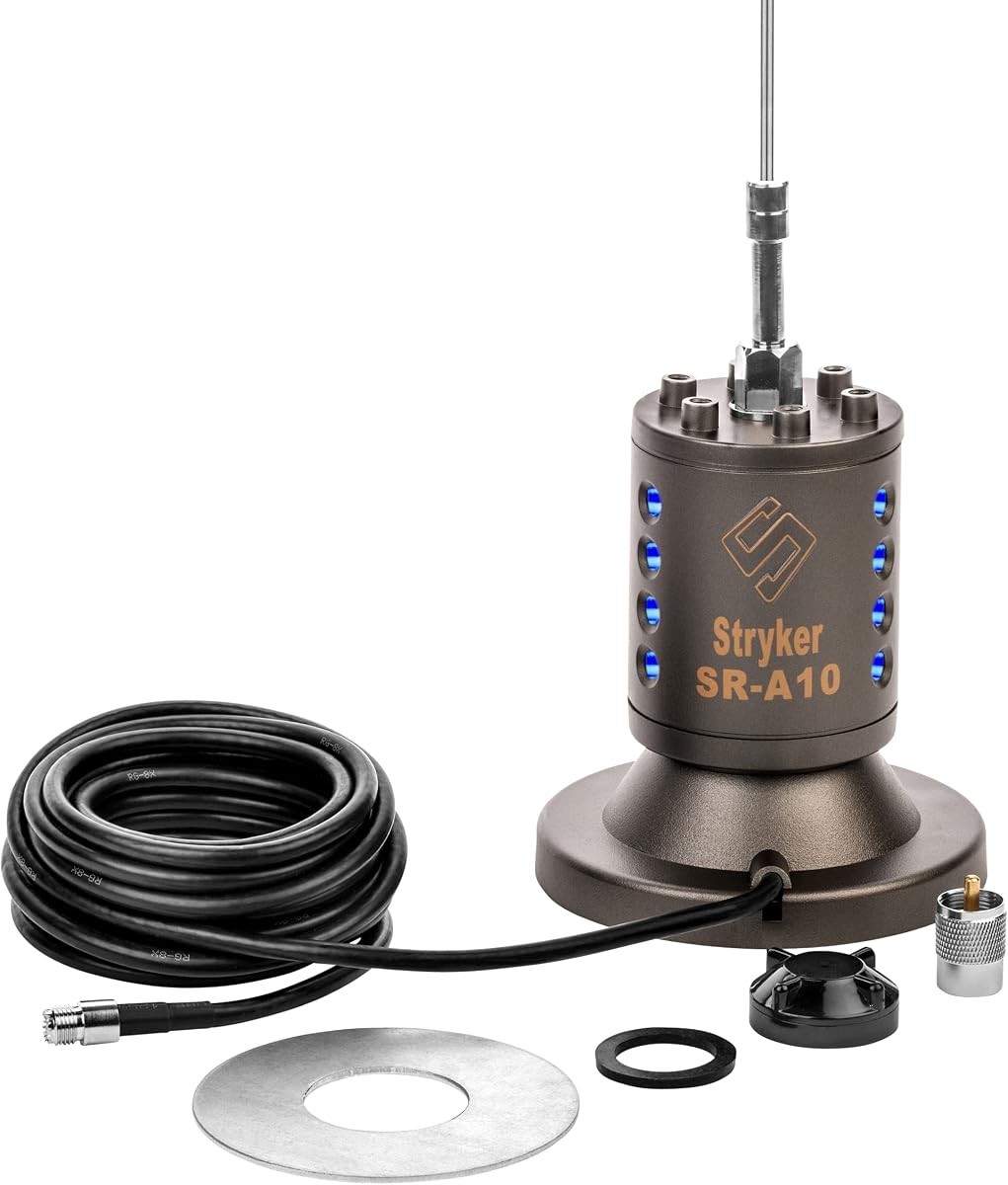
The Stryker SR-A10MM is designed for users who need a portable yet high-performance mobile solution. Its standout feature is a powerful 5-inch diameter magnetic base, which allows for quick installation on any metal surface. This flexibility is perfect for temporary setups or vehicles where permanent mounting is not desirable.
We may earn a commission when you buy through this link, at no additional cost to you.
Despite its mobile nature, the antenna boasts an exceptional power handling capability of 10,000 watts. This high rating ensures safety even with high-power transmitters. The use of 6-gauge solid copper with 100% silver plate wire enhances efficiency and reduces signal loss. It comes with a 2-year warranty for added peace of mind.
The 62-inch stainless steel whip provides a full resonance that optimizes performance across the CB band. While the magnetic mount is convenient, users should ensure it is placed on a flat metal surface to maintain security during travel. The design offers a good balance between portability and technical specifications.
This antenna is an excellent choice for operators who need a reliable, temporary, or backup antenna. It delivers the performance of a larger mobile unit without the need for complex mounting hardware. If you value versatility and high power handling in a magnetic mount, this model is a strong contender.
Install and remove the antenna in seconds on any vehicle roof or metal surface without tools.
Silver-plated copper wire ensures minimal signal loss and maximum transmission efficiency.
We may earn a commission when you buy through this link, at no additional cost to you.
The Stryker SRA10 offers a unique mounting solution for trucks and cars that lack roof space. Designed to attach directly to the vehicle's side mirror, it keeps the antenna low-profile while maintaining effective height. Its floating base helps protect the vehicle's paint and the antenna itself from wind stress during high-speed driving.
We may earn a commission when you buy through this link, at no additional cost to you.
Rated for 10,000 watts, this antenna handles high power without issue. The IPX8 waterproof rating ensures it can withstand heavy rain and harsh weather conditions. It includes a paper white backlight for visibility at night, adding a practical touch to its design. This model is highly rated for its durability and installation ease.
While it requires a suitable side mirror for mounting, the design allows for a secure fit that does not obscure the driver's view. The compact weight of roughly one pound makes it easy to handle. It provides high gain in a package that does not add significant wind drag to the vehicle.
This antenna is ideal for drivers who prefer mirror mounts over roof mounts for convenience and aesthetics. It balances high power handling with a compact form factor suitable for everyday driving. If you want a secure, high-performance mobile solution, the Stryker SRA10 is a reliable choice.
Attaches to your vehicle's mirror for easy setup without drilling or permanent modifications.
IPX8 rating ensures reliable performance even in heavy rain and extreme weather conditions.
We may earn a commission when you buy through this link, at no additional cost to you.
The Sirio GPE 27 stands out with a rare 5-star rating from users who value simplicity and performance. This base antenna features a tunable whip that allows you to adjust the resonance for optimal performance across your favorite channels. It offers a low radiation angle, which is key for long-distance DX communication.
We may earn a commission when you buy through this link, at no additional cost to you.
Designed with a 5/8 wavelength ground plane, it provides excellent gain in the vertical orientation. The coil is protected by a transparent cover that shields it from the elements while allowing for tuning access. The antenna includes protection from static discharges through a DC-ground feature, enhancing safety.
While the power rating of 250 watts is lower than beam antennas, it is sufficient for standard CB operations. The construction uses aluminum alloy and nylon to keep weight low while maintaining strength against wind loads of up to 130 Km/h. It uses a standard UHF-female connector for easy installation.
This antenna is perfect for users who want a reliable vertical option that can be tuned for specific channels. Its perfect rating suggests high satisfaction with its build and performance. If you prioritize omnidirectional coverage with easy tuning, the GPE 27 is an exceptional value for a base station.
Adjust the whip length to fine-tune the antenna for specific channels and better signal quality.
DC-ground feature protects your radio and antenna from harmful static discharges during storms.
We may earn a commission when you buy through this link, at no additional cost to you.
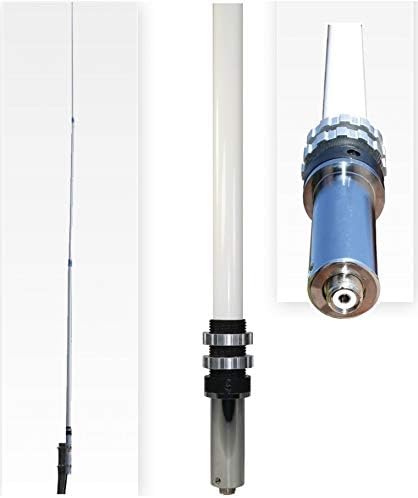
The Taurus CB-18 is a tall base antenna designed to maximize gain through height. Standing 18 feet tall, this unit offers a 5.75 dBd gain, which helps extend your range significantly. Its fiberglass body is flexible and strong, capable of bending in the wind without breaking. It is a robust choice for fixed outdoor stations.
We may earn a commission when you buy through this link, at no additional cost to you.
Rated for 2000 watts, this antenna can handle higher power outputs than many competitors. It consists of three sections, which makes shipping and installation easier compared to a single pole. The package includes stainless steel hardware for a secure and durable connection to your mast or pole.
The omnidirectional nature of this antenna ensures you can communicate in all directions. While it requires a tall pole for full effect, the height allows it to clear most local obstacles. This is a great option for rural operators who have the space for a dedicated tower setup.
If you need a reliable base antenna that balances height with practicality, the Taurus CB-18 delivers. Its fiberglass construction ensures long life even in harsh weather. For users prioritizing gain and durability in a vertical format, this model is a top contender in the base station category.
At 18 feet tall, it provides excellent elevation to overcome local obstructions and improve range.
Fiberglass construction resists corrosion and bending damage during high winds and storms.
We may earn a commission when you buy through this link, at no additional cost to you.
The CB100 Base Antenna is a cost-effective solution for those needing a tall outdoor base unit. It stands 18 feet tall to provide a 4.3 dB gain, helping to extend your transmission range. Its design focuses on durability and weather resistance, ensuring reliable performance even in rain or shine conditions.
We may earn a commission when you buy through this link, at no additional cost to you.
Users appreciate the low VSWR rating, which minimizes signal reflections and protects your radio equipment from damage. It is compatible with a wide range of CB radios, making it versatile for different setups. The weatherproof design is specifically engineered to withstand various outdoor environmental challenges.
While its gain is moderate compared to directional beams, its height provides significant benefits for clear communication. The antenna offers an excellent balance of affordability and performance for base stations. It is designed to enhance the lifespan of your radio system by optimizing power transfer.
This model is ideal for users seeking a tall, weather-resistant antenna without a premium price tag. It offers solid performance for both transmission and reception in challenging environments. If you need a straightforward base solution with proven durability, the CB100 is a practical and effective choice.
Low VSWR reduces strain on your radio by minimizing signal reflections during transmission.
Weatherproof design ensures continuous operation without interruption during adverse outdoor conditions.
We may earn a commission when you buy through this link, at no additional cost to you.
The Sirio Starduster M400 is a versatile base antenna that combines tunability with a compact design. It stands at 16.54 feet, which is slightly shorter than some competitors but still offers excellent height. It is highly rated for its robust construction and ability to handle significant power levels during operation.
We may earn a commission when you buy through this link, at no additional cost to you.
This antenna features a tunable frequency range of 26.5 to 30 MHz, ensuring optimal resonance. It handles up to 3000 watts PEP, making it suitable for high-power setups. The design uses a standard UHF-female connector and focuses on reliable omnidirectional coverage for general communication needs.
Its compact size makes it easier to mount on shorter masts or towers compared to taller units. Despite its size, it maintains a high power handling capacity and durability. Users report high satisfaction with its performance and stability in various weather conditions over time.
This is an excellent choice for users who need a reliable, tunable base station antenna without the bulk of extreme height. It balances performance with physical constraints. If you want a trusted brand with a solid balance of features and reliability, the Starduster M400 is a top recommendation.
Adjustable frequency range allows for fine-tuning across the entire CB and 10-meter band.
Handles up to 3000 watts PEP, ensuring safety and performance with powerful transmitters.
We may earn a commission when you buy through this link, at no additional cost to you.
Selecting the right CB Beam Antenna requires understanding several technical factors that impact performance and durability. This guide breaks down the key elements to consider before you make your purchase.
Gain measures how much an antenna concentrates radio energy in a specific direction. Beam antennas typically offer higher gain than omnidirectional options, allowing you to reach further in one direction. Look for gain ratings like 8.5 dBd or 11 dBd for significant range improvements.
Prioritize high gain if your goal is to contact distant stations. However, remember that higher gain often means a wider physical footprint and more precise mounting requirements.
Power handling indicates the maximum wattage the antenna can safely manage without damage. Standard CB radios output 4 watts, but some operators use amplifiers that push hundreds of watts. Ensure your antenna can handle the peak envelope power (PEP) and continuous power (CW) of your system.
Always choose an antenna with a power rating higher than your radio's output. This margin ensures longevity and prevents overheating during long transmissions or high-power bursts.
Most CB Beam Antennas cover the standard 26.5 to 30 MHz range, but some are tunable across wider bands like 10-meter HAM. Verify that the antenna's specified range matches your intended use. Some models allow you to adjust the whip for better performance on specific channels.
Look for tunable models if you operate on multiple bands. Tunable antennas provide flexibility and ensure you stay within the optimal SWR range regardless of the frequency you select.
Durability is key for outdoor antennas. High-quality models use aluminum alloys like 6063 T-832, which resist corrosion and are lightweight. Stainless steel whips and waterproof jointing sleeves also extend the life of the antenna in harsh weather.
Check for UV-resistant coatings and sealed connectors. These features protect the internal components from moisture and sunlight, ensuring consistent performance year-round without degradation.
Beam antennas often require robust mounting hardware due to their size and wind load. Consider the wind area and turning radius of the antenna. Ensure your mast or pole is strong enough to support it safely without wobbling or bending in strong winds.
Evaluate whether you need a fixed or mobile solution. Base stations require sturdy towers, while mobile options might need magnetic or mirror mounts. Proper mounting is critical for both performance and safety.
Most CB antennas use a standard UHF-female (SO-239) connector, but it is always wise to check compatibility. This ensures you can connect the antenna directly to your radio without needing complex adapters. Mismatched connectors can introduce signal loss and potential damage.
Standardize on common connector types if possible. This simplifies your setup and allows you to swap components easily in the future without purchasing proprietary adapters.
Wind load specifications indicate how much wind force the antenna can withstand. Look for ratings that match your local climate conditions. A wind load rating of 150 Km/h is a good benchmark for general durability in most regions.
Ensure your installation setup accounts for wind resistance. Secure mounting helps prevent the antenna from swaying excessively, which can lead to signal instability or physical failure over time.
Consider how easy the antenna is to assemble and tune. Some kits include coax cables and mounting hardware, reducing the time and cost of setup. Others may require professional installation due to complex tuning or heavy weight.
Opt for a kit with all necessary parts if you are installing it yourself. This reduces the risk of mismatched components and ensures a smoother, more reliable installation process.
Proper installation is the first step to success. Mount the antenna at a height that clears nearby obstacles like trees or buildings. Secure it to a sturdy mast using the provided hardware and ensure all connections are tight to prevent vibration damage.
Regularly inspect the coax cable and connectors for signs of wear or corrosion. Replace any damaged cables immediately to maintain signal integrity and protect your radio from excessive reflections. Clean the antenna with mild soap and water to remove debris without harsh chemicals.
A beam antenna is directional and focuses your signal in one direction for greater range. A vertical antenna is omnidirectional and radiates signal in all directions. Beams are better for long-distance contacts, while verticals are better for local coverage in all directions.
Most CB beam antennas work with standard RG58 or RG8 coax cables. The important factor is impedance, which should be 50 Ohms. Ensure your cable length is appropriate to avoid signal loss over distance.
Beam antennas are generally designed for fixed base stations due to their size and mounting needs. Mobile antennas are typically vertical or compact designs. Using a large beam on a vehicle is impractical due to wind load and safety concerns.
Ideally, tune your antenna once after installation. Regular checks during maintenance can ensure it stays in the optimal SWR range. If you notice performance issues, retune it to compensate for any environmental changes.
dBd stands for decibels over a half-wave dipole. It measures how much your antenna amplifies the signal compared to a standard reference. Higher dBd numbers indicate better range in the specific direction the antenna is pointing.
Yes, waterproof antennas are worth the investment for outdoor use. They prevent moisture from damaging internal components and connectors. This protection extends the lifespan of your equipment and ensures consistent performance in rain.
Grounding protects your equipment from static discharge and lightning. It helps maintain a stable electrical reference for your radio system. Proper grounding reduces noise and prevents potential damage to sensitive electronics.
Use an SWR meter connected between your radio and antenna. This device measures reflected power to help you tune your antenna. Aim for an SWR of 2.0 or lower for optimal performance and safety.
We highlighted top performers like the Sirio SY 27-4 for base stations and the Wilson 305-492 for mobile use. Each option offers unique advantages depending on your specific needs and budget. Whether you choose a high-gain beam or a versatile mobile option, quality matters.
Prioritize gain and power handling when making your final decision. If you want to reach distant stations, look for higher dBd ratings. Ensure your mounting setup can support the antenna's wind load and size requirements safely.
Always check current availability and compatibility before buying. Prices and stock levels change often. Selecting the right antenna will improve your communication range and clarity significantly.