
Upgraded Version Bed Sensor Alarm
4.5Editor score
Motion sensor placement options
Dual power supply modes
Long range transmission
Finding the right bed alarm for elderly and dementia patients is crucial for maintaining safety and peace of mind. These devices detect movement or weight changes to alert caregivers immediately when a loved one attempts to leave the bed.
We evaluated ten top-rated systems focusing on response time, alert customization, and ease of use. Our comparison includes wireless pagers, sensor pads, and motion detectors designed for various home care environments.
Each pick highlights unique strengths like long-range coverage or silent vibration modes. Note that prices fluctuate frequently on Amazon, so check current listings before purchasing to ensure you get the best deal available.
4.5Editor score
4.8Editor score

4.4Editor score
As an Amazon Associate we earn from qualifying purchases.
The following table provides a side-by-side comparison of all ten products reviewed in this guide. We highlight key specifications and core features to help you quickly identify the system that best fits your caregiving needs and home environment.



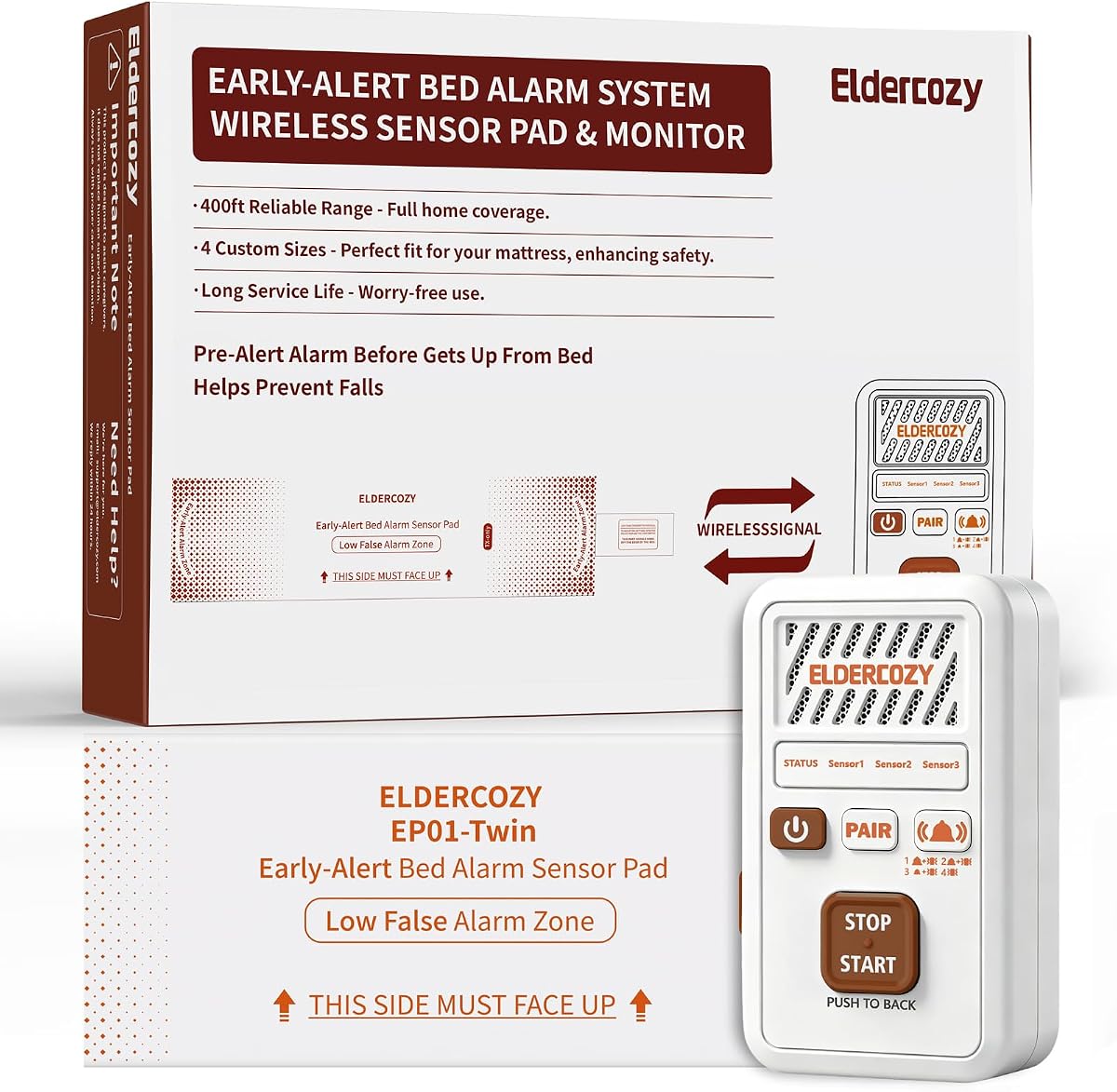
This system ranks highest for its early alert technology that detects movement before the patient stands up. With a 4.8 rating it offers comfort and reliability for sensitive sleepers.
We may earn a commission when you buy through this link, at no additional cost to you.
The TPU material ensures quiet operation without the crinkly noise of PVC pads. Hip-level placement triggers alerts immediately when the user sits on the edge of the bed.
Caregivers appreciate the long-range pager and the ability to temporarily pause alerts during assistance. The replaceable batteries extend the lifespan significantly compared to disposable models.
Best suited for families needing precise fall prevention without disturbing sleep. Its balance of comfort and advanced detection makes it a top choice for dementia care.
The hip-level sensor detects sitting motion before standing, giving caregivers crucial seconds to assist and prevent falls effectively.
Soft TPU material avoids noisy crinkles, ensuring the alarm does not disturb the patient's rest or cause sleep disruption.
We may earn a commission when you buy through this link, at no additional cost to you.
This motion sensor system provides reliable monitoring at a budget-friendly price. It detects foot contact with the floor to trigger alerts without a bed pad.
We may earn a commission when you buy through this link, at no additional cost to you.
The sensor can be placed under the bed or at the door, offering versatility for different room layouts. The long-range receiver works well in larger homes.
While effective, the sensor requires testing to avoid false alarms from pets or vibrations. It is a practical choice for those needing basic protection.
Ideal for caregivers on a tight budget who still want wireless reliability. The dual power options add convenience for continuous use without constant battery changes.
The sensor can be placed on the floor under the bed or at a door, offering adaptability for various home layouts.
Powered by batteries or Micro USB, this unit ensures continuous operation without needing frequent battery replacements or outlets.
We may earn a commission when you buy through this link, at no additional cost to you.
This premium system offers expandable monitoring and reliable pressure detection for comprehensive safety. It connects up to six sensors for whole-home coverage.
We may earn a commission when you buy through this link, at no additional cost to you.
The extra-large contact sensor reduces false alarms by ensuring accurate detection of weight shifts. Caregivers appreciate the reliable alerts and responsive customer service.
While the price is higher, the durability and network capabilities justify the investment for multiple rooms. The vibrate option ensures quiet notifications during the night.
Best for facilities or homes needing comprehensive fall prevention across multiple areas. Its robust design and support make it a dependable premium choice.
The pager supports up to six sensors allowing you to monitor beds chairs and doorways for complete home coverage.
An extra-large contact sensor is engineered to minimize false alarms ensuring caregivers trust the alert system consistently.
We may earn a commission when you buy through this link, at no additional cost to you.
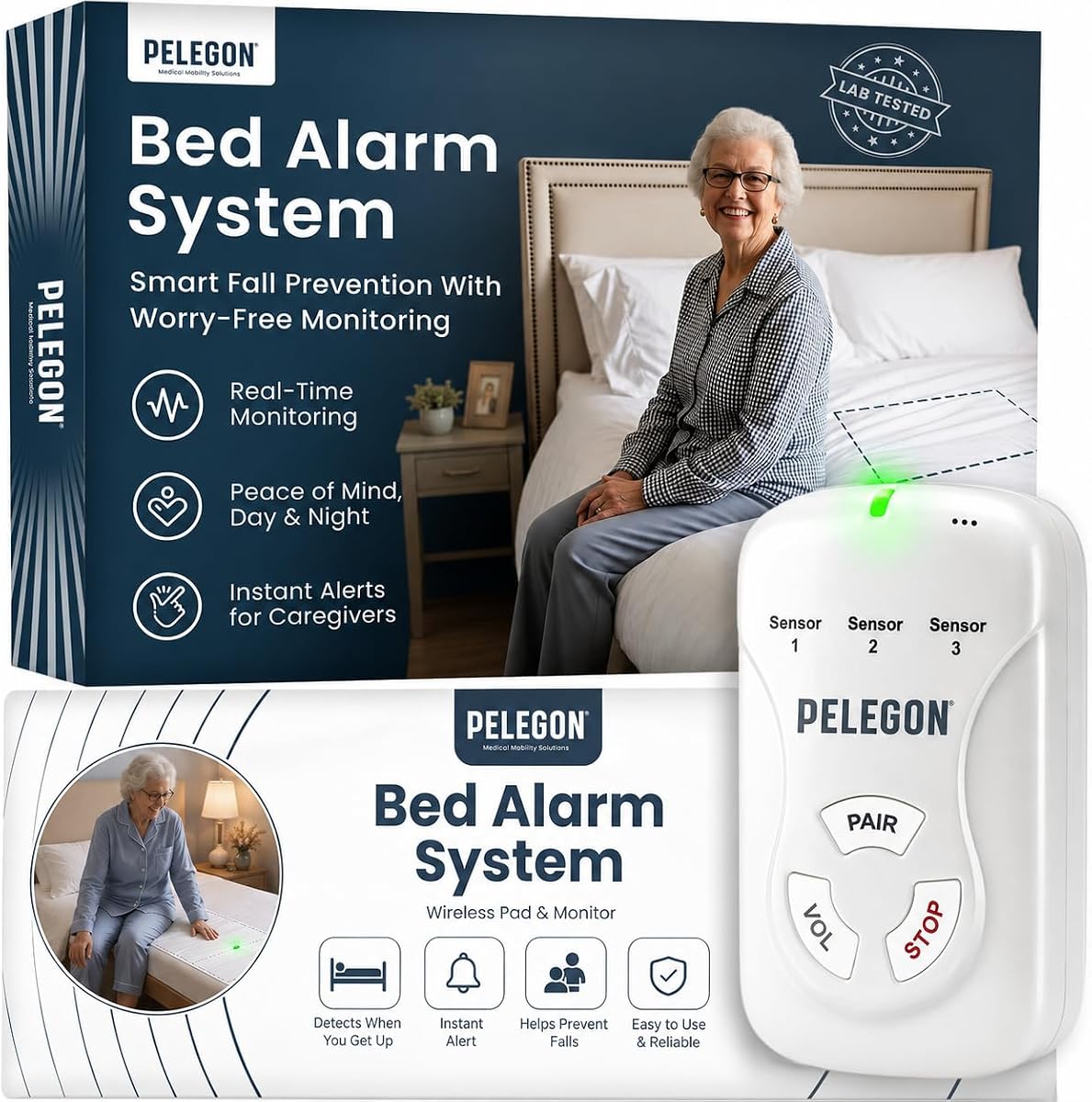
This system is designed specifically for dementia care with a fast response alert to reduce fall risks. The pager covers a wide range across the home.
We may earn a commission when you buy through this link, at no additional cost to you.
Users appreciate the customizable alert modes which allow for quiet vibration monitoring in shared rooms. Setup requires no tools making installation quick and easy.
The wire connection to the sensor pad can be a minor drawback compared to fully wireless systems. However, its reliability in high-risk wandering scenarios is strong.
Recommended for caregivers needing a quick setup for dementia patients. The vibration mode and long range make it practical for night-time monitoring.
Designed specifically for wandering risk this alert helps caregivers respond sooner to reduce unsafe movements and accidents.
Place the pad under the sheet and connect the system to start monitoring quickly without complicated installation steps.
We may earn a commission when you buy through this link, at no additional cost to you.
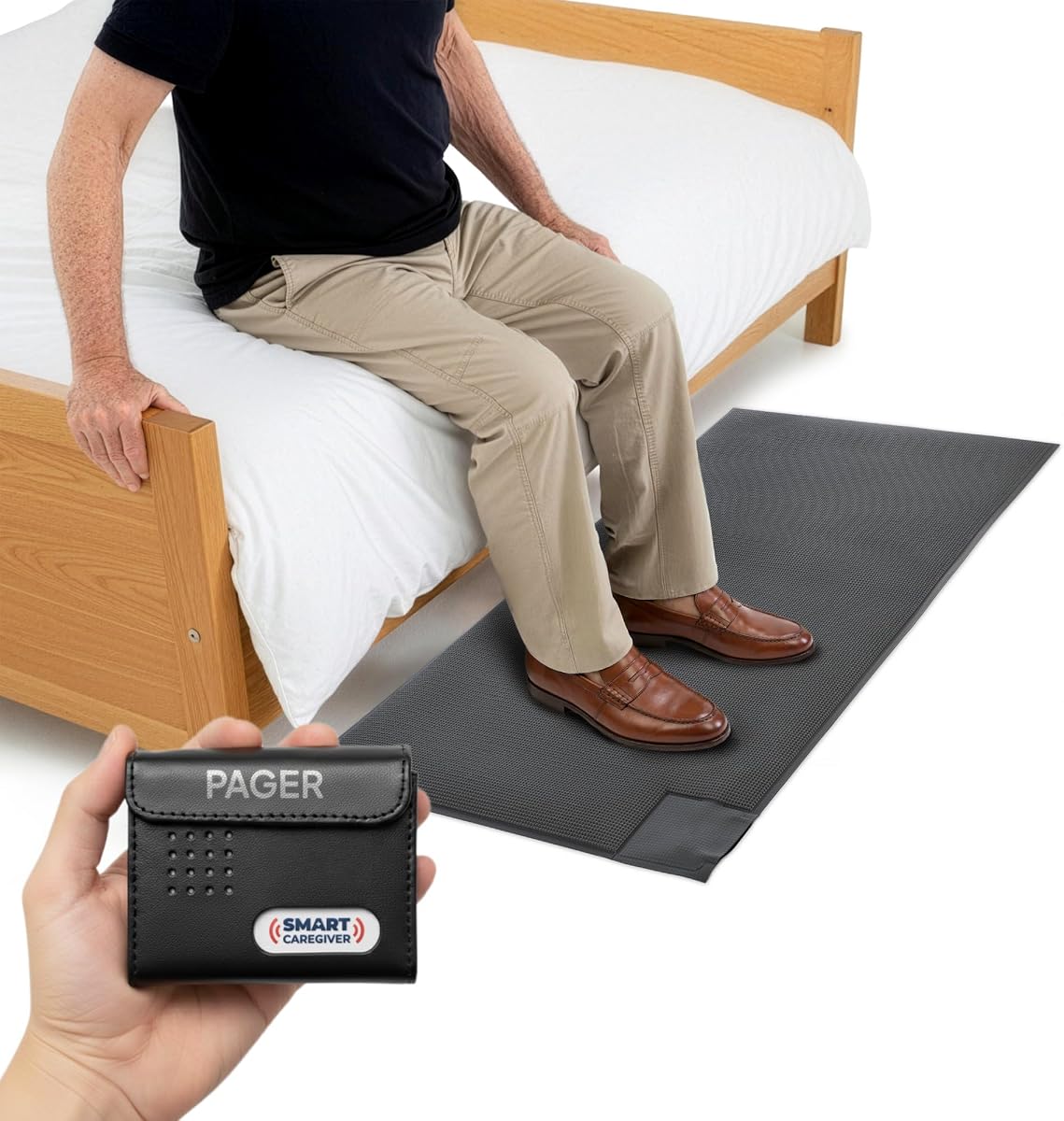
This large floor mat detects footsteps as soon as a patient steps on it providing early fall prevention. It is ideal for placing near exits or beds.
We may earn a commission when you buy through this link, at no additional cost to you.
The wireless pager alerts caregivers up to three hundred feet away without making noise in the patient's room. This keeps the environment calm and reduces startle factors.
The mat requires significant floor space which may not fit all bedroom layouts. The pager batteries are not included so plan to purchase AA batteries separately.
Best for spaces where a bed pad is not suitable. Its size ensures that any attempt to leave the area is caught immediately.
The 24 inch by 48 inch mat covers significant floor area ensuring detection whenever someone steps onto the mat.
The pager alerts do not sound in the room preventing noise that might startle or disturb the patient during the night.
We may earn a commission when you buy through this link, at no additional cost to you.
This straightforward bed alarm alerts caregivers when pressure is removed from the pad. The vinyl pad is durable and easy to clean for hygiene.
We may earn a commission when you buy through this link, at no additional cost to you.
It features a reset button to silence the alarm quickly if false triggers occur. The monitor can be mounted on a wall for easy visibility.
The wired connection limits placement flexibility compared to wireless units. Alert options are basic but sufficient for standard caregiving needs without complexity.
Ideal for those seeking a simple no-frills monitoring solution. Its waterproof design and reset functionality make it practical for daily use.
The vinyl sensor pad is sealed for incontinence protection allowing it to be cleaned easily with a wet cloth.
A reset button on the front allows caregivers to silence the alarm instantly during a false alarm or emergency.
We may earn a commission when you buy through this link, at no additional cost to you.
This portable alarm uses an infrared sensor to detect movement without touching the patient. The sensor rotates to avoid false alarms from bed movement.
We may earn a commission when you buy through this link, at no additional cost to you.
The receiver features a Type-C charging port for modern convenience. Users can choose from eighteen ringtones or use vibration for discreet alerts.
Sensor batteries are replaceable unlike sealed transmitters in some mats. However, the range is shorter than premium wireless models which may limit placement options.
Best for temporary or portable care setups. The charging port and rotation feature add modern touches to a standard sensor system.
The sensor supports 360 degree rotation to prevent false alarms from incontinence or restless sleep movements.
The portable receiver uses a Type-C charging port making it easier to power up with modern cables.
We may earn a commission when you buy through this link, at no additional cost to you.
This system comes factory paired ready to use immediately upon loading batteries. It combines motion detection with a long-range wireless receiver for broad coverage.
We may earn a commission when you buy through this link, at no additional cost to you.
The receiver offers four distinct alert modes including light flashing and sound options. Users can adjust brightness and volume to suit their environment.
The setup is straightforward but requires testing the range before permanent placement. It is a robust choice for those prioritizing speed and range.
Ideal for quick deployment in emergency situations. The factory pairing saves time on configuration compared to systems needing manual pairing.
The motion sensor and receiver are factory paired and ready to use by simply loading the batteries separately.
Powered by battery or Micro USB, this unit ensures continuous operation without needing frequent battery replacements or outlets.
We may earn a commission when you buy through this link, at no additional cost to you.
This system includes two sensor pads for monitoring both bed and chair exits. It is ideal for patients who sit for long periods during the day.
We may earn a commission when you buy through this link, at no additional cost to you.
A phone style clip allows easy switching between the bed and chair monitor. The pads are made of soft vinyl with sealed interiors for protection.
Moving the monitor between locations may require effort if you have only one unit. Additional monitors can be purchased separately for simultaneous use.
Best for users who need both chair and bed safety. The versatile design covers more ground than single-use alarm systems.
The system includes a bed sensor and a chair sensor to monitor both sitting and lying positions effectively.
A phone-style clip makes it easy to switch between using the bed and chair pad with your monitor.
We may earn a commission when you buy through this link, at no additional cost to you.
This basic alarm relies on a pressure-sensitive pad to detect when a patient attempts to leave the bed. The pager is portable and offers multiple alert styles.
We may earn a commission when you buy through this link, at no additional cost to you.
The pad is constructed from latex-free and water-resistant materials for easy cleaning. Setup is simple with clips that secure it under the fitted sheet.
User ratings are lower than other models which may indicate occasional reliability issues. However, for low-risk scenarios it provides a basic level of protection.
Best for budget-conscious caregivers needing a simple entry-level solution. Its water resistance and portability add value despite the lower rating.
Highly sensitive sensor pad accurately monitors patient movements and triggers an immediate alarm when the patient attempts to leave the bed.
Constructed from latex-free tear-and-water resistant materials the pad is incontinence-resistant and simple to wipe clean.
We may earn a commission when you buy through this link, at no additional cost to you.
Selecting the right alarm system depends on several key factors including sensor type, alert method, and coverage range. Understanding these elements ensures you choose a device that matches the specific needs of your loved one.
Sensor types vary from bed pads to floor mats and motion detectors. Bed pads detect weight changes when a patient shifts or stands. Floor mats detect footsteps and are useful near exits. Motion sensors detect foot movement without contact which reduces skin irritation.
Choose the sensor type that best fits your patient's mobility and comfort needs.
Look for systems offering customizable alerts such as sound vibration or light. Some models allow silent modes for shared bedrooms. Adjustable volume levels ensure the caregiver hears the alarm without startling the patient.
Prioritize alerts that fit your household environment and noise sensitivity requirements.
Wireless range determines how far the caregiver can move while staying connected. Models range from 300 feet to over 900 feet. Ensure the range covers your home layout to prevent signal loss in distant rooms.
Check the stated range against your home's square footage before purchasing.
Setup should be tool-free and intuitive for caregivers. Systems with factory pairing save time. Look for clear instructions and secure clips for sensor pads to prevent shifting during use.
Select a model that requires minimal technical knowledge for installation.
Consider whether the system uses disposable batteries or rechargeable USB power. Disposable batteries are convenient but cost more over time. Rechargeable options reduce waste but need charging cycles.
Decide based on your preference for maintenance and replacement frequency.
Durability is critical for daily use especially in incontinence-prone settings. Waterproof and sealed pads are easier to clean. Check warranty terms for sensor lifespan and replacement coverage.
Choose a unit with a proven track record of lasting over several years.
Some systems support multiple sensors for monitoring different areas like chairs or doors. Expandability allows a centralized monitoring point. This is useful for homes with multiple rooms to watch.
Verify if the receiver can connect to additional sensors if needed later.
Customer support ensures you get help if the device fails. Look for US-based companies with accessible hours. Good support reduces downtime and troubleshooting stress.
Verify the warranty period and availability of customer service before buying.
Install the sensor pad under the fitted sheet at the patient's hips or shoulders. Ensure it is smooth and free of wrinkles to avoid false alarms. Test the system by having the caregiver sit on the bed edge.
Clean the sensor pads regularly with a damp cloth to maintain hygiene. Avoid soaking the sensor as moisture can damage electronics. Allow the pad to dry completely before placing it back in the bed.
Check battery levels weekly and replace them promptly to ensure alerts. If using USB power, ensure the cable is not a tripping hazard. Keep the receiver close to the caregiver during nighttime hours.
Yes, many bed alarms detect movement or weight changes to alert caregivers immediately. This helps prevent unsafe wandering by notifying you when the patient attempts to leave the bed. Some models also include motion sensors for doorways to catch wandering outside the room.
Most modern alarms notify the caregiver via a pager rather than a loud room alarm. This ensures the patient is not startled. You can also use vibration-only modes for silent monitoring during the night.
Yes, these systems are often approved for use in nursing homes and rehabilitation centers. They are portable and easy to install. However, always check facility policies before bringing in electronic equipment.
False alarms often occur from restless sleep or incontinence. Choose systems with hip-level sensors instead of full-pads to reduce triggers. Some models have adjustable sensitivity settings to minimize these issues.
Some models are FSA and HSA eligible as healthcare expenses. Check with your provider regarding reimbursement. Many systems qualify as medical safety devices which may help offset costs.
Battery life varies by usage and model type. Most systems last several months on AA or AAA batteries. Check the product specifications for expected lifespan and consider buying rechargeable options for convenience.
Our top picks include the Twin Size Wireless Bed Alarms for early alert technology and the Upgraded Version Bed Sensor for budget value. These systems offer reliable detection with customizable alerts for peace of mind.
Prioritize features like range and ease of use to match your specific caregiving routine. Consider comfort for the patient to ensure they can sleep peacefully without interference from the alarm.
Always verify current prices and stock before buying as listings change frequently. Investing in the right system today can prevent accidents and provide security for your loved one tomorrow.