
Battery Restorer and Desulfator for Lead Acid
3.8Editor score
64oz bottle treats multiple batteries
Safe for all lead acid types
Boosts charge capacity effectively
This comprehensive guide compares the top battery restorer and desulfator products to help you extend lead acid battery life and save on replacements effectivel
Finding the right battery restorer and desulfator can save you significant money by extending the life of your lead acid batteries. These products work to break down sulfation buildup that commonly reduces battery capacity over time.
We have evaluated ten leading solutions ranging from chemical additives to electronic pulse devices. Our comparison focuses on compatibility, ease of use, and reported effectiveness across various battery types and applications.
Each pick highlights key features and real-world performance expectations based on user feedback and product specifications. Please note that prices and availability may change frequently on retailer platforms.
3.8Editor score

4.1Editor score

3.8Editor score
The following table provides a side-by-side overview of all ten products evaluated in this guide. Use this to quickly compare key specifications and features.


This device stands out as a top choice for those seeking electronic desulfation. With a rating of 4.1 stars, it offers a robust solution for extending lead acid battery life through advanced pulse technology.
We may earn a commission when you buy through this link, at no additional cost to you.
Its ability to work across a wide voltage range from 12V to 72V makes it versatile for various applications including solar systems and marine batteries. The included safety features like reverse polarity protection ensure reliable operation.
Users should note that results are not immediate and typically take two to four weeks to manifest. This gradual process is standard for electronic desulfation and helps avoid damaging sensitive battery components.
It is ideal for owners of vehicles or equipment using flooded, AGM, or gel batteries who want to maximize lifespan without constant replacement. This device provides a practical maintenance tool for serious battery care.
Supporting systems from 12V up to 72V ensures this device works with cars, RVs, and large solar banks alike.
Smart features like internal fuses and cutoffs protect both the device and the battery during long-term operation.
We may earn a commission when you buy through this link, at no additional cost to you.
This affordable additive offers a straightforward way to attempt battery revival without complex equipment. With a 64oz bottle, it provides enough solution for multiple batteries making it a cost-effective option for fleets.
We may earn a commission when you buy through this link, at no additional cost to you.
The product aims to restore performance by addressing sulfation buildup chemically. Users report that it can rejuvenate weak batteries and boost their ability to hold a charge when used correctly.
While the rating is moderate, the value proposition remains strong for those looking to delay costly replacements. It is important to follow instructions carefully to ensure safe application across different battery types.
Ideal for golf carts and standard car batteries that still accept a charge, this additive helps maintain reliability on a budget. It is a practical first step for battery maintenance before considering replacement.
The large bottle size reduces the cost per treatment compared to smaller additives available on the market.
This formula works by dissolving harmful sulfate crystals to restore chemical balance within the battery cells.
We may earn a commission when you buy through this link, at no additional cost to you.
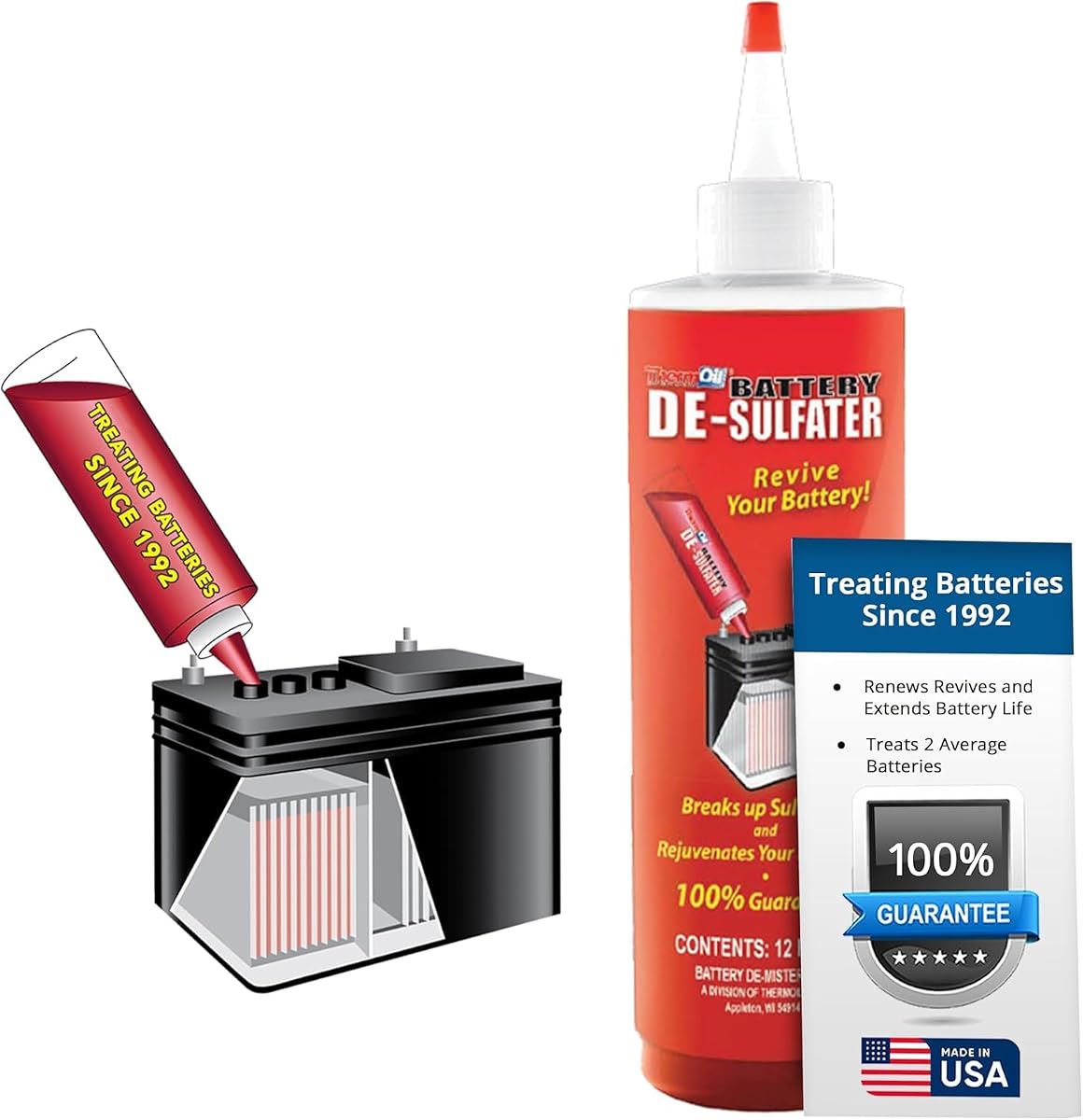
This solution is backed by a brand with decades of experience in battery care. It distinguishes itself by avoiding common fillers like Epsom salts found in cheaper additives which can degrade over time.
We may earn a commission when you buy through this link, at no additional cost to you.
The formula is designed to break down corrosion on battery plates and insulators. This process aims to reduce internal resistance by up to 50 percent improving overall power efficiency significantly.
Users appreciate the peace of mind provided by the money-back guarantee. It indicates strong confidence in the product ability to maintain battery integrity without causing harm to the components.
Best for owners who prioritize safety and proven track records over the absolute lowest price. It serves as a reliable preventative measure for maintaining lead acid batteries in optimal condition.
By excluding Epsom salts, this formula ensures cleaner results and avoids potential long-term buildup issues.
The 100 percent guarantee reflects the brand confidence in delivering consistent results for battery maintenance.
We may earn a commission when you buy through this link, at no additional cost to you.
This 12oz option provides the same trusted formula in a smaller package. It is convenient for treating a single vehicle battery or for testing the product before committing to a larger size.
We may earn a commission when you buy through this link, at no additional cost to you.
The non-acid nature of the conditioner means it is safer to handle and less likely to cause corrosion during application. It effectively works to reduce the internal heating issues common in sulfated batteries.
While the price per ounce might be higher than larger bottles, the convenience and precision of a smaller size can be beneficial. It allows users to address specific batteries without wasting solution.
Ideal for occasional users or those with fewer batteries who need a targeted approach. It helps keep batteries running efficiently without the need for immediate replacement when signs of wear appear.
The compact 12oz size is perfect for maintaining one or two batteries without excess product storage.
Being non-acid ensures that users can apply the product with minimal protective gear and reduced risk.
We may earn a commission when you buy through this link, at no additional cost to you.
This gallon size is designed for professionals or fleets managing multiple batteries at once. It offers a high volume of treatment solution which reduces the need for frequent reordering compared to smaller bottles.
We may earn a commission when you buy through this link, at no additional cost to you.
The non-toxic nature of the formula makes it safer for operators to handle in various environments such as docks or garages. It is effective for a wide range of vehicles from ATVs to forklifts.
Manufactured in the USA, this product meets specific quality standards that customers often value. The large capacity ensures that maintenance schedules can be followed without interruption due to product shortages.
It is best suited for golf courses or service centers that need to treat several batteries periodically. This solution helps extend the usable life of lead acid batteries before replacement becomes necessary.
One gallon can treat up to six batteries providing excellent value for large scale maintenance needs.
The non-toxic label allows for safer application in busy work environments without extensive protective equipment.
We may earn a commission when you buy through this link, at no additional cost to you.
This electronic unit offers a hands-off approach to battery maintenance through automatic pulse technology. It connects easily to terminals and works to dissolve sulfate crystals without user intervention.
We may earn a commission when you buy through this link, at no additional cost to you.
Designed for versatility, it works with various types of lead-acid batteries including marine and RV options. The automatic operation means you can leave it connected for long periods to ensure consistent care.
While simpler than high-end models, it provides a cost-effective way to attempt repair on sulfated units. It helps maintain capacity over time which is crucial for batteries that sit unused for long periods.
Ideal for users who want a 'plug and forget' solution for their spare batteries or vehicles in storage. This device supports battery health efforts without requiring complex programming or monitoring.
The device manages its own charging cycles ensuring consistent treatment without manual adjustments or monitoring.
Compatibility with deep cycle batteries makes it useful for RVs and marine applications where longevity is key.
We may earn a commission when you buy through this link, at no additional cost to you.
This product is specifically marketed for golf carts and similar heavy-use lead acid batteries. Its formulation aims to break down the specific sulfate buildup common in these high-drain applications.
We may earn a commission when you buy through this link, at no additional cost to you.
With a gallon size it suits golf courses or large residential fleets that need to maintain multiple carts. The process requires regular charging over ten days to allow the formula to work effectively.
The focus on serviceable batteries means it works well on units that are weak but not dead. It helps extend the interval between replacements which saves money over the long term for operators.
Best for owners who want a targeted solution for their fleet maintenance schedule. It provides a reliable way to keep batteries performing well during peak usage seasons.
The formula is optimized for the heavy usage patterns typical of golf carts and similar equipment.
The one gallon volume allows treating multiple batteries in a single purchase reducing downtime and costs.
We may earn a commission when you buy through this link, at no additional cost to you.
This maintainer is designed to handle larger batteries up to 400AH capacity. It uses high-frequency peak pulses to prevent sulfate crystals from sticking to electrodes effectively keeping them in near-new state.
We may earn a commission when you buy through this link, at no additional cost to you.
The auto-setting feature recognizes battery voltage automatically removing the need for manual configuration. This makes it easier to use for those who may not be tech-savvy when connecting the device.
Note that it requires a minimum voltage to operate so batteries below 11.5V need an initial charge. This ensures the device receives enough power to start the desulfation process safely.
Ideal for larger solar or marine systems that need regular maintenance without disconnecting the battery. It integrates well with existing charging setups to enhance battery recovery efforts.
The auto-setting capability simplifies connection by adjusting to the battery voltage without manual input.
Supporting up to 400AH makes this suitable for substantial energy storage systems requiring regular care.
We may earn a commission when you buy through this link, at no additional cost to you.
With a high rating of 4.2 this solution offers effective renewal for weak lead acid batteries. It targets sulfide layers and deposits to restore normal discharge characteristics and charging ability.
We may earn a commission when you buy through this link, at no additional cost to you.
The process involves adding the fluid to existing liquid without draining the battery first. This simplicity reduces the time and mess involved in typical battery maintenance procedures significantly.
Users should ensure they record wiring locations to avoid miswiring during the process. After application, a full recharge is necessary to realize the full benefits of the restoration formula.
Best for motorcycles, boats, and trucks where quick maintenance is preferred. This product helps recover capacity in batteries that are underperforming but still structurally sound for use.
No need to drain the existing electrolyte allows for a quicker and cleaner application process.
By cleaning up deposits the fluid helps restore the battery ability to discharge normally and hold charge.
We may earn a commission when you buy through this link, at no additional cost to you.
This device holds the highest rating among the reviewed electronic desulfators. It utilizes high-frequency peak pulses to decompose lead sulfate and extend the overall life of the battery.
We may earn a commission when you buy through this link, at no additional cost to you.
The 2A output provides a steady current that helps in the gradual removal of sulfate crystals. This process is designed to keep electrodes in a near-new state for longer operational periods.
Similar to other pulse devices it requires the battery to be above a minimum voltage to function correctly. Users should check the battery before connecting to ensure successful operation of the unit.
Ideal for AGM SLA and VRLA batteries up to 200AH capacity. This tool is excellent for anyone looking to maintain battery health and avoid premature replacements with simple electronic intervention.
The 2A regenerator output ensures sufficient power to dissolve sulfate crystals effectively over time.
Working with AGM SLA and VRLA types makes this versatile for various modern lead acid applications.
We may earn a commission when you buy through this link, at no additional cost to you.
Selecting the right product depends on your battery type and the level of intervention you need.
Not all desulfators work with every battery type. Chemical additives are generally safe for flooded lead acid but should never be used on sealed AGM or Gel batteries. Electronic pulse devices often specify if they support these sealed types so always check the product specs first.
Ensure the product explicitly states it is safe for your specific battery technology to avoid damage.
Chemical additives are poured directly into cells and work by dissolving sulfate crystals chemically. They are simple but require maintenance intervention. Electronic devices connect to terminals and use pulses over weeks to break down crystals without adding fluids.
Choose additives for simple maintenance and electronic units for hands-off long-term protection.
Electronic desulfators usually have a specific voltage range such as 12V to 48V. If you have multiple systems or a specific vehicle like a 36V golf cart you must ensure the device supports that voltage.
Verify the supported voltage range matches your battery system to ensure proper operation.
Pulse devices often list a maximum ampere hour capacity they can handle. A unit rated for 200AH might struggle with a much larger 400AH deep cycle battery. Using a device below its rated capacity ensures it works effectively.
Match the device capacity rating to your battery size for best results.
Chemical solutions often show results within days while electronic pulse devices can take weeks. If you need a quick fix an additive might seem faster but electronic devices provide long-term health maintenance.
Consider your patience level and when you need the battery to be fully restored.
When using electronic units look for safety features like reverse polarity protection and thermal shutdown. These prevent short circuits or overheating during the long process of desulfation.
Prioritize devices with built-in protections to avoid damaging the battery or equipment.
Some brands offer money-back guarantees if the product does not perform as advertised. This is common with chemical additives and indicates confidence in the formula.
Check for warranty details before purchasing to protect your investment.
Decide if you are treating a single car battery or a fleet of golf carts. Larger bottles of liquid solution make more sense for fleets while single units work best for personal vehicles.
Choose a size that fits your typical volume of work.
For liquid additives always ensure the battery is well vented and remove the caps if necessary. Measure the recommended amount of solution and pour it carefully into each cell. Do not drain the existing electrolyte before adding the restorer as the instructions typically advise adding directly.
For electronic desulfators connect the red clip to the positive terminal and the black to the negative. Ensure the battery voltage is above the minimum threshold before connecting. Let the device remain connected for at least two weeks to see measurable changes.
After applying any solution recharge the battery fully to allow the formula to work and settle. Monitor the battery performance over the next few weeks to see if capacity has improved. If no improvement is seen after three weeks the battery may be beyond repair.
Generally no restorers are designed for batteries that still accept a charge but are losing capacity over time. If a battery is completely dead or frozen it is likely beyond recovery. However weak batteries that have been sitting idle often respond well to these treatments.
Liquid chemical additives should not be used on sealed AGM or Gel batteries as they cannot be accessed. Electronic pulse desulfators are safe for use with AGM and Gel batteries as they do not require opening the casing.
Chemical solutions typically show improvement within one to two weeks of regular charging. Electronic desulfators take longer and can take two to four weeks to fully desulfate the battery plates and restore capacity.
Yes many electronic pulse devices are designed to be connected alongside a standard charger. They can be used continuously to maintain battery health between full charge cycles without interference.
Most modern solutions are non-toxic and non-hazardous but you should still wear protective gear. Always handle any chemical solution with care and store it in a safe place away from children or pets.
No frozen batteries often have damaged internal plates that cannot be restored. If a battery shows signs of freezing or physical swelling it should be replaced safely instead of attempting restoration.
Choosing the right solution depends on whether you prefer chemical or electronic intervention. Our top picks highlight the most reliable options for both methods to help you maintain your batteries effectively.
Prioritize safety and compatibility when selecting a product. A device that matches your battery type and voltage will provide better results than a generic solution that might not fit your needs.
Remember that prices and availability can change on retailer platforms. Check the current listings before purchasing to ensure you get the best deal on your chosen battery care product.