
Zoom F2 Lavalier Recorder
4.0Editor score
32-bit float technology
Includes lavalier mic
Fifteen hours battery life
Up to 512GB storage
This guide compares the top audio field recorders for film to help you capture clean dialogue, sound effects, and music with reliable tools for any production.
Capturing high-quality audio is essential for professional film production. Whether you are shooting dialogue on a quiet set or recording ambient sound in noisy environments, having the right field recorder ensures your tracks remain clear and usable throughout post-production workflows.
We evaluated ten top-rated recorders based on features like 32-bit float recording, input channels, timecode sync, and portability. Each product was analyzed for its ability to handle dynamic range, connect to microphones, and maintain reliability during long shooting days in various conditions.
Each pick below highlights specific strengths such as budget affordability, professional-grade inputs, or compact design for run-and-gun shoots. Note that prices and availability may change over time, so verify current listings before purchasing to ensure you get the best deal for your needs.
4.0Editor score

4.7Editor score
4.6Editor score
This side-by-side comparison outlines the core specifications and strengths of each recorder to help you quickly identify which model aligns with your production requirements and budget constraints.




The Zoom F6 stands out as a top choice for filmmakers needing reliable field recording. With a 4.7 rating, it delivers professional results using 32-bit float technology that prevents clipping regardless of volume spikes during unpredictable shooting conditions.
We may earn a commission when you buy through this link, at no additional cost to you.
Its six XLR inputs allow simultaneous recording of multiple microphones for complex scenes. The timecode I/O ensures frame-accurate sync with video cameras, which is critical for post-production. You can use it as a standalone device or a USB interface for flexible workflows.
While the price is higher than entry models, the robust construction and dual power options make it ideal for long location days. The ability to record up to 14 tracks gives you flexibility for multi-channel setups without needing additional gear.
Film crews prioritizing audio fidelity and sync accuracy will find the F6 indispensable. It balances portability with professional features, making it the best overall choice for serious productions requiring dependable sound capture.
The 32-bit float recording captures whispers and explosions without distortion, ensuring no take is lost to clipping.
Timecode I/O keeps audio tracks perfectly aligned with video footage, saving hours of manual synchronization in editing.
We may earn a commission when you buy through this link, at no additional cost to you.
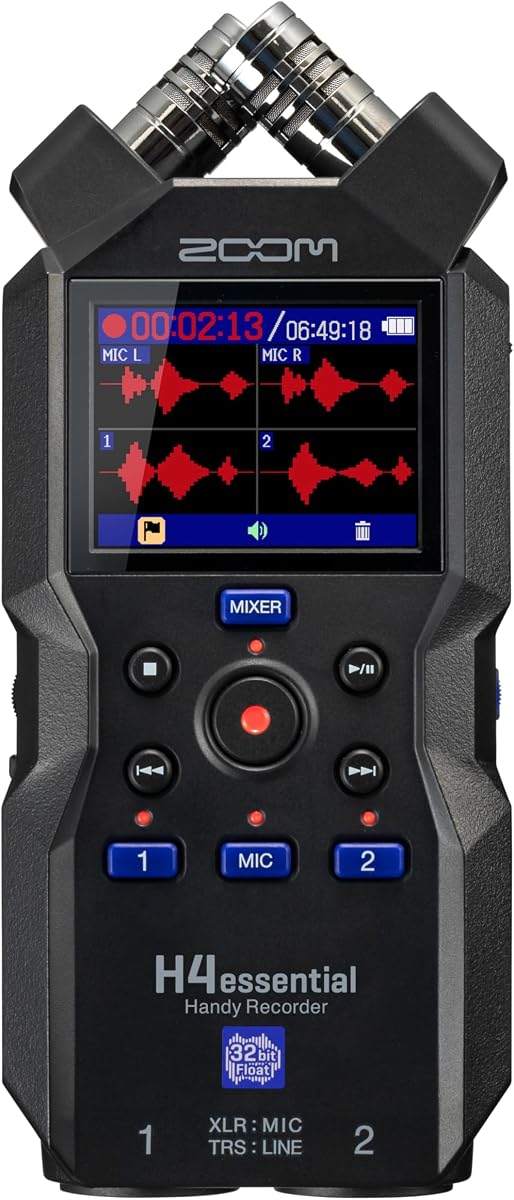
The Zoom H4 Essential is a versatile tool for creators needing reliable audio capture. With a 4.4 rating, it handles music, interviews, and video audio effectively. Its 4-track capability offers room for growth beyond basic stereo recording.
We may earn a commission when you buy through this link, at no additional cost to you.
It features two XLR/TRS inputs for external mics and built-in stereo microphones for quick setups. USB-C connectivity lets you stream to devices or save backups to SD cards. The spoken menu guidance makes navigation easier for all users.
While it supports fewer tracks than professional units, it covers most indie film needs. The clear sound quality ensures dialogue and ambient recordings remain usable. It is a solid middle ground between simplicity and functionality.
Content creators and small crews seeking flexibility without high costs will appreciate this model. It provides the essential features needed for field recording while maintaining an accessible price point and user-friendly design.
Connect external microphones or mixers easily while relying on built-in mics for quick captures when gear is limited.
Spoken menu guidance helps visually impaired users or beginners navigate settings quickly without reading small text.
We may earn a commission when you buy through this link, at no additional cost to you.
The Zoom F6 stands out as a top choice for filmmakers needing reliable field recording. With a 4.7 rating, it delivers professional results using 32-bit float technology that prevents clipping regardless of volume spikes during unpredictable shooting conditions.
We may earn a commission when you buy through this link, at no additional cost to you.
Its six XLR inputs allow simultaneous recording of multiple microphones for complex scenes. The timecode I/O ensures frame-accurate sync with video cameras, which is critical for post-production. You can use it as a standalone device or a USB interface for flexible workflows.
While the price is higher than entry models, the robust construction and dual power options make it ideal for long location days. The ability to record up to 14 tracks gives you flexibility for multi-channel setups without needing additional gear.
Film crews prioritizing audio fidelity and sync accuracy will find the F6 indispensable. It balances portability with professional features, making it the best overall choice for serious productions requiring dependable sound capture.
The 32-bit float recording captures whispers and explosions without distortion, ensuring no take is lost to clipping.
Timecode I/O keeps audio tracks perfectly aligned with video footage, saving hours of manual synchronization in editing.
We may earn a commission when you buy through this link, at no additional cost to you.
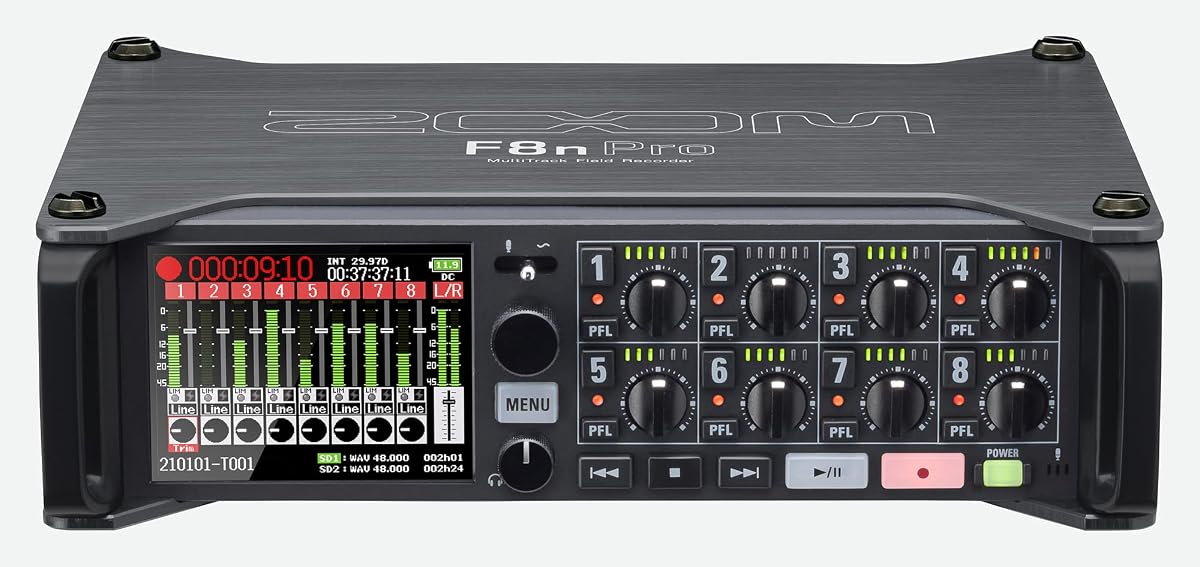
The Zoom F8n Pro is designed for professional film crews requiring top-tier audio control. With a 4.6 rating, it offers eight inputs and ten tracks for complex recording scenarios. Its industry-leading timecode accuracy ensures perfect synchronization with video.
We may earn a commission when you buy through this link, at no additional cost to you.
Dual SD slots provide redundant recording, so you never lose critical takes due to card failure. The high-quality preamps capture quiet dialogue and loud action without distortion. It also functions as a USB interface while recording to the card.
Though it is heavier and pricier than compact units, the reliability and flexibility justify the investment for large productions. The 0.2ppm timecode accuracy via TCXO is unmatched in its class. This device is built for environments where mistakes are not an option.
Crews working on high-stakes films should consider the F8n Pro as their primary sound unit. It delivers unmatched precision, redundancy, and connectivity, ensuring every recording meets broadcast and professional production standards consistently.
Dual SD card slots allow simultaneous recording to two cards, protecting your footage from storage failures during critical scenes.
The TCXO timecode accuracy keeps audio perfectly synced with picture, eliminating drift even over long recording sessions.
We may earn a commission when you buy through this link, at no additional cost to you.
The Zoom H1 XLR offers professional-quality results in a compact form factor. With a 4.5 rating, it records in 32-bit and 96kHz for clear sound suitable for interviews and documentaries. Two XLR/TRS inputs provide flexibility for external microphones.
We may earn a commission when you buy through this link, at no additional cost to you.
The OLED waveform display helps you monitor levels quickly during fast-paced shoots. It also supports 3.5mm inputs and headphone outputs for added connectivity. SDXC support up to 1TB ensures ample storage for extended sessions without interruption.
While it lacks multi-track capability, its simplicity makes it ideal for run-and-gun situations. The pro-quality audio ensures you capture usable dialogue even in challenging conditions. It is an excellent companion for camera operators needing reliable audio.
Indie filmmakers and solo shooters will find the H1 XLR a reliable ally. It balances ease of use with high fidelity, making it perfect for capturing interviews, ambient sound, and narration on the go.
The OLED waveform display allows you to see audio levels clearly at a glance, preventing distortion during quick takes.
Connect various microphones via XLR/TRS combo inputs and monitor directly through 3.5mm headphone outputs easily.
We may earn a commission when you buy through this link, at no additional cost to you.
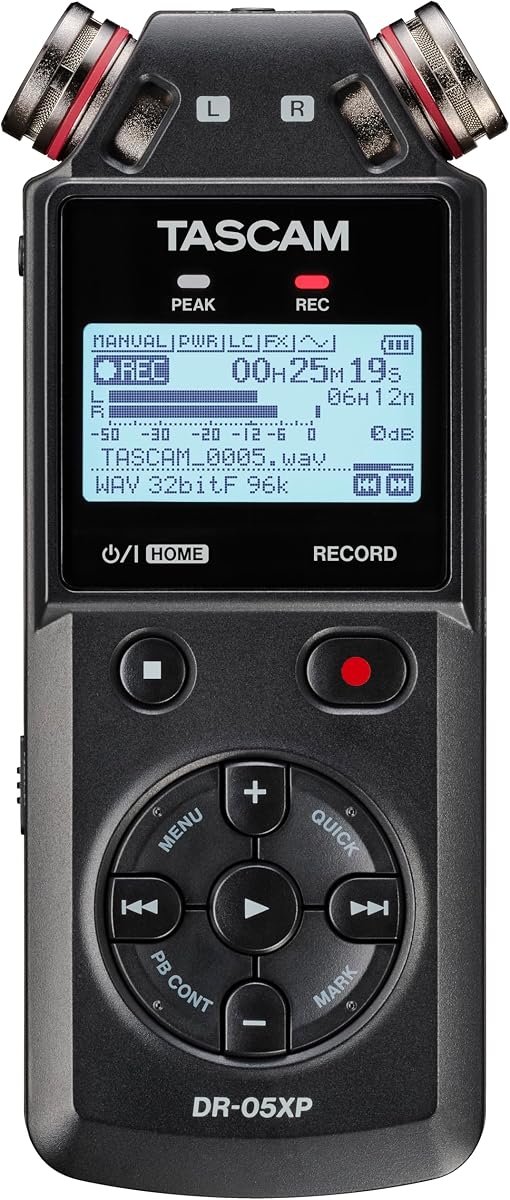
The TASCAM DR-05XP is a portable recorder ideal for capturing audio on a budget. With a 4.2 rating, it handles music, meetings, and voice recordings well. Its omnidirectional microphones can manage loud environments up to 125dB SPL.
We may earn a commission when you buy through this link, at no additional cost to you.
Flexible recording modes include 32-bit float support for safety against distortion. USB-C connectivity turns it into an interface for computers directly. It runs up to 17.5 hours on batteries, ensuring you stay recording through long events.
Without XLR inputs, it suits simple field recording rather than complex setups. The included mics are sufficient for ambient noise or voiceovers. It is a solid tool for hobbyists or as a backup recorder for professionals.
Users needing an affordable, reliable handheld recorder will appreciate this model. It delivers pro-quality recording capabilities in a compact package, making it accessible for beginners entering the field of audio capture.
Omnidirectional condenser microphones can handle loud environments without distortion, ensuring clear captures in noisy settings.
Use the 2-in/2-out USB-C audio interface to record directly to your computer for seamless workflow integration.
We may earn a commission when you buy through this link, at no additional cost to you.
The Zoom H5 offers versatile recording options through interchangeable input capsules. With a 4.7 rating, it lets you swap microphones like camera lenses for different environments. It supports four-track simultaneous recording for greater creative flexibility.
We may earn a commission when you buy through this link, at no additional cost to you.
Two XLR/TRS inputs with phantom power handle a wide range of external microphones. The detachable X/Y capsule reduces handling noise significantly. It runs on standard AA batteries, making it easy to power during long field shoots.
While it supports older SD cards up to 32GB, the multichannel USB interface connects well with computers. The safety net function protects recordings from accidental overwrites. It is a solid choice for those needing modularity in their gear.
Musicians and filmmakers needing adaptable audio setups will value this model. It combines reliability with the flexibility to change mics for different scenarios, making it a versatile workhorse for various creative projects.
Interchangeable capsules allow you to swap microphones easily, adapting the recorder to different recording environments instantly.
Running on two AA batteries makes the H5 easy to power in remote locations without needing specialized power banks.
We may earn a commission when you buy through this link, at no additional cost to you.
The TASCAM DR-10L Pro is designed for discreet personal audio capture in video production. With a 4.4 rating, it supports 32-bit float recording to capture whispers and screams equally. The included lavalier microphone ensures clear voice recordings.
We may earn a commission when you buy through this link, at no additional cost to you.
LTC Jam Sync allows seamless timecode synchronization with other devices via firmware updates. Support for high-capacity microSDXC cards means practically limitless storage. The app lets you control multiple units simultaneously for coordinated shoots.
This device excels in interviews or situations where hiding the recorder is necessary. It is small enough to hide on a person without being seen. The battery life supports extended recording sessions without interruptions or worries.
Creators needing a reliable clip-on recorder will find this model perfect. It delivers clear audio quality and synchronization features in a discreet package, ideal for content creators, journalists, and filmmakers.
LTC Jam Sync keeps audio tracks perfectly synced with video cameras for streamlined post-production workflows.
The small form factor and included lavalier mic allow for stealthy recording in busy settings without distracting subjects.
We may earn a commission when you buy through this link, at no additional cost to you.
The Zoom H1 Essential is built to capture clear stereo audio for videos and tutorials. With a 4.0 rating, it helps creators achieve polished sound without complex setups. It is ready instantly when inspiration strikes for songwriting or live sessions.
We may earn a commission when you buy through this link, at no additional cost to you.
Natural stereo sound makes voices come through clearly for podcasts and interviews. It captures real-world sound like ambience and nature for creative projects. Connecting via USB-C allows you to use it as a mic for livestreams or calls.
While it lacks XLR inputs, it covers the basics for content creators well. It is a cost-effective solution for those needing better quality than built-in cameras. The compact design makes it easy to carry everywhere.
Aspiring filmmakers and podcasters needing a simple entry into better audio should consider this model. It provides essential features for capturing interviews, tutorials, and ambient sound without overwhelming controls.
Capture clear stereo audio for videos that needs more polished sound than your phone alone offers.
Connect via USB-C to use it as a microphone for livestreams and remote meetings effortlessly.
We may earn a commission when you buy through this link, at no additional cost to you.
The Zoom F2 is the smallest 32-bit float recorder available for wearable use. With a 4.0 rating, it captures clip-free audio at any volume without gain adjustments. It comes with a lavalier mic and accessories for ready-to-go use.
We may earn a commission when you buy through this link, at no additional cost to you.
Running up to fifteen hours on two AAA batteries ensures long recording sessions. It supports storage up to 512GB for ample space. The REC Hold switch prevents accidental stops during critical shoots, ensuring reliability when it matters most.
The precision clock ensures perfect audio and video sync for professional production. It is designed for journalists and creators needing reliable personal audio on the go. The simple interface makes it easy to start recording immediately.
For weddings or quick interviews where discretion is key, this model is ideal. It delivers professional audio quality in a tiny package, making it a reliable tool for content creators and filmmakers.
32-bit float technology ensures audio remains clip-free at any volume, so you can focus entirely on your content.
Runs up to fifteen hours on just two AAA batteries, making it one of the most efficient recorders available.
We may earn a commission when you buy through this link, at no additional cost to you.
Selecting the right field recorder depends on your specific production needs and budget. This guide outlines the key factors to consider before purchasing.
Check how many XLR or TRS inputs the recorder offers. More inputs allow you to connect multiple microphones for complex scenes, while fewer inputs suit simple interviews or run-and-gun shoots.
For professional film work, aim for at least two inputs for flexibility. Ensure the unit supports phantom power if using condenser microphones that require it.
Look for 32-bit float recording capabilities. This technology prevents clipping even if levels peak unexpectedly, preserving audio quality that would otherwise be lost in standard formats.
High bit rates like 96kHz ensure detailed sound suitable for professional post-production. Avoid recorders limited to lower quality formats if you plan on serious editing.
Timecode I/O is vital for syncing audio with video in post. Units with built-in timecode generators or inputs ensure frame-accurate alignment between sound and picture.
Without proper timecode, manual syncing can be tedious. Prioritize models with reliable timecode features for any multi-camera production.
Field recorders need reliable power. Consider battery life and whether the unit accepts AC adapters or USB power. Longer battery life means fewer interruptions during long shoots.
Some models allow recording while charging. Verify power options match your workflow to avoid missing critical takes due to dead batteries.
Physical build quality matters for outdoor use. Rugged designs withstand harsh environments better than fragile plastic units. Weight also affects how comfortable the unit is to carry for extended periods.
Choose a size that fits your bag and setup. Balance durability with size constraints for practical day-to-day use on location.
Check SD card slot type and capacity limits. Higher capacity allows longer recording times without changing cards. Some units have dual slots for redundant backups.
Redundancy is critical for professional work. Ensure the recorder supports enough storage for your typical shoot length and file formats.
High-quality preamps are essential for low-noise audio capture. Good preamps allow you to record quiet dialogue cleanly without introducing hiss or noise.
Look for specifications like EIN ratings. Better preamps result in clearer recordings that require less processing later in post-production.
Intuitive controls help when adjusting levels quickly during filming. Spoken menus or clear displays improve usability for all experience levels.
Prioritize models with logical menus and accessible controls. A recorder that is difficult to use may lead to missed recording opportunities.
Always test your recorder before shooting begins to ensure all settings are configured correctly. Set timecode sync on-camera devices and check audio levels with a sound check to avoid surprises during production.
Keep your SD cards formatted in the device to prevent errors. Store cards in protective cases when not in use to avoid physical damage or data corruption over time.
Regularly update firmware to access new features and bug fixes. Keep the unit clean by wiping down surfaces after dusty shoots, and avoid exposing electronics to extreme temperatures or moisture unnecessarily.
Not all models support this technology. Modern recorders from brands like Zoom often include it, but budget models may still use 24-bit. Check specifications carefully to ensure you get clip-free recording capabilities.
Multiple inputs allow you to connect several microphones simultaneously for complex audio setups. This is essential for recording dialogue from multiple actors or capturing ambient noise alongside specific sounds without needing multiple devices.
Timecode is crucial for professional film as it ensures audio syncs perfectly with video. Without it, editors must manually align audio and video, which is time-consuming and prone to error during post-production.
Yes, most field recorders are excellent for podcasting. They capture high-quality audio and can connect to microphones. Many also offer USB connectivity for direct streaming or recording to computers.
Most units use AA or AAA batteries for portable operation. Some support USB power or AC adapters for continuous recording. Check the model to see if it supports external power sources for long shoots.
Use recorders with 32-bit float recording to prevent clipping automatically. Alternatively, set levels conservatively so peaks do not exceed maximum thresholds. Gain controls should be adjusted based on the sound source.
Choosing the right field recorder involves balancing features like input count, recording format, and budget. The Zoom F6 and F8n Pro offer premium capabilities for complex productions, while models like the H1 XLR suit simpler needs.
Prioritize features that match your workflow. If you need reliability and sync, timecode and redundancy are essential. For quick shoots, portability and battery life may matter more than multi-track recording.
Remember to verify current prices and availability before purchasing. Audio gear evolves quickly, so staying informed ensures you select the best tool for your specific filmmaking projects in 2026.