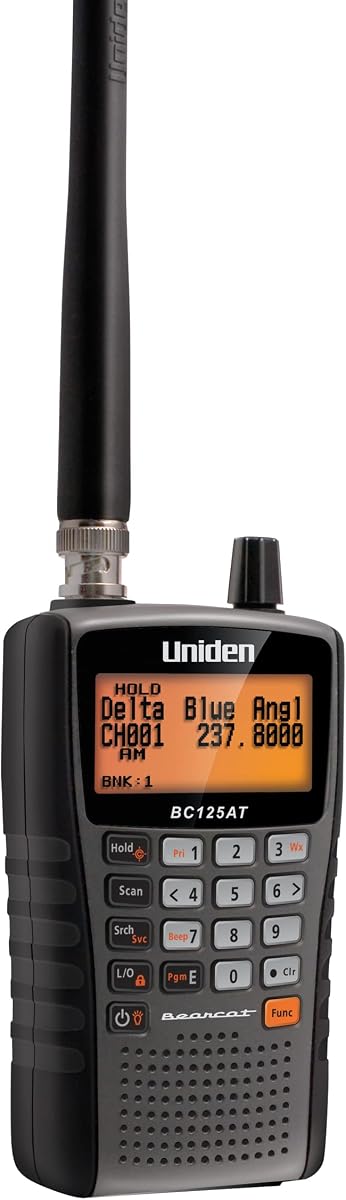
Uniden BC125AT
4.0Editor score
500 alpha-tagged channels
Close Call RF capture tech
Compact lightweight portable design
Finding the right handheld scanner for monitoring frequencies requires understanding your specific needs and local signal environments. Whether you are tracking emergency services or hobbyist bands, the right device ensures reliable reception without unnecessary bulk or complexity.
We evaluated ten leading models based on channel capacity, digital capabilities, ease of use, and build quality. Our analysis focuses on real-world performance in weak signal areas, battery life, and the ability to decode modern trunking systems effectively.
Each pick highlights key strengths and limitations to help you make an informed decision. Note that availability and specific features may vary by region and retailer over time. Always verify compatibility with local frequency before purchasing.
4.0Editor score

4.4Editor score

4.2Editor score
As an Amazon Associate we earn from qualifying purchases.
The following comparison table provides a side-by-side look at key specifications for all ten featured scanners. This overview helps you quickly identify which model matches your technical requirements and usage scenarios.


The Uniden BC125AT stands out as a reliable entry point for analog monitoring needs. With a rating reflecting solid build quality, this device offers a straightforward way to track local broadcasts without complex setup procedures.
We may earn a commission when you buy through this link, at no additional cost to you.
Its 500 alpha-tagged channels allow users to organize frequencies by location or department efficiently. The Close Call RF capture technology helps identify nearby transmitters quickly, making it easy to discover new signals during field operations.
While it lacks digital trunking capabilities, this limitation is acceptable for users focused on traditional analog systems. The lightweight design ensures it fits easily into a pocket or bag for extended outdoor activities.
This scanner is ideal for hobbyists or professionals needing basic radio monitoring. If your area relies on analog broadcasts, this model provides excellent value and ease of use for daily listening tasks.
Organize your channels by department or location to find what you need quickly during critical monitoring sessions.
The compact form factor makes it easy to carry this scanner anywhere without adding significant weight to your gear.
We may earn a commission when you buy through this link, at no additional cost to you.
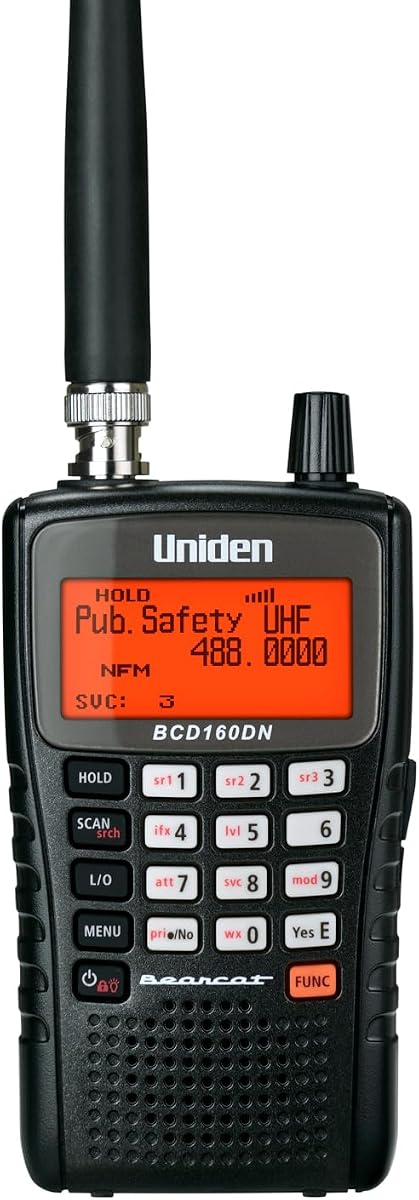
The Uniden BCD160DN introduces digital monitoring capabilities to users seeking more than basic analog reception. It supports DMR and NXDN systems, offering a step up in versatility for those tracking modern radio networks.
We may earn a commission when you buy through this link, at no additional cost to you.
Features like band scope rapid tagging help identify signals quickly. Users can manage profiles and favorite lists through free PC software, which simplifies organization for frequent monitors with complex listening requirements.
However, it does not support trunking or APCO P25 systems. This restricts its utility in areas where public safety agencies have fully migrated to digital trunking networks.
This model is best for individuals focused on specific digital amateur or commercial bands. If trunking is not a priority, the BCD160DN offers a functional digital solution at an accessible price point.
Preloaded DMR and NXDN support means you can start listening to digital signals immediately after unboxing the device.
Use available software to manage your scanner's profiles and databases without relying solely on the device interface.
We may earn a commission when you buy through this link, at no additional cost to you.
The Uniden SR30C delivers a compact solution for tracking over 32,000 frequencies across ten service banks. Its design focuses on ease of use for those who need quick access to aviation, marine, or racing bands without clutter.
We may earn a commission when you buy through this link, at no additional cost to you.
Close Call RF capture and priority scan functions ensure important transmissions are not missed. Memory backup keeps your stored frequencies safe even if power is lost during field operations or travel.
Like other analog models, it cannot receive digital communications. Users in cities with digital trunking systems may find this limitation significant for emergency services monitoring.
This scanner is perfect for travelers or enthusiasts focused on non-public safety bands. The USB power option and small footprint make it an excellent companion for portable listening scenarios.
Power the scanner from a PC or smart phone charger using the included USB cable for extended use without batteries.
Designate priority channels to ensure critical transmissions are monitored frequently during routine scanning sessions.
We may earn a commission when you buy through this link, at no additional cost to you.
The Uniden SDS100 sets a high standard for digital handheld scanners with its True I/Q receiver. This technology significantly improves performance in weak-signal and simulcast areas, ensuring clear audio where other devices struggle to connect reliably.
We may earn a commission when you buy through this link, at no additional cost to you.
Location-based scanning allows users to set their position via zip code or GPS coordinates. This feature automatically selects relevant systems nearby, making it ideal for frequent travelers or multi-region monitoring needs.
While the initial setup may require time to input database information, the weekly updates keep the system current. The rugged construction ensures durability in challenging environments, supporting reliable use in various weather conditions.
This scanner is the top choice for serious enthusiasts who need reliable digital reception. Its advanced features justify the investment for those tracking public safety or complex trunking systems regularly.
Capture complete signal waveforms to improve digital error correction and recovery in difficult RF environments.
Connect an external GPS unit for precise system selection and automatic reselection when you move locations.
We may earn a commission when you buy through this link, at no additional cost to you.
The Whistler WS1040 provides essential digital trunking capabilities for those tracking P25 Phase I systems. Its free form memory organization allocates resources efficiently, avoiding the rigid banks found in older scanner models.
We may earn a commission when you buy through this link, at no additional cost to you.
Skywarn Storm Spotter functionality allows instant access to frequencies used by storm spotter networks. This makes it a valuable tool for weather enthusiasts monitoring severe weather conditions closely in real time.
Menu driven programming with context sensitive help reduces the learning curve for new users. However, some may find the PC interface necessary for full configuration and updates cumbersome.
This scanner is a solid choice for users needing trunking support without the premium price of higher-end models. It balances performance and cost effectively for community monitoring.
Dynamic memory allocation allows you to store more frequencies by removing wasted rigid bank structures.
Quickly access specific frequencies for storm spotting networks to stay informed during severe weather events.
We may earn a commission when you buy through this link, at no additional cost to you.
The Uniden BCD436HP combines HomePatrol simplicity with advanced digital features in a handheld form. Its zip code programming eliminates complex setup steps, allowing users to start receiving local public safety and weather alerts immediately.
We may earn a commission when you buy through this link, at no additional cost to you.
The extra-large display and instant replay feature enhance the listening experience significantly. You can program custom alerts for channel IDs or close call hits, ensuring critical information is never missed during monitoring sessions.
While it lacks the ruggedness of the SDS100, its user-friendly design makes it ideal for those prioritizing ease of use. The TrunkTracker V system ensures compatibility with major trunking networks across the USA and Canada.
This scanner is perfect for users who want powerful features without technical complexity. If you need a plug-and-play digital solution with strong customization options, this model delivers premium value.
Enter your zip code and the scanner automatically finds nearby systems without requiring manual programming knowledge.
Select from tone patterns, volume settings, and colors to create alerts that match your specific monitoring needs.
We may earn a commission when you buy through this link, at no additional cost to you.
The SeeSii TinySA Ultra+ is a specialized spectrum analyzer designed for visualizing RF signals across a wide frequency range. Unlike traditional scanners, it helps identify interference and analyze signal strength with precision in technical environments.
We may earn a commission when you buy through this link, at no additional cost to you.
Its dual functionality allows it to act as a signal generator for testing purposes. This makes it versatile for troubleshooting electronic equipment, verifying RF paths, or testing antenna performance effectively.
PC control and built-in data storage enable detailed analysis without needing external tools. The large touchscreen simplifies navigation during field tests, ensuring efficient workflow in various technical scenarios.
This device is essential for technicians who need deep signal analysis rather than simple listening. If you require detailed spectrum data to monitor frequencies or troubleshoot issues, this is a powerful tool.
Switch between spectrum analyzer and signal generator modes to handle diverse testing scenarios with one handheld device.
Built-in 32GB SD card allows direct data recording for later review or sharing with other team members.
We may earn a commission when you buy through this link, at no additional cost to you.
The AURSINC TinySA Ultra+ ZS407 extends spectrum analysis capabilities up to 7.3GHz with ultra mode enabled. This makes it suitable for testing modern wireless communication signals that require higher frequency coverage than standard analyzers.
We may earn a commission when you buy through this link, at no additional cost to you.
Integrated LNA gain improves weak signal reception, while low phase noise ensures accurate analysis. These technical features make it a reliable tool for evaluating signal stability and spectral purity in complex RF environments.
The 4-inch IPS display provides clear RF data visualization for efficient analysis. Combined with PC control support, it simplifies the process of capturing and reviewing measurement data during lab or field testing.
This analyzer is ideal for technicians needing high-precision RF measurement. If your work involves analyzing higher frequency bands beyond typical consumer scanners, this model offers necessary range and accuracy.
Reach up to 7.3GHz for analyzing modern wireless bands that standard analyzers cannot cover effectively.
The IPS display presents signal details clearly, allowing you to observe and analyze RF patterns effectively.
We may earn a commission when you buy through this link, at no additional cost to you.
The AURSINC TinySA offers a budget-friendly entry point into spectrum analysis with reliable coverage up to 960MHz. Its design prioritizes portability and simplicity, making it suitable for basic RF testing and hobbyist projects.
We may earn a commission when you buy through this link, at no additional cost to you.
Built-in calibration and signal generator functions allow for self-testing and verification. ESD protection enhances longevity by improving stability and anti-static levels, which is valuable for field use in various environments.
While it has a lower frequency limit than the Ultra models, it meets many standard needs for hobbyists. The PC control via USB ensures you can manage settings and capture data without complex hardware additions.
This analyzer is best for those new to RF testing who need essential features without high cost. If you need to visualize signals below 1GHz, this compact device delivers solid performance.
Access core spectrum analysis features at a fraction of the cost of professional-grade equipment.
Use the built-in calibration generator for automatic self-tests to ensure measurement accuracy consistently.
We may earn a commission when you buy through this link, at no additional cost to you.
The AURSINC TinySA Ultra+ ZS406 covers frequencies from 100kHz to 5.4GHz, offering full-band monitoring capabilities. Its adjustable resolution bandwidth enables precise measurements, which is critical for analyzing complex signals like SSB or intermodulation.
We may earn a commission when you buy through this link, at no additional cost to you.
The dual role of analyzer and signal generator supports verification workflows for electronic testing. Phase noise performance ensures accurate analysis of signal frequency stability, providing the precision needed for high-end communication tasks.
PC control and a large command set allow for flexible configuration and data transfer. The long battery life ensures uninterrupted testing sessions in the field, making it practical for extended monitoring work.
This device is recommended for professionals needing precise RF analysis without specialized lab equipment. If you require adjustable RBW and stable measurements for technical tasks, this model offers robust functionality.
Switch resolution bandwidth to separate adjacent signals clearly for accurate frequency monitoring and testing.
Low phase noise performance delivers superior signal purity for evaluating communication system performance accurately.
We may earn a commission when you buy through this link, at no additional cost to you.
Selecting the right scanner involves evaluating specific technical capabilities and use cases. Understanding these factors ensures you get a device that meets your monitoring needs effectively.
Determine whether your local emergency services broadcast on analog or digital systems. Analog scanners are simpler but may miss communications in areas that have transitioned to digital trunking networks like P25 or DMR.
Always check local radio system types before purchasing to avoid buying a device incompatible with the signals you need to monitor.
Look for models with sufficient channel storage to hold frequencies for all your areas of interest. Alpha-tagging features allow you to name channels by department or location for easier access during scanning.
Prioritize units with flexible memory management to organize frequencies logically and reduce clutter in your database.
Advanced search functions like custom range entry or preset bands help you discover signals faster. Priority scan features ensure you do not miss critical transmissions on designated channels while listening to others.
Choose a scanner with robust scanning speeds and priority functions for real-time monitoring effectiveness.
If you plan to carry the device outdoors, select a compact model with durable construction. Weather resistance is critical for operation in challenging environments or during outdoor emergency response activities.
Check for ruggedness ratings like JIS 4 to ensure the unit withstands typical field conditions reliably.
Consider the power source options available for continuous use. Rechargeable batteries or USB power capabilities allow for extended monitoring sessions without relying solely on disposable AA batteries.
Ensure the scanner has a reliable power system to avoid interruption during important listening periods.
User-friendly interfaces and simple programming methods save significant setup time. Look for models with zip-code based location selection or preloaded databases that simplify channel configuration.
Prioritize intuitive menus and helpful software tools to reduce the technical learning curve significantly.
PC programming interfaces offer advanced control and easier database management. Ensure the device supports Windows or Linux drivers for seamless integration with your computer systems.
Choose scanners with robust software tools to manage complex frequency lists and update firmware efficiently.
A clear display with good contrast helps read channel information in various lighting conditions. Customizable displays allow you to show relevant data fields for quick status checks.
Prioritize larger screens with backlighting to ensure visibility during nighttime or low-light monitoring.
Start by identifying local frequencies and inputting them into the device. Use alpha tagging to name channels for quick identification during active scanning.
Maintain battery health by using rechargeable packs when possible and avoiding full depletion. Store the device in a protective case to prevent physical damage.
Regularly update firmware and databases to ensure access to the latest radio systems. Keep the scanner away from moisture and extreme temperatures to extend operational lifespan.
Analog scanners receive traditional radio signals that use continuous wave transmission. Digital scanners decode binary signals used by modern public safety systems. Digital models are necessary for areas using trunking systems like P25.
Not all scanners support local emergency systems. Many jurisdictions have switched to digital or trunked networks that require specific digital capabilities. Always verify the scanner supports the exact systems in your area.
Many modern handhelds offer easy on-device programming, especially with zip code features. However, PC software can simplify large database management. Check each model for standalone setup needs.
This feature detects nearby radio transmitters automatically. It helps users find local frequencies without manual searching. It is useful for discovering new signals in unfamiliar areas quickly.
Receiving radio signals is generally legal in most regions. However, using scanners for certain professional purposes may have restrictions. Always check local laws regarding radio reception before regular use.
Spectrum analyzers visualize RF signals graphically to identify frequencies and interference. Scanners listen to audio broadcasts on selected channels. Analyzers are technical tools for signal diagnosis rather than listening.
The Uniden SDS100, BC125AT, and BCD436HP offer excellent options for various needs. Each device provides unique strengths depending on whether you prioritize analog simplicity or digital performance.
Consider your local signal environment and the technical features you require. Budget-friendly models work for analog zones, while digital models are essential for public safety monitoring in urban areas.
Always verify current availability and compatibility before purchasing to ensure the device meets your needs. This guide aims to help you find the right tool for effective frequency monitoring.