
SMA Coaxial Cable LTE Antenna Extension Kit
5.0Editor score
Dual coax cable installation solution
Low loss 3D-FB structure
Flexible indoor outdoor routing
Discover the top coaxial cables for cell phone boosters reviewed for low loss, durability, and connector types to maximize your signal strength today.
Choosing the right coaxial cable is essential for maximizing the performance of your cell phone booster system. A high quality cable ensures minimal signal loss over long distances, keeping your connection strong and reliable wherever you need it most.
We compared ten top rated options based on conductor quality, shielding effectiveness, connector types, and weather resistance. Each product was evaluated for compatibility with major booster brands and real world installation scenarios to help you make an informed decision.
Each pick highlights specific strengths and ideal use cases for homes, offices, or vehicles. While we strive for accuracy, pricing and availability can change quickly, so always verify current details before purchasing your next signal booster cable.
5.0Editor score

5.0Editor score
4.6Editor score
This side-by-side comparison highlights key specifications for each cable to help you quickly identify the best fit for your specific booster setup and installation needs.
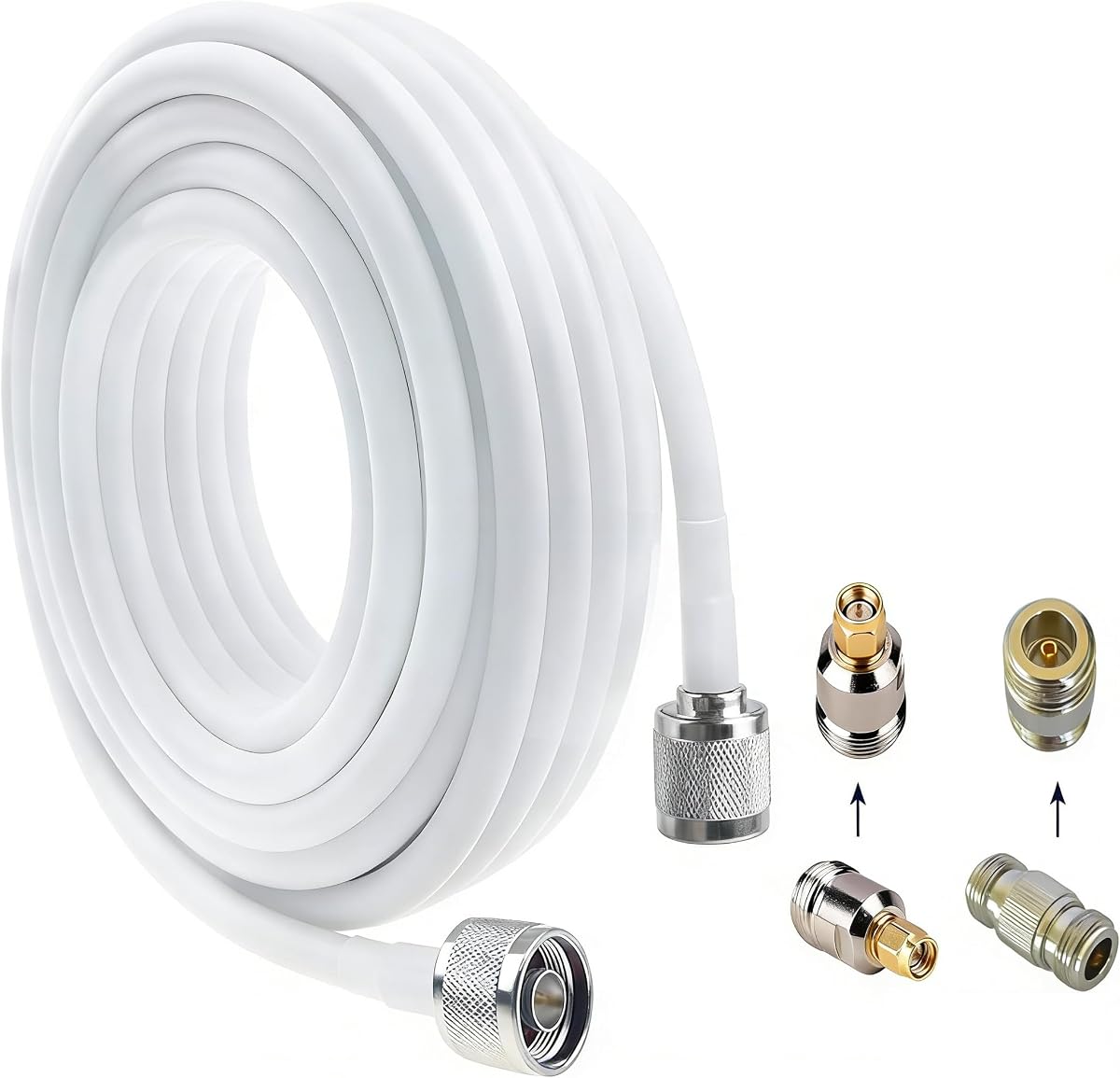
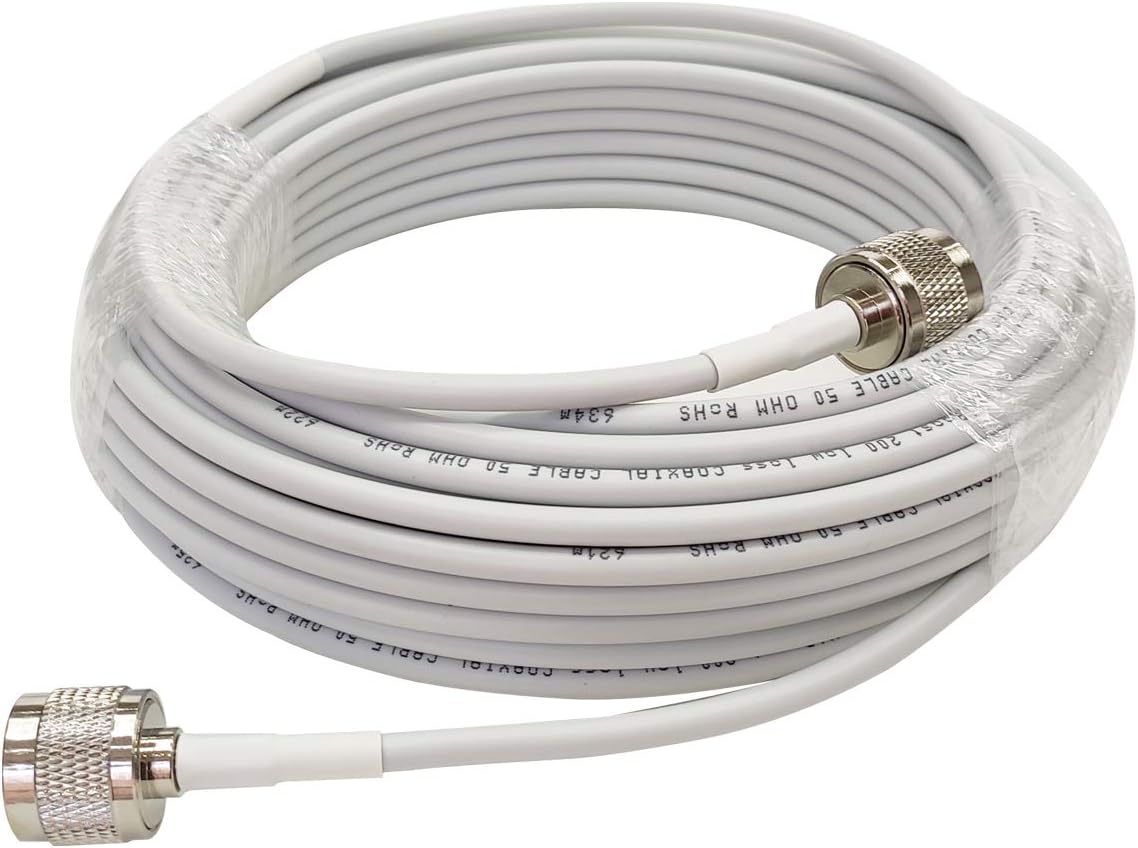



This 100ft 5D-FB coaxial cable stands out as a top choice for serious signal booster installations. It offers ultra low loss performance thanks to its larger center conductor and precise 50 Ohm impedance, ensuring your signal stays strong even over long distances.
We may earn a commission when you buy through this link, at no additional cost to you.
The premium N-Male to SMA-Male connectors are nickel-plated to prevent corrosion and ensure a secure, stable link. The heavy-duty weather-resistant jacket protects against UV rays, rain, and extreme temperatures, making it ideal for both outdoor antenna runs and indoor routing.
While it is a bit more expensive than standard cables, the investment pays off in reliability and performance. The only minor trade-off is ensuring your booster has an SMA port or using an adapter, but the included kit options make this easy to manage.
If you need a durable, high-performance cable that can handle the demands of a full booster system without sacrificing signal quality, this is the one to choose. It delivers superior call quality and faster data speeds by reducing degradation effectively.
The 5D-FB construction minimizes attenuation, allowing you to run long distances between your outdoor antenna and indoor amplifier without losing strength.
Built with flexible heat-resistant PVC and robust shielding, this cable withstands harsh outdoor environments while remaining easy to route indoors.
We may earn a commission when you buy through this link, at no additional cost to you.
This dual coax cable installation solution is perfect for renters or those needing a clean, damage-free setup. It combines a 20-foot extension cable with a 20-inch jumper cable, allowing you to pass signals through small holes or window gaps easily.
We may earn a commission when you buy through this link, at no additional cost to you.
The low loss 3D-FB structure minimizes signal attenuation over distance, maintaining stable cellular strength. Standard SMA male to female connectors ensure wide compatibility with most booster systems, making it a reliable choice for quick upgrades or replacements.
While it is shorter than the 100-foot options, its flexibility and ease of installation make it a smart budget pick. The only downside is that the connectors are less robust than metal ones, but they are sufficient for most indoor applications.
If you want a cost-effective way to extend your booster reach without drilling holes, this kit is the ideal choice. It offers long-range layout freedom and reliable performance for small home or office setups.
The flexible jumper cable easily passes through tight window gaps or tiny wall holes, ideal for renters or finished homes needing clean installations.
Low loss 3D-FB structure helps maintain stable cellular signal strength when extending or replacing original booster cables over moderate distances.
We may earn a commission when you buy through this link, at no additional cost to you.
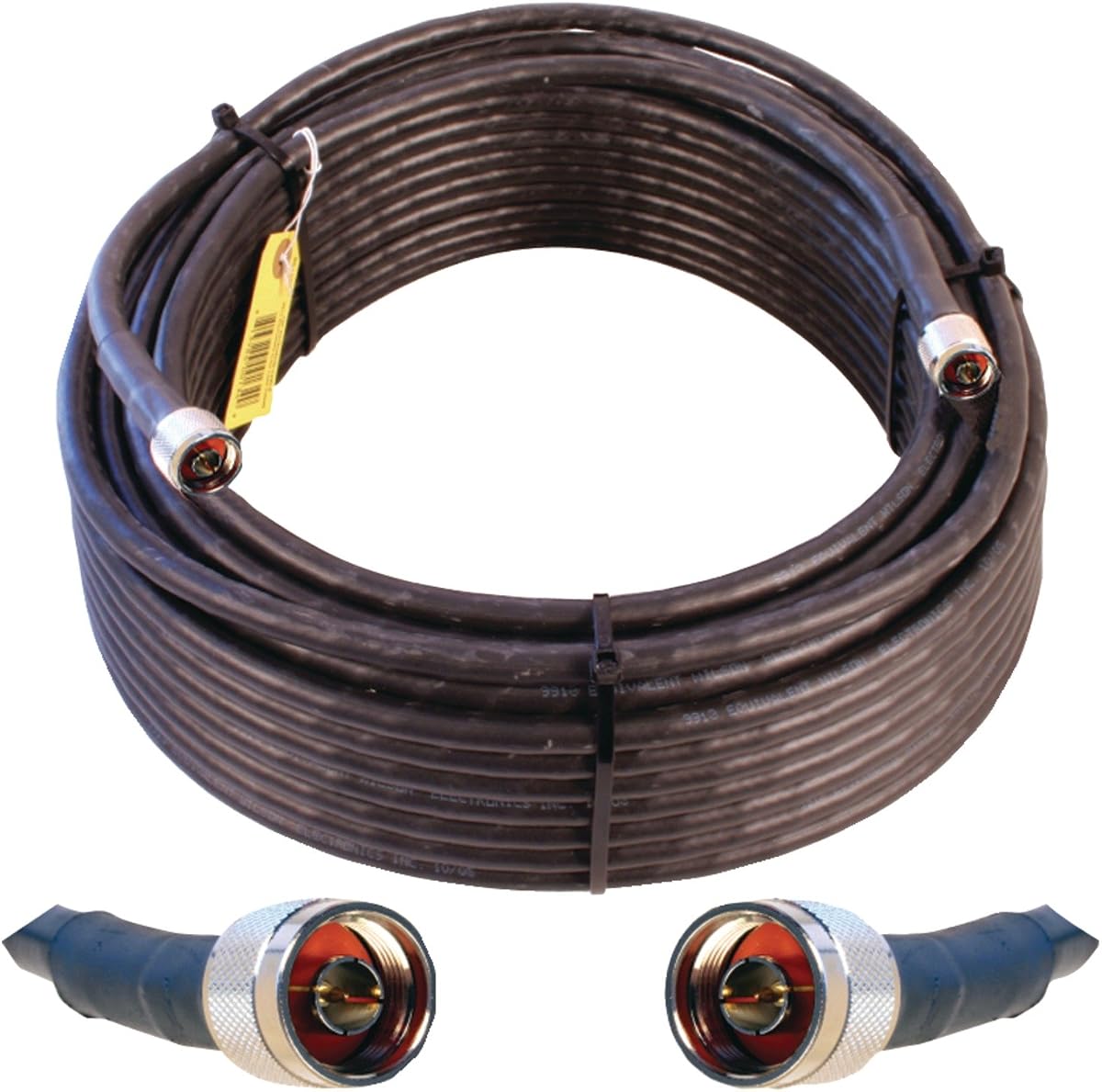
This Wilson Electronics cable is engineered for maximum functionality with weBoost amplifiers and other high-end systems. Manufactured and assembled in the USA, it features premium double-shielded twisted pairs and triple-shielded coaxial cable for superior signal integrity.
We may earn a commission when you buy through this link, at no additional cost to you.
The N-type connector with threaded, weatherproof structure handles frequencies up to 11GHz efficiently. It is CL3 rated for commercial applications and can carry up to 300 volts, making it perfect for complex or multi-phase systems that demand reliability.
While it is more expensive than generic brands, the build quality and warranty justify the cost. The only trade-off is the specialized N connectors which might require adapters for some boosters, but the performance benefits are significant for critical setups.
If you need the highest standard of signal transfer over large distances with minimal loss, this cable is worth the investment. It delivers unmatched reliability and support for professional or heavy-duty booster applications.
Constructed from premium materials, this CL3 rated cable can handle up to 300 volts, making it ideal for commercial and heavy-duty applications.
The medium-sized RF connector handles frequencies up to 11GHz, ensuring fast and efficient data transfer for modern cellular networks.
We may earn a commission when you buy through this link, at no additional cost to you.
This N male to N male coaxial cable is specifically built for cellular signal booster systems and outdoor antennas. It helps extend antenna distance while maintaining stable signal transmission, making it ideal for homes, offices, and rural setups.
We may earn a commission when you buy through this link, at no additional cost to you.
The low loss 50 Ohm performance minimizes signal loss for reliable 4G LTE and 5G performance. Included adapters (N-N and N-SMA) provide flexible extension and repair options with most signal booster setups, enhancing its versatility.
It is weather-resistant and durable, designed to resist moisture, sunlight, and temperature changes. The only downside is the 50-foot length which may not cover very large distances, but the included adapters make it easy to extend if needed.
If you need a straightforward, reliable extension cable with versatile connectors for your booster system, this is a solid choice. It delivers consistent performance for both indoor and outdoor installations without signal degradation.
The kit includes N female-to-female coupler and N Female-to-SMA Male adapter for flexible extension or repair with most signal booster setups.
Made with 50 ohm impedance and high-quality conductors, this cable minimizes signal loss for more reliable 4G LTE and 5G performance.
We may earn a commission when you buy through this link, at no additional cost to you.
This 50ft 3D-FB ultra low loss coaxial cable is designed for high performance with cell phone signal boosters. It features a highly durable waterproof and UV resistant PVC outer jacket, making it suitable for both indoor and outdoor installations.
We may earn a commission when you buy through this link, at no additional cost to you.
The characteristic impedance of 50 ohm ensures stable signal transfer, while the N-Male to N-Male connectors provide secure connections. It can be connected to splitters, indoor antennas, outdoor antennas, taps and other accessories seamlessly.
The jacket's waterproof properties protect against harsh weather, ensuring long-term reliability. The only limitation is the fixed 50-foot length, which may require additional extensions for larger properties, but it is perfect for standard setups.
If you need a reliable, weather-resistant cable for your HiBoost or compatible booster system, this option delivers consistent performance. It minimizes loss and supports versatile connectivity options for your booster needs.
Highly durable waterproof and UV resistant PVC outer jacket ensures the cable works great indoors and outdoors in various conditions.
Designed to connect with cell phone signal boosters, indoor and outdoor antennas, taps, and splitters for a complete signal solution.
We may earn a commission when you buy through this link, at no additional cost to you.
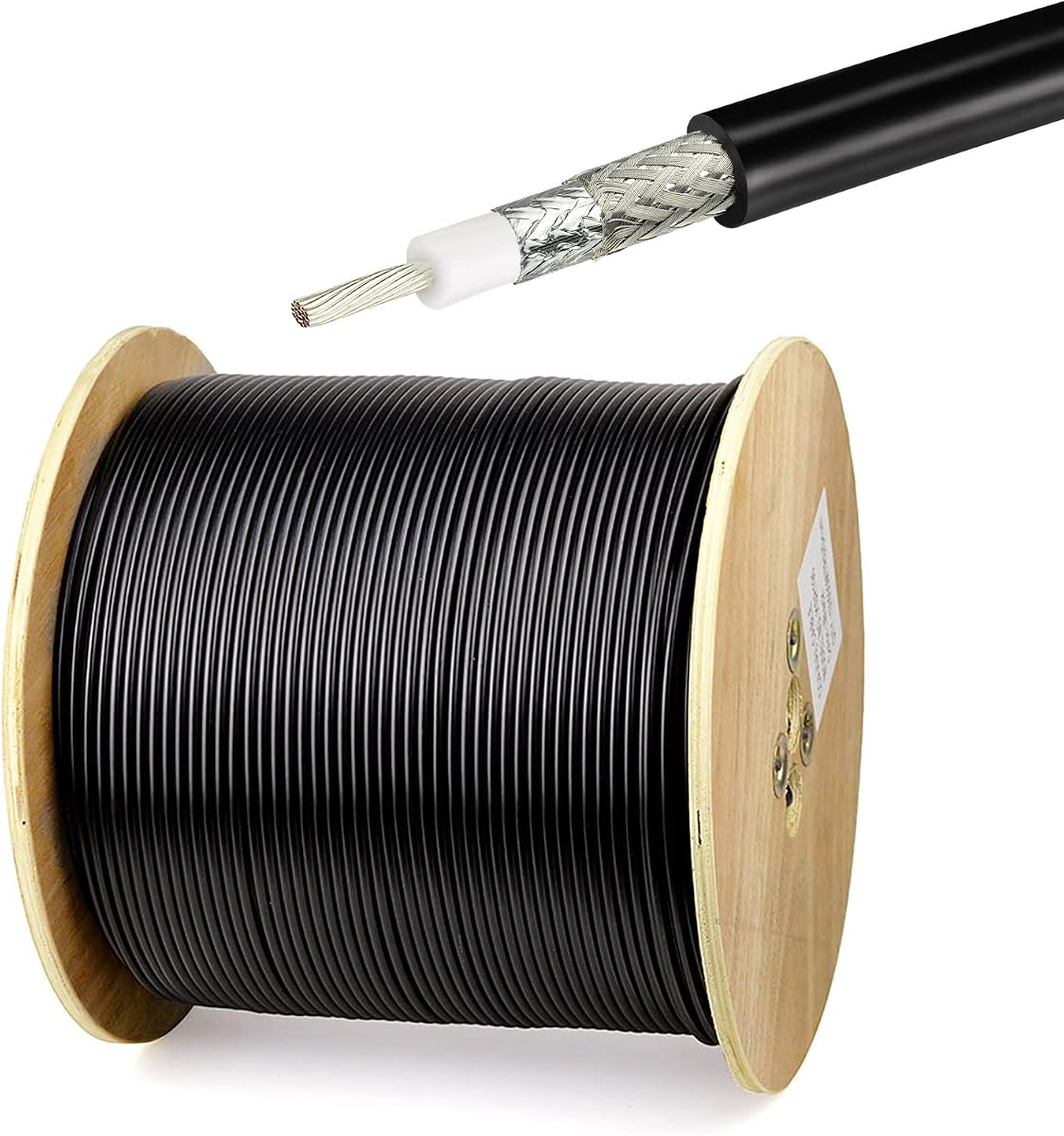
This 100ft 5D-FB coaxial cable delivers maximum signal integrity with minimal attenuation. It features Copper clad Aluminum for conductivity and double-layer aluminum foil shield to block external electromagnetic interference effectively.
We may earn a commission when you buy through this link, at no additional cost to you.
The tough and flexible PVC jacket offers superior weather resistance for moisture and UV protection. The 100-ft length advantage easily connects devices across different rooms, between floors, or from attic to basement without signal loss.
The 50-Ohm impedance match minimizes signal reflection and maximizes power transfer. The N-Male to SMA-Male connectors are precision-machined for secure coupling at high frequencies, though ensuring proper device compatibility is important.
If you need a long run cable that maintains signal quality and blocks interference, this is an excellent choice. It supports network equipment links and RF distribution systems reliably over extended distances.
The double-layer aluminum foil shield effectively blocks external electromagnetic interference (EMI/RFI) while preventing signal leakage from the cable.
Engineered with a tough and flexible PVC jacket, offering easy routing in confined spaces such as attics or walls without damage.
We may earn a commission when you buy through this link, at no additional cost to you.
This 100ft 5D-FB coaxial cable provides maximum signal integrity with minimal attenuation using Copper clad Aluminum. The N-Male connectors are precision-machined with threaded coupling for optimal shielding at high frequencies.
We may earn a commission when you buy through this link, at no additional cost to you.
The PVC jacket offers superior weather resistance against moisture and UV, making it ideal for indoor and outdoor antenna runs. The 100-ft length advantage easily connects devices across different rooms or floors with stable transmission.
Its 50-Ohm impedance match minimizes signal reflection and maximizes power transfer for standard RF equipment. The double-layer aluminum foil shield blocks external electromagnetic interference effectively, ensuring crystal-clear stable transmission.
If you need a versatile, long cable for boosters and antennas with robust shielding, this is a great option. It is perfect for attic to basement runs and supports various RF applications reliably.
High-quality N-Male connectors are precision-machined with threaded coupling to ensure secure connections to antennas, amplifiers, and cellular boosters.
The double-layer aluminum foil shield effectively blocks external electromagnetic interference (EMI/RFI) while preventing signal leakage effectively.
We may earn a commission when you buy through this link, at no additional cost to you.
This 10-foot low loss coax cable is perfect for extending the reach of your amplifier or connecting vehicle wireless amplifiers to small antennas. It attenuates signal less than 2 db, ensuring minimal loss over short distances.
We may earn a commission when you buy through this link, at no additional cost to you.
The SMA female and SMA male connectors provide secure connections that maintain signal integrity. It is designed specifically for vehicle setups where flexibility and compact routing are essential for clean installations.
While it is short, its low loss characteristics make it effective for precise connections. The Wilson brand is trusted for reliability, though the length is limited to specific short-range needs.
If you need a reliable short extension for a booster or vehicle antenna, this cable is a solid choice. It offers minimal attenuation and secure connectivity for your specific setup.
It attenuates signal less than 2 db, ensuring minimal loss over short distances for reliable connections.
Designed to connect vehicle wireless amplifiers to small vehicle antennas for efficient signal extension.
We may earn a commission when you buy through this link, at no additional cost to you.
This RG8X coaxial cable is a step up from standard RG-58, recommended for high-powered applications. It features a waterproof PVC jacket for harsh outdoor use and supports better signal transfer with minimum loss over large distances.
We may earn a commission when you buy through this link, at no additional cost to you.
It works for any 50 Ohm RF system, including cell boosters, WiFi repeaters, CB ham radios, and antenna analyzers. The cable is well compatible with PL259/SMA/BNC/TNC/UHF/N connectors, offering versatile connectivity options.
The flexible design allows bending and strapping without inducing signal interference. The SWR is low at less than 1.15, ensuring efficient power transfer. Custom lengths are available directly from the manufacturer if needed.
If you need a robust cable for high-power signal transfer with versatile connector compatibility, this is a strong contender. It is ideal for users seeking premium coax performance without brand restrictions.
The RG8X construction is recommended for high-powered applications or users who simply want the best coax possible.
It could be bent and strapped without inducing signal interference, supporting better signal transfer over large distances.
We may earn a commission when you buy through this link, at no additional cost to you.
This 100ft RG8X coaxial cable is a step up from standard RG58, recommended for high-powered applications. The signal loss is much lower than RG58 cable, supporting better signal transfer with minimum loss over large distances.
We may earn a commission when you buy through this link, at no additional cost to you.
The outer material is a waterproof PVC jacket suitable for harsh outdoor environments. It is compatible with any 50 Ohm RF system, including cell phone boosters, WiFi repeaters, and CB radios. It is well compatible with TS9/SMA/BNC/TNC/UHF/N connectors.
MOOKEERF is a professional manufacturer of RF cables made to the highest standards. The cable is flexible and can be bent without inducing signal interference. It offers long-distance performance with reliable durability for various applications.
If you need a professional-grade, long high-power cable for boosters, this is a solid option. It provides low SWR, high durability, and flexible routing for demanding RF setups.
MOOKEERF is a professional manufacturer of RF cables, and all their cables are made to the highest standards for reliability.
The cable could be bent and strapped without inducing signal interference, supporting better signal transfer with minimum loss over large distances.
We may earn a commission when you buy through this link, at no additional cost to you.
Choosing the right coaxial cable is crucial for optimizing your booster's performance. This guide outlines key factors to consider before purchasing.
The length of your coaxial cable directly impacts signal loss due to attenuation. Longer cables introduce more loss, especially for low-quality materials. Always choose a cable that is slightly longer than your needed distance to allow for routing slack but avoid excessive length that degrades the signal. Opt for low-loss cables for distances over 50 feet to maintain strong performance.
Most cellular systems operate at 50 Ohm impedance. Ensure your cable matches this specification to prevent signal reflection and maximize power transfer. Cables that deviate from 50 Ohms can cause signal degradation and reduce booster efficiency significantly. Verify the impedance rating in the product details before purchasing to guarantee compatibility with your booster system.
Check the connectors on your booster and antenna to ensure compatibility. Common types include SMA, N, and BNC. Mismatched connectors will prevent a secure connection. Some kits include adapters for flexibility. Ensure the connectors are plated with nickel or brass to resist corrosion over time. This is vital for outdoor installations exposed to moisture and temperature changes.
Effective shielding protects your signal from external electromagnetic interference (EMI/RFI). Look for cables with double-layer aluminum foil or braided shields. Good shielding ensures stable transmission by preventing noise from entering the signal path. Cables with weak shielding may result in unstable connections or dropped calls in high-interference environments.
For outdoor runs, the jacket must be weatherproof to resist moisture and UV rays. PVC jackets are common and durable, but high-quality versions are flexible yet tough. Indoor cables can have lighter jackets. A waterproof jacket prevents the internal conductors from corroding over time. Choose a jacket material that suits your installation environment for long-term reliability.
Copper-clad aluminum (CCA) conductors offer better conductivity than aluminum. Some high-end cables use solid copper for lower resistance. High-quality conductors minimize signal loss and heat buildup over distance. Check the product specifications to confirm the conductor type and ensure it supports high-frequency data transfer effectively.
While longer cables offer flexibility, they also increase signal loss. If you need to route a cable over a long distance, consider a 100ft low-loss cable rather than splicing two shorter ones. Splicing introduces additional loss points and potential connection failures. Direct runs with one continuous cable are always better for signal integrity.
Look for certifications like CL3 rating for in-wall safety. Commercial grade cables often have stricter quality controls. Ensuring the cable meets safety standards reduces fire hazards. Trusted brands usually provide better warranties and support. These certifications indicate the cable has been tested for durability and safety under various conditions.
Start by measuring the distance between your outdoor antenna and indoor booster to determine the required cable length. Always add a few extra feet for slack to allow for proper routing around corners or through walls. A cable that is too tight can stress the connectors and lead to signal failure.
Connect the cable to your antenna and booster carefully, ensuring the connectors are tightened securely but not over-tightened. For outdoor connections, apply waterproof tape or silicone sealant to protect the connector from moisture. This prevents corrosion and maintains a stable signal connection during rain or snow.
Inspect your cable regularly for wear and tear. If you notice fraying or cracks in the jacket, replace it immediately to avoid signal degradation. Keep cables away from sharp objects and do not kink them during installation, as bending the cable too sharply can damage the internal conductors.
Low-loss cables minimize signal attenuation, ensuring the signal from your outdoor antenna reaches the booster without significant degradation. This maintains faster data speeds and clearer call quality. Without low-loss construction, long runs could negate the booster's benefits by losing signal strength.
RG58 works for short distances and low-power setups but is not ideal for long runs. It has higher attenuation compared to 5D-FB cables. For booster systems needing reliability over 50 feet, 5D-FB is highly recommended to maintain consistent signal strength.
Most boosters use SMA or N connectors. Some models use SMA while others use N. Check your booster's manual for the exact connector type required. Adapters are available to bridge different connector standards if your cable does not match.
Yes, but ensure the cable is CL3 rated for in-wall safety. Standard outdoor cables may not be safe for enclosed wall spaces. Always use cables designed for in-wall routing and check local fire codes to ensure compliance before installation.
Use waterproof tape or silicone sealant to cover the connection points. This prevents moisture from entering the connectors and causing corrosion. Proper protection ensures the cable lasts longer and maintains stable signal transmission in harsh weather.
It depends on the cable quality. With low-loss 5D-FB cables, 100ft runs can still provide excellent performance. With RG58 or standard cables, you may experience significant signal loss. Always choose low-loss cables for long-distance setups.
5D-FB cables have a larger center conductor and better shielding than 3D-FB. This results in lower attenuation and better performance over longer distances. 3D-FB is good for short runs but 5D-FB is superior for long or critical installations.
Yes, if the connector type on the cable does not match your booster or antenna, you will need an adapter. Adapters allow you to use the cable with different standards. Ensure the adapter is high quality to avoid signal loss at the connection point.
Choosing the right coaxial cable is essential for maximizing your booster's performance. The 100ft 5D-FB cables offer exceptional durability and low loss for long-distance runs, while the SMA dual kit provides a budget-friendly solution for smaller setups.
Prioritize cables with proper impedance matching, effective shielding, and weather-resistant materials for outdoor use. Ensure connector compatibility with your booster to prevent signal degradation. Investing in high-quality cable ensures your booster system performs at its peak.
Prices and availability can change quickly, so verify current product details before purchasing. Check customer reviews and compatibility notes to ensure you select the best cable for your specific needs. With the right cable, you can enjoy stronger signal coverage and faster speeds consistently.