
Mcbazel 3 in 1
4.5Editor score
Beaufort scale display
Wind temperature sensor
Lightweight portable design
This guide compares the top marine anemometers for sailors and boaters, evaluating accuracy, durability, and features to help you find the perfect wind
Navigating safely requires precise wind data. A quality marine anemometer provides real-time speed and direction readings essential for sailing, docking, and weather assessment on any vessel.
We evaluated ten leading models based on accuracy, build quality, and ease of use. Our selection includes handheld units for casual users and integrated systems for serious racers.
Each pick highlights specific strengths like portability or marine-grade durability. Prices fluctuate frequently, so verify current listings before purchasing to ensure you get the best value today.
4.5Editor score

4.5Editor score

4.4Editor score
The following table provides a side-by-side comparison of all ten selected marine anemometers. Review key specifications to find the model that matches your specific boating requirements.


The BTMETER BT-100 stands out as a top choice for marine enthusiasts seeking reliable handheld data. With a strong 4.5 rating, it delivers precise wind speed and temperature readings essential for safe boating decisions.
We may earn a commission when you buy through this link, at no additional cost to you.
Its versatility shines through five different measurement units including knots and mph. The bright backlit LCD ensures visibility during early morning or late evening sailing sessions. A tripod hole allows for stable continuous monitoring without holding the device.
While the plastic housing is durable enough for typical use, it may not withstand extreme impacts. The reliance on AAA batteries means carrying spares is wise for extended trips offshore. These trade-offs are acceptable given the device performance and affordability.
Sailors and drone pilots will find this unit invaluable for quick weather checks. Its portability and ease of use make it a practical tool for both casual boaters and professionals needing reliable wind data on the water.
The ability to switch between m/s, km/h, ft/min, knots, and mph ensures compatibility with various sailing standards and preferences.
A threaded tripod hole on the bottom enables hands-free operation, crucial for long-term wind monitoring or drone flights.
We may earn a commission when you buy through this link, at no additional cost to you.
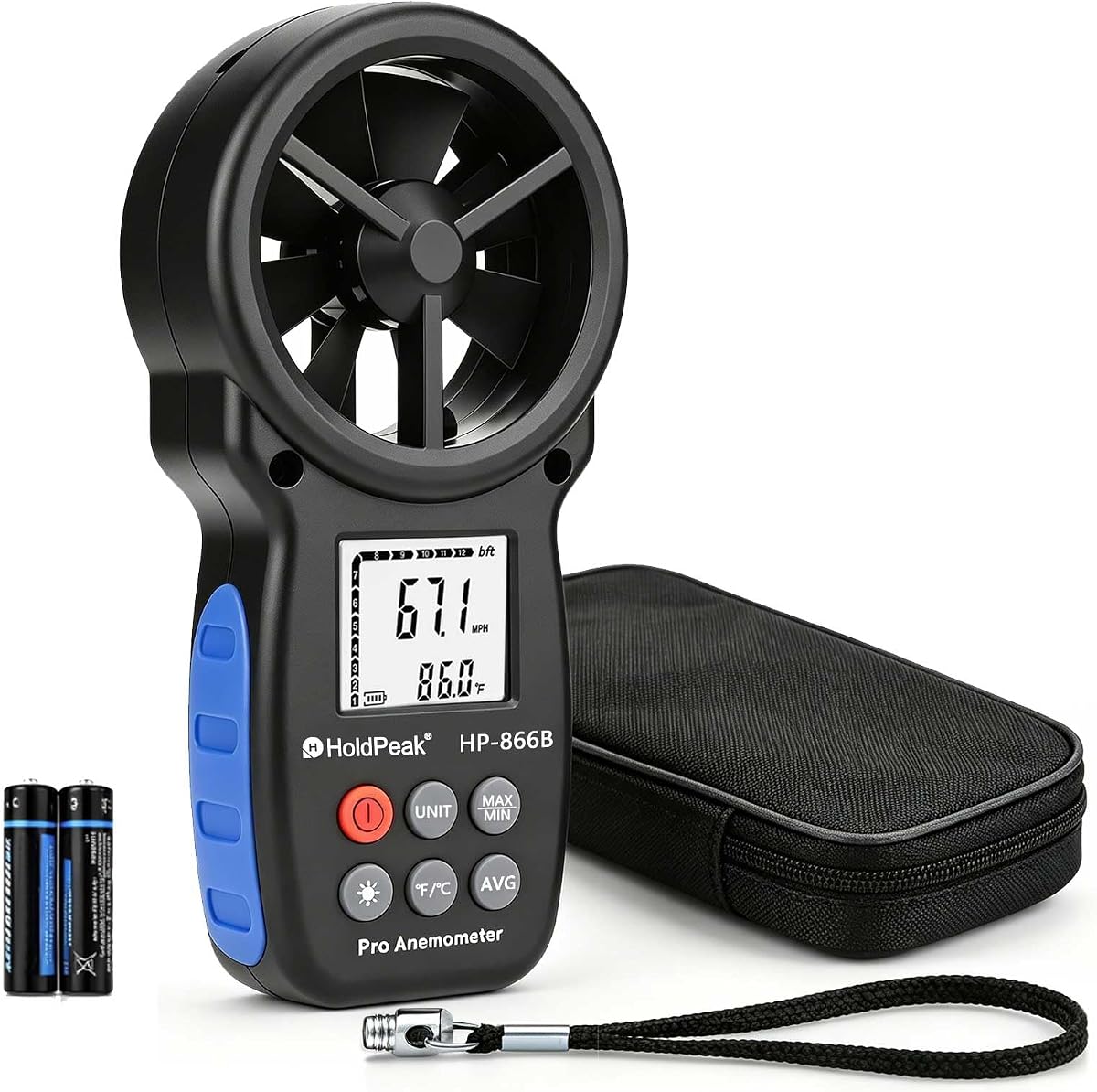
The HoldPeak 866B offers professional-grade accuracy with dual temp sensors and eight vanes. It is a solid choice for boaters needing consistent wind data without complex installation requirements.
We may earn a commission when you buy through this link, at no additional cost to you.
Its smooth fan shaft ensures reliable detection across the 0.67 to 67.1 mph range. The included hand strap prevents accidental drops on deck. Auto off function conserves battery life during intermittent use.
The compact size fits easily in pockets but may be harder to read in bright sunlight. The lack of a tripod hole limits static mounting options. These limitations are minor compared to its overall utility.
Ideal for fishing or sailing trips where quick wind checks are needed. The included carrying pouch protects the device from salt spray and rough handling during transport to the marina.
Two temperature sensors provide more stable readings by compensating for environmental fluctuations during measurement.
A waterproof pouch keeps the anemometer safe from moisture and physical damage when not in use.
We may earn a commission when you buy through this link, at no additional cost to you.
This magnetic mount model offers exceptional convenience for temporary or semi-permanent wind monitoring. Its 4.7 rating reflects high user satisfaction with its calibration and durability in marine environments.
We may earn a commission when you buy through this link, at no additional cost to you.
The magnetic base allows instant attachment to metal surfaces on the boat. Calibration ensures precise readings critical for tactical sailing maneuvers. The durable housing withstands exposure to salt and sun better than plastic handhelds.
The cost is higher than basic handhelds, which may deter casual users. Magnetic mounting requires a flat metal surface, which might not be available on all vessels. These factors limit accessibility but enhance utility for serious users.
Sailors needing quick setup for regattas or fishing will appreciate the ease of use. It serves as an excellent portable alternative to fixed systems without permanent installation.
No tools are required to mount the device, making it ideal for quick deployment and storage on deck.
Factory calibration ensures data reliability across varying wind conditions, essential for performance sailing.
We may earn a commission when you buy through this link, at no additional cost to you.
The Raymarine I60 Display serves as a dedicated interface for existing marine wind systems. It offers a clean and professional look with clear data presentation for advanced sailors.
We may earn a commission when you buy through this link, at no additional cost to you.
It integrates seamlessly into NMEA networks allowing centralized data viewing. The black and grey finish matches standard marine instrument panels. This unit assumes you already have a functioning masthead transducer installed.
The lower rating suggests mixed experiences with setup or compatibility. Relying on a separate sensor increases overall system cost. These drawbacks are expected for display-only components in specialized marine electronics.
Best suited for boat owners upgrading or replacing existing i60 systems. It provides a reliable visual endpoint for complex onboard instrumentation networks.
Compatible with standard marine protocols ensuring smooth communication with other onboard instruments.
Designed to match the footprint of traditional instruments for easy retrofitting into existing consoles.
We may earn a commission when you buy through this link, at no additional cost to you.
The TopTes TS-301 excels with its large backlight LCD screen. It offers comprehensive environmental data including humidity alongside wind speed. This makes it versatile for outdoor activities beyond just sailing.
We may earn a commission when you buy through this link, at no additional cost to you.
The 2.26 inch screen ensures readings are visible even from a distance. Three AAA batteries power the device which auto shuts off after ten minutes to save power. The unit is lightweight for easy transport.
While the plastic build is light, it may lack the robustness of marine-grade units. Battery life can vary with frequent backlight use. These are minor concerns given the high value and functionality.
Perfect for sailing enthusiasts who also enjoy hiking or drone flying. The humidity feature adds value for general weather monitoring on the water.
The large backlight screen makes it easy to read data in low light or glare conditions.
Includes humidity and temperature sensors for a complete weather profile during outdoor activities.
We may earn a commission when you buy through this link, at no additional cost to you.
This Raymarine E28081 kit provides essential replacement parts for older ST50 ST60 and ST80 systems. It ensures continued accuracy for vessels with existing wind instrumentation that needs repair.
We may earn a commission when you buy through this link, at no additional cost to you.
The set includes the vane cups, counterweight, speed plates, screws, and an allen key. OEM quality guarantees compatibility and performance. This restores the system to original factory specifications.
Installation requires basic tools and knowledge of the masthead assembly. It is not a standalone handheld meter but rather a critical component. This distinction is vital for buyers seeking a complete new system.
Ideal for boat owners maintaining legacy marine instrument setups. It offers a cost-effective way to extend the life of reliable ST series systems.
Designed specifically for ST50 ST60 and ST80 units ensuring perfect fit and function.
Includes allen key and screws so you can complete the installation immediately.
We may earn a commission when you buy through this link, at no additional cost to you.
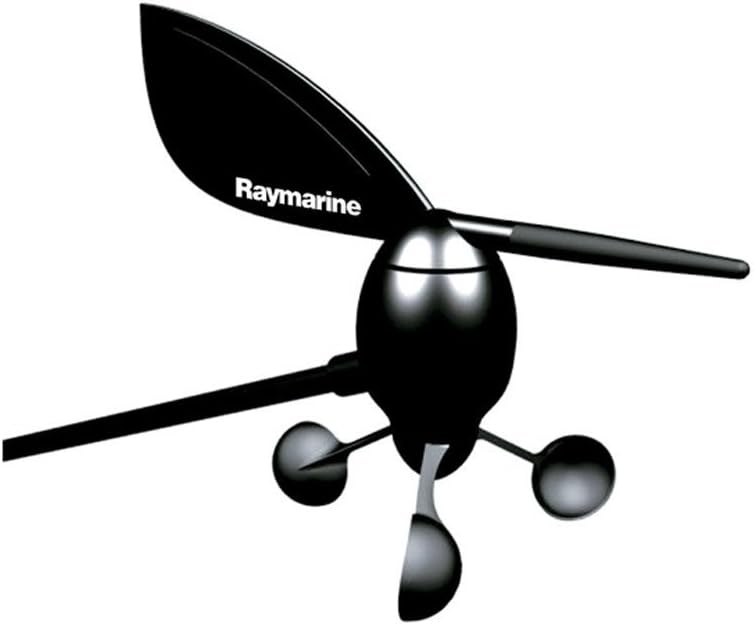
The latest version of the Raymarine masthead offers updated durability and performance for modern sailing needs. It acts as the primary sensor for networked wind data systems.
We may earn a commission when you buy through this link, at no additional cost to you.
Its design includes robust cups and arms built to withstand salt and UV exposure. This unit works with existing displays to provide true and apparent wind data. It is a critical component for high performance sailing.
Without a display this unit is non-functional on its own. Installation on the mast requires specialized tools or professional help. These constraints mean it is best for system upgrades.
Sailors upgrading their instrumentation will find this sensor reliable. It ensures your networked system has the most accurate and durable data source possible.
Updated materials offer better resistance to harsh marine environments compared to older versions.
Built with durable components to ensure long-term performance and data consistency.
We may earn a commission when you buy through this link, at no additional cost to you.
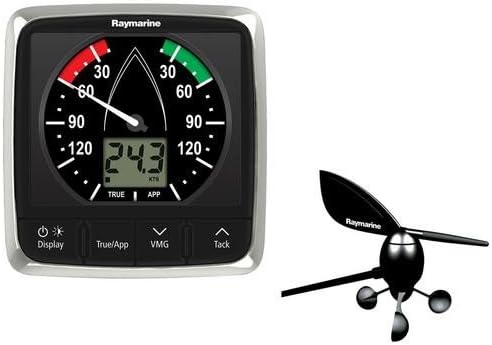
This Raymarine i60 System provides a complete premium wind data solution for serious sailors. It combines a durable display with a high-quality masthead transducer for accurate measurements.
We may earn a commission when you buy through this link, at no additional cost to you.
Features include VMG and tack data which are essential for racing strategies. The 30 meter cable covers most mast heights. Nighttime backlighting ensures data is readable during night watches.
The price is significantly higher than handheld options. Installation requires drilling and cable routing which may need professional help. These costs are justified by the performance and reliability.
Ideal for racers or cruisers needing integrated instrument data. This system offers a professional upgrade over basic handheld wind sensors.
Displays VMG and tack angles to help sailors optimize their course relative to wind direction.
Red backlighting preserves night vision while allowing clear data access on the console.
We may earn a commission when you buy through this link, at no additional cost to you.
The Raymarine i60 Wind Display System with masthead provides comprehensive weather data for marine navigation. It supports true and apparent wind metrics essential for tactical decisions on water.
We may earn a commission when you buy through this link, at no additional cost to you.
Its saltwater resistant design ensures reliability in harsh marine environments. Adjustable backlighting allows for day and night visibility. Users can customize display fields to prioritize key data points.
The lack of a rating makes confidence harder for first-time buyers. Setup involves mounting the masthead and connecting to the display unit. This requires careful planning and execution.
Best for advanced sailors needing robust weather monitoring. The system offers extensive data options for strategic navigation.
Select which data fields to show on screen to prioritize your specific sailing needs.
Built to resist corrosion and damage from constant exposure to salt spray.
We may earn a commission when you buy through this link, at no additional cost to you.
The Mcbazel 3 in 1 handheld is a budget-friendly option for casual boaters. It measures wind speed, temperature, and Beaufort level to give a complete wind assessment.
We may earn a commission when you buy through this link, at no additional cost to you.
Its double-line LCD shows both speed and temperature simultaneously. Max Min and Avg functions help track wind changes over time. It is lightweight and easy to carry in a pocket.
Batteries are not included so purchase them separately. The housing is basic and may not last in extreme conditions. These limitations are acceptable given the low cost.
Perfect for occasional sailors or recreational fishing trips. It offers essential wind data without breaking the budget.
Includes the 1 to 12 Beaufort scale to classify wind force and expected conditions.
Max Min and Avg functions allow you to track wind variability during your trip.
We may earn a commission when you buy through this link, at no additional cost to you.
Selecting the right marine anemometer depends on your sailing style and budget. Use these factors to find a unit that delivers accurate wind data when you need it most.
Ensure the device supports units relevant to your activities such as knots for sailing or mph for general use. Models with Beaufort scales offer intuitive wind force estimates for quick visual checks.
Look for multiple unit options to accommodate different regional standards and navigation software requirements.
Higher accuracy models use dual sensors and precise vanes to minimize errors during speed changes. This is critical for racing or safety where precise wind data informs decisions.
Check the stated tolerance range to ensure it meets your expectations for precision.
Marine environments demand salt and UV resistant materials. Plastic handhelds may suffice for occasional use but professional systems need robust housings to prevent corrosion.
Prioritize models designed specifically for marine exposure over general HVAC tools.
A large backlit screen ensures readings are visible in bright sunlight or at night. Some models offer adjustable backlighting to preserve night vision during evening watches.
Select displays with high contrast text to reduce eye strain while navigating.
Handheld units offer flexibility but require manual holding. Tripod holes or magnetic mounts allow for continuous monitoring without interruption.
Consider how you plan to use the device and choose mounting options accordingly.
Most handhelds rely on AAA batteries while integrated systems use ship power. Check auto off features to conserve battery during intermittent use on trips.
Ensure you can easily replace or recharge power sources while underway.
For networked boats, ensure the anemometer works with your existing instrument panels via NMEA standards. Display only units require compatible sensors for full functionality.
Verify compatibility with your current navigation system before purchasing.
Handheld models offer affordability while integrated systems provide high-end performance. Look for warranties that cover marine damage or sensor failures.
Balance your budget with expected longevity and reliability needs.
To start using your handheld unit, install the provided batteries and power it on. Allow the sensors to acclimate to the external environment for 30 minutes before taking initial readings to ensure accuracy.
Hold the device steady away from body heat and obstructions for the most accurate wind speed measurements. For tripod models, secure the unit to a stable surface to monitor wind over time.
Rinse the device with fresh water after saltwater exposure and store it in a dry place. Check battery levels regularly and replace them when low to avoid data loss during trips.
Integrated systems like Raymarine offer higher accuracy due to calibrated masthead sensors and professional-grade electronics. Handhelds vary but models like BTMETER provide reliable data for casual users.
Rinse with fresh water after use to remove salt spray and dry thoroughly. Store in a cool dry place and replace batteries as needed to prevent corrosion and power loss.
Yes, but HVAC units may lack marine durability and specific sailing units like knots or Beaufort scales. Choose models designed for outdoor marine conditions for best results.
The Beaufort scale classifies wind force from 0 to 12 based on observed conditions. It helps sailors quickly assess wind strength without needing precise numbers.
No, handheld units measure speed and temperature but require separate vane transducers for wind direction. Integrated systems typically provide both speed and direction data.
Typically 10 to 20 hours of continuous use depending on backlight settings. Auto off features help extend life when the device is not in active use.
The BTMETER BT-100 leads as the best overall handheld due to its versatility and accuracy. For professional sailing the Raymarine i60 System offers unmatched data integration.
Prioritize durability and ease of use based on your specific boating needs. Casual users may prefer the affordable Mcbazel 3 in 1 while racers need integrated network systems.
Prices and availability fluctuate often so check current listings before purchasing. Select a unit that matches your sailing style for safe and informed navigation on the water.