
Intel Core Ultra 9 285K
4.6Editor score
24 cores for heavy workloads
Up to 5.7 GHz boost clock
40MB cache for fast access
This guide compares the top CPUs for Excel and Data Analysis, evaluating core counts, cache sizes, and clock speeds to help you choose the right processor for
Selecting the right central processing unit is crucial for anyone working extensively with spreadsheets and large datasets. A powerful CPU ensures that complex formulas calculate instantly and that large pivot tables refresh without lag. This guide helps you navigate the options available to optimize your data processing tasks.
We have evaluated ten leading desktop processors based on their architecture, core configurations, and benchmark performance relevant to productivity workloads. Each product was assessed for its ability to handle multi-threaded tasks and single-core speed required by modern applications. Our goal is to provide a clear view of how each chip performs under stress.
Every pick in this list highlights specific strengths such as cache size, boost clocks, and compatibility with modern motherboards. Please note that product prices and availability are subject to change over time. We recommend checking the current listings on Amazon to verify the latest details before making your final decision on hardware.
4.6Editor score

4.8Editor score

4.8Editor score
This side-by-side comparison table outlines the key specifications for each processor to help you visualize the differences in cores, threads, and clock speeds at a glance.


The Intel Core Ultra 9 285K stands out as a top tier option for users requiring maximum processing power for Excel and data analysis. It receives a strong rating for its ability to handle complex computations without breaking a sweat. This processor is designed to future proof your workstation with its advanced core configuration.
We may earn a commission when you buy through this link, at no additional cost to you.
Its hybrid architecture integrates P cores and E cores to optimize workload distribution efficiently. You will find that large pivot tables and macro executions benefit from the 5.7 GHz boost clock. The 40MB cache ensures that data stays close to the cores for rapid access during intensive operations.
While the performance is top notch, users should be aware that this chip requires careful thermal management. It does not come with a cooler, so investing in a high end air or liquid cooler is necessary. Additionally, you must ensure your motherboard supports the new LGA1851 socket and 800 series chipset.
This CPU is best suited for professionals who demand the absolute highest performance for their data analysis tasks. If your workflow involves massive datasets and frequent recalculations, this processor will deliver the speed you need. We recommend it for those building a high end workstation where cost is secondary to capability.
The mix of P cores and E cores allows the system to prioritize heavy calculation tasks while handling background processes efficiently.
With support for PCIe 5.0 and DDR5 memory, this platform ensures your system remains relevant for years to come.
We may earn a commission when you buy through this link, at no additional cost to you.
The AMD Ryzen 7 9800X3D earns our Editor's Choice award due to its unique 3D V-Cache technology that benefits data processing significantly. It boasts a rating that reflects its superior ability to handle latency sensitive workloads. This processor is ideal for users who rely heavily on cached data for their calculations.
We may earn a commission when you buy through this link, at no additional cost to you.
The 96MB of L3 cache is a standout feature that reduces the need to fetch data from slower system memory. This means that spreadsheet operations and complex formulas execute with remarkable speed and consistency. The Zen 5 architecture provides a solid IPC uplift that enhances overall throughput even with fewer cores.
One consideration is that this chip requires a decent cooling solution as it does not include a stock cooler. While it runs efficiently, thermal management is key to sustaining boost clocks during long analysis sessions. You will need to pair it with a capable AM5 platform to unlock its full potential.
We recommend this CPU for analysts who want a balance of high clock speeds and massive cache capacity. If you work with datasets that fit well within cache limits, this processor will offer a smooth and responsive experience. It is a fantastic choice for upgrading an existing AM5 system for peak performance.
The stacked cache design allows for larger datasets to be stored directly on the CPU die for faster access times.
The AM5 socket ensures long term support for future Ryzen processors, giving you a clear upgrade path.
We may earn a commission when you buy through this link, at no additional cost to you.
The AMD Ryzen 5 9600X is our top pick for those seeking the best value without sacrificing modern performance capabilities. It has achieved a high rating for its ability to handle demanding tasks at a very competitive price point. This processor makes the latest AM5 platform accessible to budget conscious professionals.
We may earn a commission when you buy through this link, at no additional cost to you.
With 6 cores and 12 threads, it provides ample headroom for multitasking while Excel and other applications run in the background. The 5.4 GHz max boost ensures that single threaded workloads are handled with speed and efficiency. It also supports high speed DDR5 memory which further enhances data throughput.
Users should note that this processor does not come with a cooler, so you will need to budget for one separately. While it is unlocked for overclocking, stock performance is already impressive for most data analysis needs. It is a great option for building a new workstation without overspending on processing power.
We recommend this CPU for users who want a modern system that will last for years without breaking the bank. If you need a reliable workhorse for daily spreadsheet tasks and moderate data analysis, this chip delivers exceptional value. It is the smart choice for those prioritizing cost efficiency and performance balance.
Choosing this processor allows you to use the latest motherboard technology and upgrade to future CPUs easily.
The unlocked nature of the chip means enthusiasts can tune performance for specific workload requirements.
We may earn a commission when you buy through this link, at no additional cost to you.
The Intel Core i9-14900K is known for its incredible clock speeds that make it a powerhouse for single thread performance. It is rated well for its ability to handle tasks that require quick responses and high frequency operations. This processor brings significant performance gains to workstations that need raw speed.
We may earn a commission when you buy through this link, at no additional cost to you.
Its 24 cores and 32 threads allow it to manage multiple heavy applications simultaneously without slowing down. The 6.0 GHz max boost is a standout feature that helps in accelerating calculations in large datasets. It also offers flexibility with both DDR4 and DDR5 memory support for diverse build configurations.
However, this performance comes at the cost of higher power usage and heat output. You will need a robust cooling system to keep temperatures in check during sustained workloads. Additionally, you may need to update your BIOS if you are using an older 600 series motherboard.
We recommend this CPU for users who prioritize maximum clock speed and raw power over efficiency. If you frequently work with complex macros and need the fastest possible response times, this chip is a strong contender. It is best suited for those who have a well ventilated case and high end cooling.
The 6.0 GHz boost ensures that even complex formulas calculate almost instantaneously for a smoother user experience.
Support for both DDR4 and DDR5 allows you to use existing RAM or upgrade to the latest standard.
We may earn a commission when you buy through this link, at no additional cost to you.
The Intel Core Ultra 7 270K offers a strong balance of performance and features for users entering the new Intel platform era. It is rated highly for its reliability and the smooth experience it provides during standard office tasks. This processor is designed for those who want modern technology without going to the absolute top tier.
We may earn a commission when you buy through this link, at no additional cost to you.
With 24 cores and a 5.5 GHz boost frequency, it delivers consistent performance across a variety of workloads. The hybrid architecture helps in managing background tasks efficiently while keeping your main applications running smoothly. It also supports PCIe 5.0 which ensures high bandwidth for storage and GPUs.
This CPU is unlocked for performance tuning, allowing you to squeeze out more power if you have the cooling to support it. However, you will need an Intel Z series chipset motherboard to enable overclocking features. The power design is robust, so ensure your PSU can handle the demands.
We recommend this CPU for enthusiasts who want a high performance system that is still reasonable for daily use. It is a great step up from older generations if you need more cores for productivity tasks. Choose this if you want a modern foundation for your PC with room to grow.
Being unlocked means you can adjust clock speeds to match your specific cooling and power supply capabilities.
The new socket and chipset provide access to the latest features like faster I/O and memory speeds.
We may earn a commission when you buy through this link, at no additional cost to you.
The AMD Ryzen 9 9950X is a high performance processor designed for users who need significant multi-threaded power. It has earned a strong rating for its ability to handle heavy loads and maintain speed under pressure. This CPU is ideal for those who deal with huge datasets and complex data pipelines.
We may earn a commission when you buy through this link, at no additional cost to you.
Its 16 cores and 32 threads ensure that you can run multiple virtual machines or analysis tools simultaneously. The 5.7 GHz max boost keeps single thread tasks fast while the large cache helps with data locality. It is built on the latest Zen 5 architecture which offers improved efficiency and speed.
Because this chip runs hot under heavy load, a liquid cooler is recommended to keep it performing at its best. The unlocked nature allows for tuning, but stability at high frequencies is key for reliable data work. You should ensure your motherboard has a strong VRM design to support its power needs.
We recommend this CPU for power users and professionals who need the best multi-core performance available. If your work involves heavy compilation or processing large dataframes in memory, this processor will excel. It is a premium choice for those who want top end capabilities for their workstation.
The high core count allows you to split large tasks across threads to reduce total completion time significantly.
Zen 5 brings improvements in instructions per clock that make every core more productive than previous generations.
We may earn a commission when you buy through this link, at no additional cost to you.
The Intel Core i7-12700KF is a capable processor that offers a good balance of performance for the price. It is rated highly for its ability to handle daily productivity tasks and moderate data analysis with ease. This chip represents a solid choice for those who do not need the absolute newest platform.
We may earn a commission when you buy through this link, at no additional cost to you.
With 8 performance cores and 4 efficiency cores, it provides a hybrid approach that handles workloads intelligently. The 5.0 GHz boost is sufficient for most spreadsheet operations and the cache helps with response times. It supports the LGA1700 socket which is supported by many motherboards.
One thing to note is that this version does not have integrated graphics so you need a discrete GPU. It is unlocked for overclocking if you want to push performance further with adequate cooling. The platform is mature meaning you can find a range of motherboard options easily.
We recommend this CPU for users looking for a reliable workhorse without paying a premium for the latest tech. It is great for general office use and light to medium data tasks where budget is a consideration. This is a smart buy for building a cost effective and capable system.
You can save money on the platform while still getting strong performance for most business and personal needs.
The wide availability of parts makes upgrading or repairing this system straightforward and affordable.
We may earn a commission when you buy through this link, at no additional cost to you.
The Intel Core i5-14400F is an excellent choice for those looking for affordable performance in modern workstation builds. It is rated well for its ability to handle typical data tasks without breaking the bank. This processor brings the hybrid architecture to a lower price point effectively.
We may earn a commission when you buy through this link, at no additional cost to you.
It features 10 cores and 16 threads which is plenty for multitasking while running Excel and other tools. The 4.7 GHz boost is adequate for most calculations and the included thermal solution simplifies your build process. It also supports both DDR4 and DDR5 memory giving you flexibility in budgeting.
Keep in mind that the KF version requires a discrete graphics card for display output which may add to costs. While it is a great value it may not be the fastest for very heavy multi-threaded analysis tasks. You will need a compatible 600 or 700 series motherboard to use it.
We recommend this CPU for users who want a cost effective system that still delivers strong performance for daily work. It is perfect for entry level analysts who need a reliable PC without overspending. This is a great starting point for those building their first high performance PC.
The RM1 thermal solution included with this CPU saves you the hassle of buying a cooler separately.
You can choose between DDR4 or DDR5 memory to suit your budget and performance requirements.
We may earn a commission when you buy through this link, at no additional cost to you.
The AMD Ryzen 9 9900X is a compelling option for users who need a balance of core count and clock speed. It is rated highly for its consistent performance and ability to handle demanding applications smoothly. This processor offers a significant step up for productivity workloads.
We may earn a commission when you buy through this link, at no additional cost to you.
With 12 cores and 24 threads it provides substantial power for multitasking and complex data processing. The 5.6 GHz boost ensures that single core tasks remain fast and responsive. The large cache is a major benefit for keeping frequently accessed data close to the CPU.
Note that this processor does not come with a cooler so you will need to purchase one to run it properly. It is unlocked for overclocking so enthusiasts can push it further if they have the thermal headroom. It supports PCIe 5.0 on select motherboards for modern connectivity.
We recommend this CPU for those who need high performance but do not need the absolute top tier core count. It is a great choice for users who want a future proof AM5 platform with excellent speed and cache. This is ideal for professionals who value balance in their hardware.
Twelve cores allow for robust multitasking and handling multiple applications without performance bottlenecks.
The AM5 platform ensures you will have access to upgrades and new features for several years.
We may earn a commission when you buy through this link, at no additional cost to you.
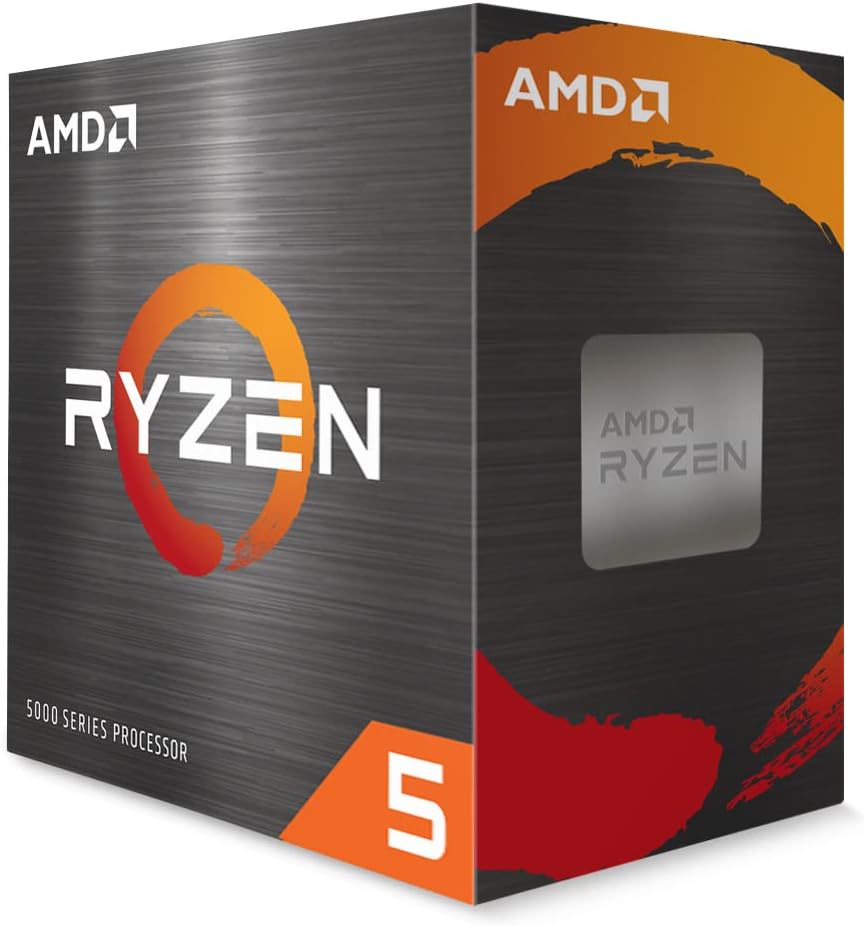
The AMD Ryzen 5 5500 is a budget friendly option that is perfect for entry level data work and general computing. It has a strong rating for its reliability and value in low cost system builds. This processor brings solid multi-threading capabilities at an accessible price point.
We may earn a commission when you buy through this link, at no additional cost to you.
It features 6 cores and 12 threads which is enough for basic spreadsheet work and light data tasks. The 4.2 GHz boost is adequate for standard office tasks and it includes a cooler in the box. The AM4 platform is well supported with a wide range of motherboard options available.
While this processor is not the fastest on the market it delivers good performance for the price. Users should be aware that it uses DDR4 memory which is cheaper but older than DDR5. It is an unlocked CPU so you can try overclocking if you have good airflow in your case.
We recommend this CPU for those who need a reliable and cheap processor for basic workloads. It is great for students or small businesses looking to equip multiple machines without high costs. This is a smart choice for building a functional PC on a tight budget.
The low price makes this an excellent choice for building multiple workstations for a team or office.
The Wraith Stealth cooler allows you to use the CPU right out of the box without extra purchases.
We may earn a commission when you buy through this link, at no additional cost to you.
Choosing the right CPU for Excel and Data Analysis requires balancing core count, clock speed, and cache size to meet your specific workload demands.
The number of cores and threads determines how many tasks your CPU can handle simultaneously. For Excel and data analysis, having more cores helps with background processes and multitasking while your main applications run. However, many Excel formulas still rely heavily on single-threaded performance so a balance is often best.
Look for a CPU with at least 6 to 8 cores for modern workflows to ensure smooth performance during peak usage times.
Clock speed affects how fast individual calculations are processed. Higher boost frequencies mean that complex formulas and macros will execute more quickly. This is crucial for users who frequently deal with large spreadsheets that require frequent recalculation.
Prioritize processors with high max boost clocks to ensure that your single-threaded tasks run without noticeable lag or delays.
Cache memory is a small amount of high speed memory located on the CPU. Larger caches allow the processor to store frequently accessed data close to the cores. This reduces the need to fetch data from slower system memory improving overall application responsiveness.
Choose a CPU with ample L3 cache especially if you work with large datasets that fit within cache limits for better performance.
Your CPU must be compatible with your motherboard socket and chipset. Different generations require different sockets and some may need BIOS updates to function correctly. Checking compatibility ensures you can install the processor without issues and use all features available.
Verify that your motherboard supports your chosen CPU and that you have the necessary BIOS version for optimal performance.
Modern CPUs support DDR5 memory which offers faster data transfer speeds than DDR4. For data analysis tasks memory bandwidth can be a bottleneck so faster RAM helps significantly. Ensure your motherboard supports the memory type your CPU uses to maximize performance.
Select a platform that supports DDR5 if possible for better longevity and speed when handling large data files.
High performance CPUs generate more heat and require robust cooling solutions to maintain boost clocks. A poor cooling setup can lead to thermal throttling where the CPU slows down to protect itself. Proper cooling is essential for sustained performance during long analysis sessions.
Invest in a quality air or liquid cooler for unlocked processors to ensure stable temperatures under heavy workloads.
Prices vary widely across processors so you need to find a model that fits your budget without sacrificing essential features. Entry level CPUs may be enough for light tasks but power users should look for higher tier options for better speed. Balance cost with the features you actually need for your work.
Determine your total budget including motherboard and cooling to avoid overspending on components you do not need.
Some CPUs come with integrated graphics which can save you the cost of a discrete graphics card. For basic display needs this is often sufficient but data visualization tasks may require a dedicated GPU. Check if you need a dedicated card for your specific use case.
If you do not need a GPU immediately choose a CPU with integrated graphics to save on initial build costs.
Proper installation is key to ensuring your CPU performs correctly. Install the processor gently into the socket and secure the cooler evenly to avoid pressure points that could damage the chip. Use thermal paste to fill any air gaps between the CPU and the cooler for efficient heat transfer.
Maintain your system by keeping the interior clean from dust which can clog fans and heat sinks. Regularly check your fans to make sure they are spinning correctly and free of debris. This helps prevent overheating and keeps your CPU running at optimal speeds.
Update your BIOS regularly to ensure you have the latest compatibility and performance improvements. Manufacturers often release updates that improve stability and add support for newer memory speeds. Keep an eye on your motherboard manufacturer website for these updates to maintain system reliability.
For large Excel spreadsheets, a CPU with high single-thread performance and a large cache is ideal. Processors like the AMD Ryzen 7 9800X3D or Intel Core Ultra 9 285K offer these features. They allow complex formulas to calculate quickly and ensure smooth scrolling through massive datasets without lag.
While many cores help with multitasking, data analysis often relies on single-thread speed for individual calculations. However, having at least 6 to 8 cores is beneficial for running multiple applications simultaneously. This balance ensures that your main analysis tools remain fast while background tasks run smoothly.
Yes, DDR5 memory offers faster data transfer rates which can improve overall system responsiveness. While Excel itself is not always memory bandwidth bound, faster RAM helps with large datasets and faster system performance. It is a good future proofing choice for new workstation builds.
Unlocked processors allow you to overclock them to gain extra performance if your cooling supports it. This can be beneficial if you need to push performance further for specific tasks. However, most users will find stock performance adequate for standard analysis work without the need for tuning.
Both AMD and Intel offer strong processors for data tasks depending on your needs. AMD currently leads in cache technology with 3D V-Cache which can benefit certain workloads. Intel often has strong single-thread speeds which are great for responsive spreadsheet use. Choose based on your specific workflow needs.
You should check your motherboard manufacturer website for the CPU support list. This list shows which processor models are compatible with your board. You may need to update your BIOS to support newer CPUs so ensure you have the correct version installed.
We have reviewed ten top processors that offer excellent performance for Excel and data analysis. From the high end Intel Core Ultra 9 285K to the budget friendly AMD Ryzen 5 5500, there is a choice for every user. Your decision should depend on your specific workload requirements and available budget.
When selecting a CPU prioritize core count and clock speed to match your data processing needs. Ensure your motherboard and cooling system are compatible with your chosen processor to avoid issues. A well chosen CPU will significantly enhance your productivity and speed during complex analysis tasks.
Please remember that prices and availability can change frequently so check current listings before buying. We hope this guide helps you find the right hardware for your workstation. Happy analyzing and thank you for using our expert reviews to make your decision.