
Luster Leaf 1625 Digital Soil Thermometer
4.2Editor score
Must have tool for planting
Determines soil temperature early season
Perfect for transplanting tasks
This guide compares the top ten digital soil thermometers for gardeners seeking accurate temperature readings to optimize planting schedules and ensure healthy
Choosing the right digital soil thermometer helps you monitor critical growing conditions for your garden. Accurate temperature data ensures seeds germinate properly and plants thrive in optimal environments.
We evaluated ten top models based on accuracy, durability, and ease of use. Our comparison covers basic thermometers and advanced kits that measure moisture, pH, and light alongside temperature.
Each pick highlights unique features and ideal use cases for different gardeners. Remember that prices and availability change frequently, so check current details before purchasing your next tool.
4.2Editor score

4.2Editor score

4.7Editor score
This side-by-side comparison highlights the key specifications and features of the top ten digital soil thermometers available this season.



The YAMRON 4-in-1 Soil Moisture Meter stands out as a top choice for gardeners seeking comprehensive data. It combines temperature, moisture, pH, and sunlight measurement into one device. Its rating reflects strong performance in providing actionable insights for plant care across different environments.
We may earn a commission when you buy through this link, at no additional cost to you.
Its standout quality is the ability to measure multiple parameters quickly. The large LCD screen with white backlight ensures readability in any lighting condition. The 45-degree rotating head design allows users to view data without bending over, which is excellent for accessibility.
While highly capable, users should note that the device requires moist soil for accurate readings. Dry or hard soil can damage the probe. Following the instruction to water the test area ten minutes before measuring ensures longevity and accuracy.
This device is ideal for both novice and experienced growers who want scientific data to guide watering and planting decisions. It is particularly useful for those managing indoor potted plants or outdoor gardens where light and soil conditions vary significantly.
The device uses light sensor analysis to determine sunlight levels alongside soil conditions.
Visual content design helps even beginners understand soil conditions through specific values and graphics.
We may earn a commission when you buy through this link, at no additional cost to you.
The Luster Leaf 1625 Digital Soil Thermometer is a must-have tool for anyone planting in the early season. It focuses solely on temperature measurement, which is critical for determining when seeds will germinate. Its simple design ensures that users get the specific data they need without complexity.
We may earn a commission when you buy through this link, at no additional cost to you.
This thermometer excels in its primary function of determining soil temperature. It is specifically designed to help gardeners know when to transplant seedlings. The digital readout provides a clear answer to the question of whether the soil is ready for new growth.
The main trade-off is its single function nature. While it provides accurate temperature data, it does not measure moisture or pH. However, for those who already have other tools or only need temperature monitoring, this limitation is acceptable given its affordable positioning.
This product is best suited for gardeners who prioritize accurate temperature readings for transplanting and planting. It is a reliable addition to any garden tool kit where budget is a consideration but accuracy remains important.
The tool is specifically engineered to assist with early season planting and transplanting decisions.
Its design eliminates unnecessary features to focus on delivering precise temperature readings.
We may earn a commission when you buy through this link, at no additional cost to you.
This 7-in-1 Digital Soil Tester Kit offers an extensive range of features for detailed plant care. It measures moisture, pH, temperature, light intensity, and soil fertility through EC and TDS functions. Its high rating indicates strong user satisfaction with its comprehensive data capabilities.
We may earn a commission when you buy through this link, at no additional cost to you.
The standout feature is its ability to measure water quality via EC and TDS functions. This adds a layer of depth not found in basic meters. The 2025 probe technology ensures that these readings are quick and accurate, helping users determine optimal watering times effectively.
While powerful, the device requires some learning to interpret all seven metrics correctly. Additionally, users must moisten the soil before testing to avoid damage. These requirements are minor trade-offs for the depth of information provided to the grower.
This kit is ideal for gardeners who want a single tool to manage all aspects of their plant environment. It is particularly valuable for those managing complex gardens or hydroponic setups where soil and water quality are equally important.
The EC and TDS functions allow users to know when it is time to water based on soil fertility.
The latest 2025 probe technology ensures precise measurements of soil pH moisture and temperature.
We may earn a commission when you buy through this link, at no additional cost to you.
The Reotemp K83B1 is a specialized tool designed for composting and soil temperature monitoring. It comes with a digital composting guide, making it perfect for beginners looking to manage their compost pile efficiently. Its high rating reflects strong durability and performance in tough conditions.
We may earn a commission when you buy through this link, at no additional cost to you.
Its premium quality is evident in its construction. The corrosion-resistant 304 stainless steel case ensures longevity. The 12-inch stem allows for deep measurement in compost bins and piles. The waterproof and dust-proof design makes it resilient against challenging weather conditions.
The guide included is a significant value add for those new to composting. It offers expert instructions on managing the pile for efficient production. While it focuses on composting, the temperature range also works well for soil monitoring in various garden settings.
This thermometer is best for those who want a durable, long-term solution for compost and soil monitoring. It is a premium investment for gardeners who value quality construction and educational resources alongside their tools.
The free digital composting guide provides expert instructions on how to manage your compost pile.
Corrosion resistant stainless steel and glass lens ensure the tool lasts long in outdoor environments.
We may earn a commission when you buy through this link, at no additional cost to you.
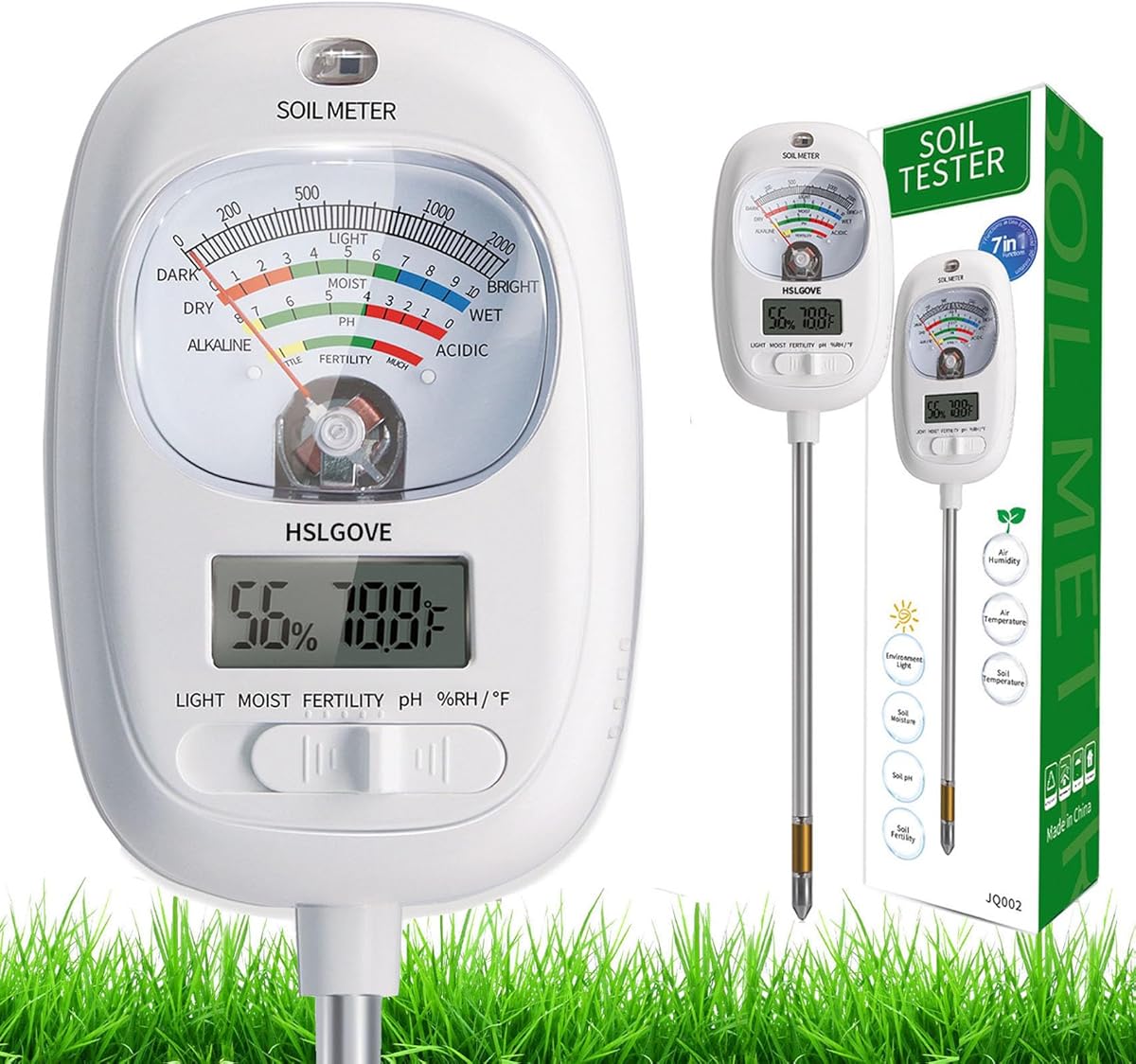
The HSLGOVE Soil Test Kit combines dual screens to provide both analog and digital data. It measures soil moisture, pH, fertility, temperature, light, and air temperature and humidity. This versatility makes it a strong contender for gardeners wanting a complete picture of their environment.
We may earn a commission when you buy through this link, at no additional cost to you.
Its unique dual-dial design allows for simultaneous monitoring of soil and air conditions. The digital LCD screen displays temperature and humidity while the analog dial measures soil moisture. This split approach helps cultivate seedlings scientifically without needing multiple tools.
The probe is built with three metal materials for accuracy and durability. However, the device requires three batteries and careful handling of the dial mechanism. These minor inconveniences are offset by the wide range of data it provides in a single unit.
This kit is perfect for gardeners who want to monitor both soil and air conditions for their plants. It is suitable for indoor and outdoor use, making it a versatile addition to any gardening setup.
The design combines soil meter and LCD display to monitor soil moisture and air temperature simultaneously.
This patented design provides a comprehensive understanding of your plant environment with one unit.
We may earn a commission when you buy through this link, at no additional cost to you.
The Urban Worm Soil Thermometer is designed for both general gardening and worm composting. Its 5-inch stainless steel stem penetrates soil and worm compost to the perfect depth. The clear tick marks make monitoring easy without needing to read specific numbers constantly.
We may earn a commission when you buy through this link, at no additional cost to you.
Its primary strength lies in its specific guidance for worm health. The thermometer indicates when worms are happiest between 55F and 90F. This helps users know when to cool them off or move them to a warmer place for optimal conditions.
While versatile, its design is optimized for worm bins and gardens. It may lack the digital features of advanced testers but offers simple and effective temperature monitoring. The stainless steel stem ensures it withstands the moisture and acidity of compost environments.
This tool is best for those who maintain worm bins alongside their garden. It provides the specific temperature data needed to keep worms happy and soil conditions healthy for plants.
Easy-to-read green, yellow, and red tick marks allow for quick and visual temperature checks.
The device provides clear guidance on ideal temperature ranges for worm health and composting.
We may earn a commission when you buy through this link, at no additional cost to you.
The ECOWITT WN34BS is a digital soil sensor that connects to a Wi-Fi gateway for live data. It features an IP65 waterproof LCD display for viewing temperature directly. Its ability to track up to eight locations makes it scalable for larger gardens or farms.
We may earn a commission when you buy through this link, at no additional cost to you.
Its standout feature is remote monitoring. When paired with a gateway, users can view live data on their phones or computers. This allows for email alerts and access to historical records on a website. It is a smart choice for modern gardeners who want to track trends.
While powerful, the gateway is sold separately which adds to the cost. The sensor has a long transmission range of up to 300 feet which ensures stability. The setup process requires some technical knowledge but rewards users with detailed insights.
This device is ideal for those who want to track soil temperature at multiple locations remotely. It is particularly useful for gardeners who want to analyze historical data and receive alerts when conditions change.
Live data can be viewed on the WS View Plus or Ecowitt App when paired with a gateway.
Up to 8 channels are supported allowing users to track temperature at multiple locations.
We may earn a commission when you buy through this link, at no additional cost to you.
The Digital Soil EC Meter focuses on conductivity and temperature measurement. EC is an important indicator of salt content in the soil. This tool helps gardeners take better care of their plants by monitoring soil nutrient levels and temperature simultaneously.
We may earn a commission when you buy through this link, at no additional cost to you.
Its standout feature is the IP67 waterproof corded sensor probe which is robust for outdoor use. The backlight LCD display saves trouble in reading values compared to traditional dial testers. Automatic temperature compensation ensures accurate readings across different soil temperatures.
Calibration requires a specific solution which is not included. This adds a step to the process but ensures higher accuracy. The probe is 5.4 inches long and provides good reach into the root zone for testing.
This meter is best for growers who need to monitor nutrient levels and salt content. It is suitable for those managing lawns, soil, or indoor plants where precise nutrient data is valuable for plant health.
EC measures conductivity value which indicates salt content in the soil accurately.
ATC function allows for accurate detection of EC and temperature across a range of conditions.
We may earn a commission when you buy through this link, at no additional cost to you.
This 4-in-1 Soil Moisture Meter allows users to check plants from across the home or yard. It features a wireless range of up to 328 feet so you do not have to bend down to check conditions. The device combines moisture, temperature, light, and clock on one screen.
We may earn a commission when you buy through this link, at no additional cost to you.
Its standout feature is the triple-probe TDR sensor which provides stable and consistent readings. It supports monitoring up to 12 plants from one central display. The waterproof and corrosion-resistant probe ensures long-term use in various outdoor environments.
The wireless aspect requires separate sensors for each plant which may increase cost. However, the convenience of monitoring without disturbing roots is significant. Users can leave the probe in the soil for continuous monitoring without repeated digging.
This system is ideal for those who manage many plants or have indoor and outdoor gardens. It is a smart solution for people who want to reduce overwatering and underwatering without constant manual checks.
With wireless range of up to 328 feet you can check plants from your couch or office.
You can leave the probe in the soil for continuous monitoring without disturbing roots.
We may earn a commission when you buy through this link, at no additional cost to you.
The 7-in-1 Soil Test Kit uses a 5-probe system for enhanced data precision. It monitors pH, sunlight, fertility, temperature, and humidity in one go. The extra-large split display allows for effortless reading without crouching or bending down.
We may earn a commission when you buy through this link, at no additional cost to you.
Its strength lies in the combination of five probes and a scientific calibration algorithm. This delivers faster and more accurate results than standard meters. The heavy-duty construction is designed to withstand long-term outdoor exposure without losing sensitivity.
Users should note that pH testing requires moist soil and time to settle. The system also supports expandable probes for distributed monitoring which adds versatility. The large screen design is ideal for seniors or frequent field use in greenhouses.
This kit is best for those who need a comprehensive tool for large gardens or farms. It consolidates critical parameters into a single device making it easy to manage complex growing environments.
Five high-quality metal probes and optimized scientific calibration algorithm deliver highly accurate results.
Premium corrosion-resistant materials are used to withstand tough and compacted soil conditions.
We may earn a commission when you buy through this link, at no additional cost to you.
Selecting the right digital soil thermometer depends on your specific gardening needs and the range of data you require. This guide covers the key factors to consider before making your purchase.
Consider whether you need a basic thermometer or a multi-function tester. Some devices measure only temperature while others include moisture pH and light. Choosing a tool with the right combination of sensors ensures you have the data you need for your plants.
Focus on features that match your gardening style. If you only plant in seasons where temperature matters choose a simple thermometer. If you care about soil health broadly choose a multi-function kit.
Look for a large screen with clear numbers. Backlit displays are essential if you check soil at night or in low light. Some models have rotating heads or split screens to reduce bending.
Prioritize displays that show data at a glance. Clear interfaces help beginners understand soil conditions without confusion.
Ensure the probe is made of corrosion-resistant materials like stainless steel. A durable probe withstands moisture and soil acids better. Waterproof ratings like IP65 or IP67 indicate resistance to dust and water.
Check the length of the probe to ensure it reaches the root zone. Longer probes are better for large pots or deep garden beds.
Advanced models offer wireless connectivity for remote monitoring. These require a gateway or hub but allow you to track data from your phone. Real-time alerts can notify you of significant temperature changes.
Choose connected models if you want to track trends over time. Traditional models work well if you just need spot checks.
Select a device that is simple to operate. Look for intuitive interfaces and minimal steps to get a reading. Some devices require soil moisture to work properly which is a key factor to know.
Ensure the device matches your technical comfort level. Beginners should prefer straightforward tools with clear instructions.
Consider how many batteries the device requires and how often they need replacement. Some units use standard batteries while others may need specific packs. Low battery alerts are helpful to prevent unexpected issues.
Opt for energy-efficient models if you plan to use the device frequently. Long-lasting power ensures you are not interrupted during gardening tasks.
Basic thermometers are affordable but lack features. Multi-function kits cost more but provide comprehensive data. Compare the price against the features to ensure you get value for your investment.
Invest in a model that meets your long-term needs. A slightly more expensive tool may last longer and offer better accuracy over time.
Determine if you need a device for indoor plants outdoor gardens or compost bins. Some thermometers are specialized for specific uses like worm bins. Others are designed for large farms or small pots.
Choose a tool suited for your primary use case. General purpose models offer flexibility but specialized ones provide better accuracy for specific tasks.
Insert the probe into the soil to a depth of at least 4 inches for accurate readings. For best results moisten dry soil slightly before testing to ensure sensor contact.
Wait at least 10 seconds for the reading to stabilize. Do not force the probe into hard or dry soil as this can damage the sensor.
Clean the probe after each use and store it in a dry place. Replace batteries as needed and calibrate the device if the manual recommends it.
Many digital soil testers use electrical conductivity to measure moisture and pH. Dry soil is an insulator and prevents the current from passing through the probe. Moistening the soil allows the sensor to read accurately without damaging the device.
You should insert the probe about 4 to 5 inches into the soil. This depth ensures you are measuring the root zone where temperature affects growth. For compost piles insert the probe to the center of the pile.
Most models are designed for temporary testing rather than permanent installation. However some wireless sensors are meant to stay in the soil for continuous monitoring. Check the product manual for specific instructions.
Seeds generally require soil temperatures between 60 and 75 degrees Fahrenheit to germinate. Using a thermometer ensures you plant at the right time. Cold soil can delay growth or cause seeds to rot.
Some basic models do not require calibration while others may need it for accuracy. If your device has a calibration feature follow the manual to set it properly. This is especially important for measuring pH or EC.
Fluctuations can occur due to uneven moisture levels or shallow probe depth. Try moistening the soil evenly and inserting the probe deeper. Ensure the probe is not touching rocks or roots which can alter readings.
Yes many models are suitable for compost monitoring. Ensure the probe is long enough to reach the center of the pile. Active compost piles can reach high temperatures so use a model rated for high heat.
Inaccurate readings often result from dry soil or probe damage. If readings seem inconsistent compare them with another trusted device. Cleaning the probe and replacing batteries can often resolve these issues.
We have reviewed ten top models ranging from simple thermometers to comprehensive test kits. The YAMRON 4-in-1 stands out for its balance of features while the Reotemp offers durability for composting.
Prioritize a device that matches your specific gardening needs. If you need connectivity consider the ECOWITT model but for basic planting the Luster Leaf is reliable and affordable.
Always check the current price and availability before buying. Conditions and features vary so ensure the tool you choose fits your current gardening setup.