
Portable UHF VHF Counter
4.1Editor score
Compact handheld design
Simple one button control
Affordable price point
This guide compares the top frequency counters for ham radio to help you choose the best model for accurate signal measurement and frequency testing in any
Finding the right frequency counter for ham radio is essential for any operator who wants precise signal measurements and reliable communication. These devices help you verify transmitter frequencies, tune antennas, and ensure compliance with band limits without expensive lab equipment.
We evaluated ten leading frequency counters based on accuracy, ease of use, and range capabilities. Our analysis covers portable handheld units, advanced analyzers, and budget modules to help you find the perfect fit for your station needs and technical skill level.
Each pick below shows key specs, pros, cons, and detailed insights into real-world performance. Keep in mind that prices and availability change often so check current listings before buying to get the best value for your specific radio hobby requirements.
4.1Editor score

4.1Editor score

5.0Editor score
The following table provides a side by side comparison of all ten frequency counters included in this guide. Review the specs to see which model best matches your specific ham radio frequency measurement needs and budget constraints today.


The Mcbazel Surecom SF401 Plus stands out as a top choice for ham radio operators needing reliable frequency measurement. With a rating of 4.1 stars, this portable counter handles signals from 27MHz to 3000MHz and includes a signal strength indicator for useful feedback during testing.
We may earn a commission when you buy through this link, at no additional cost to you.
Its TCXO technology ensures temperature compensated accuracy across a wide range of conditions. The four button control scheme makes it easy to select ranges and read measurements quickly. Users appreciate the included antennas for VHF and UHF bands which add value right out of the box.
While it excels at measuring continuous wave signals from walkie talkies, it is not suitable for wide bandwidth applications. This limitation is acceptable for most hobbyists who primarily need to check carrier frequencies. The small size allows you to carry it to field days or club meetings without hassle.
If you need a dependable handheld frequency counter for ham radio that balances performance and portability, this model is an excellent starting point. It offers solid accuracy and essential features without overwhelming complexity for daily use at home or on the go.
The TCXO crystal oscillator maintains accuracy between -45C and 65C which is critical for outdoor operations where weather varies.
Easy range options cover most two way radio frequencies making it simple to switch between bands during your testing sessions.
We may earn a commission when you buy through this link, at no additional cost to you.
The Surecom SF401 Plus earns a strong 4.3 rating from users who value straightforward frequency measurement tools. Like its sibling model it measures continuous carrier signals across the 27MHz to 3000MHz range. This makes it suitable for checking frequencies on common ham bands and commercial two way radios.
We may earn a commission when you buy through this link, at no additional cost to you.
Its design focuses on simplicity with four buttons that let you choose measurement ranges without confusion. The signal strength indicator provides immediate visual feedback when testing transmissions. The compact form factor ensures you can toss it in your gear bag for portable testing anywhere you go.
One trade off is that it does not handle wide bandwidth signals so it is strictly for narrowband carrier measurements. For most amateur radio needs this limitation is minor. The TCXO base provides stable readings even when temperatures shift during outdoor use.
This counter is a great option for operators who want a no fuss device to verify transmitter frequencies. It combines ease of use with sufficient accuracy for routine checks. You will find it helpful for ensuring your equipment stays within authorized band limits.
The built in signal strength indicator helps you confirm that the meter is receiving a clean transmission before taking a frequency reading.
Designed for field use the unit resists everyday wear and keeps size down so it fits easily in pockets or small kits.
We may earn a commission when you buy through this link, at no additional cost to you.
The FC-2800M Frequency Counter delivers a robust 4.4 rating by offering digital mode support for DMR radios. It covers frequencies from 2MHz to 2800MHz and includes built in DCS CTCSS decoders which are valuable for identifying access tones on repeaters and shared channels.
We may earn a commission when you buy through this link, at no additional cost to you.
Its user friendly four button control keeps operation simple even when switching between analog and digital modes. The low PPM crystal time base ensures high accuracy for both ham radio and CB applications. A two year warranty provides added peace of mind for your investment.
While the price is a bit higher than basic counters the decoding capabilities justify the expense for digital users. Some beginners might find the DMR features complex but they are essential for modern amateur communication. The compact design ensures it remains handy during on site tuning.
Choose this model if you work with DMR systems and need tone decoding alongside frequency measurement. It bridges the gap between traditional analog counters and digital needs. This versatility makes it a strong contender for serious operators who value extra functionality in their toolkit.
Digital mode for DMR radio allows you to measure frequencies from digital voice systems which many basic counters cannot handle accurately.
Built in DCS CTCSS decoder helps you identify sub audio tones which are often required to access repeaters in your area.
We may earn a commission when you buy through this link, at no additional cost to you.
The Portable TinySA Spectrum Analyzer offers a unique blend of frequency counting and spectrum visualization for ham radio enthusiasts. With a 4.4 rating it excels at showing signal details from 100kHz to 960MHz on a vibrant 2.8 inch touchscreen. This visual approach helps you spot interference and harmonics easily.
We may earn a commission when you buy through this link, at no additional cost to you.
Its built in signal generator and internal calibration source make it versatile for testing filters and amplifiers. You can connect via USB to Windows or Linux for remote control which is great for logging data during experiments. The rechargeable battery supports field use without needing mains power.
While its frequency range tops out lower than some dedicated counters it covers most HF VHF and UHF bands used by hams. The learning curve is steeper due to its advanced features but the power it offers is unmatched at this price. It acts as a mini lab bench in your pocket.
This analyzer is ideal for those who want more than just a frequency number. It helps you understand signal purity and bandwidth issues. If you enjoy tinkering with SDR or antenna systems this device provides professional level insights in a compact portable package.
The color display lets you view up to 290 scan points which reveals noise floors and spurious signals that a simple counter might miss.
Sine and square wave outputs allow you to test receiver sensitivity and antenna performance without needing separate test equipment.
We may earn a commission when you buy through this link, at no additional cost to you.
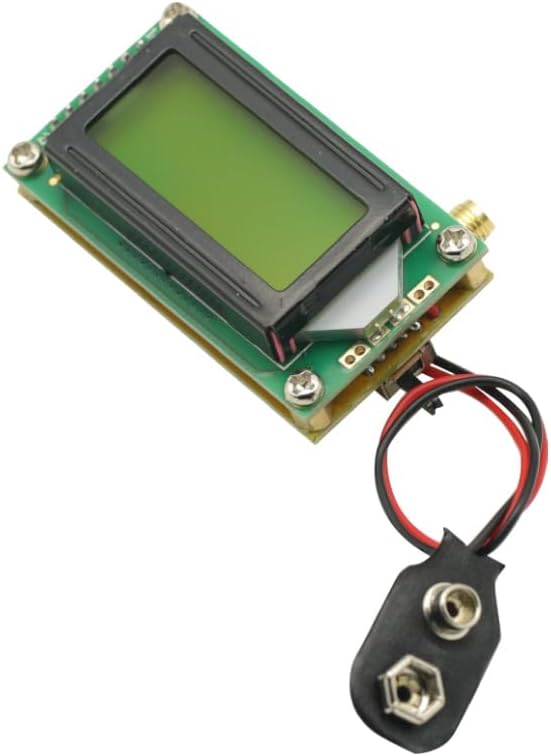
The Portable UHF VHF Counter earns its Best Budget badge by delivering essential frequency measurement at a very affordable price. It focuses on the core ham bands of 136 to 174MHz for VHF and 400 to 470MHz for UHF which covers most local communication needs. A 4.1 rating reflects satisfaction with its simplicity.
We may earn a commission when you buy through this link, at no additional cost to you.
Its one button control makes it extremely easy to use. Long press to power on then press to cycle through tests. The 9V battery powers the unit and antenna for quick checks within one meter. The mini size of 9 by 5.5 by 2cm ensures it fits in any pocket.
While it lacks wide range capabilities it excels at what it does without complexity. Some users may miss higher frequency support but for local radio checks it is sufficient. The CTCSS and DCS decoder features help verify tone squelch settings alongside frequency readings.
Buy this if you need a basic tool to verify frequencies on handheld transceivers without breaking the bank. It is perfect for beginners or as a spare unit in your car. The lightweight build ensures you will always have it on hand for quick signal checks on the go.
One button control simplifies operation so even new operators can get accurate frequency readings without fumbling through menus or settings.
Mini size 9 by 5.5 by 2cm lets you carry it everywhere so you can check signals wherever your radio adventure takes you.
We may earn a commission when you buy through this link, at no additional cost to you.
The Anysecu SF-103 builds on the SF401 legacy with a 4.2 rating that highlights its utility for maintenance personnel and enthusiasts. It measures continuous carrier signals from 2MHz to 2.8GHz which covers most amateur bands and commercial radios. The signal strength indicator adds a useful dimension for evaluating transmission quality.
We may earn a commission when you buy through this link, at no additional cost to you.
Its four button control is intuitive and allows quick range selection for different frequencies. The small size lets you carry it anywhere for field testing or bench work. Users appreciate its ability to test both VHF and UHF bands effectively. DMR radio signal support broadens its use for digital systems.
One limitation is that it focuses on continuous waves so complex modulated signals may not read accurately. However for standard frequency verification it performs well. The build is sturdy enough for regular use but not ruggedized for extreme environments. This balance keeps the price accessible.
This counter is a smart choice for those who need reliable frequency checks across a broad range of bands. It combines essential features with a straightforward interface. If you want an upgrade from basic models without overspending this SF-103 offers solid value for ham radio operators.
Signal strength indicator helps you gauge if a transmitter is strong enough for clear communication when checking remote sites or repeaters.
Ranges cover most of the frequency of two way radios so you rarely need to switch tools for common ham and commercial checks.
We may earn a commission when you buy through this link, at no additional cost to you.
The Mcbazel Surecom SF-103 delivers a 4.3 rating by offering high accuracy through its TCXO crystal oscillator. It covers frequencies from 2MHz to 2.8GHz with accuracy within plus or minus 4ppm which is critical for precise ham radio operations. The battery level warning ensures you avoid unexpected shutdowns during testing.
We may earn a commission when you buy through this link, at no additional cost to you.
Its four button control makes operation smooth and the compact size fits comfortably in hand. The warning about max direct input signal protects the meter from damage which is a thoughtful safety feature. You can use it for 2m HAM radio and all VHF UHF bands effectively.
While it does not handle wide bandwidth signals the focus on continuous wave measurements ensures stable readings. The DMR radio signal support adds value for digital users. Some care is needed to avoid connecting directly to radio antenna outputs to prevent damage.
Choose this counter if precision and safety are priorities for your testing routine. It balances performance with protection features that extend its life. The reliable accuracy makes it a trusted tool for verifying frequencies in both casual and professional amateur radio settings.
TCXO technology ensures accuracy across temperatures so your readings stay consistent whether you are indoors or in the field.
GUI Battery level warning keeps you informed so you never lose power mid test and need to restart your measurement process.
We may earn a commission when you buy through this link, at no additional cost to you.
The Acxico 1 Pcs Counter serves as an entry level option for hobbyists working on ham radio projects. With a 3.1 rating it offers basic functionality at a low cost. It measures frequencies from 1 to 500 MHz using a digital 0802 LCD display which provides clear readouts for simple tests.
We may earn a commission when you buy through this link, at no additional cost to you.
Its PCB and FR4 material construction keeps it lightweight and easy to integrate into other kits. The accuracy is adjustable to the second digit of the decimal point which may lack precision for high end use. It is best suited for casual checks or learning about frequency measurement.
Users note that this module requires some assembly or integration into a larger setup which adds complexity. The limited range above 500MHz means it cannot cover UHF bands fully. However for lower frequencies and educational purposes it remains a useful and inexpensive component.
Consider this module if you are building a custom test station on a tight budget. It provides a foundation for understanding frequency counters without high costs. For casual users who do not need extreme accuracy it can still deliver satisfactory results for basic ham radio maintenance.
Very affordable price allows beginners to experiment with frequency measurement technology without a large financial commitment to advanced gear.
PCB FR4 material and modular form make it easy to integrate into your own test bench projects for hands on learning.
We may earn a commission when you buy through this link, at no additional cost to you.
The 1PCS 1MHz to 500MHz board is a compact module designed for ham radio kits and simple testing needs. It has a 3.6 rating reflecting its basic functionality. The LCD display provides clear frequency readings from 1MHz to 500MHz making it suitable for HF and low VHF checks.
We may earn a commission when you buy through this link, at no additional cost to you.
Low power consumption makes it ideal for battery powered portable setups. The board arrives new and ready for integration into custom projects. Users find it helpful for educational purposes where exact precision is less critical than understanding how counters work internally and externally.
While it covers useful lower bands the 500MHz limit excludes most UHF operations which limits broader utility. You will need to connect it to power and input signals yourself which may challenge less technical users. It serves well as a budget component for custom test gear.
Opt for this board if you are building a custom test station or learning about electronics. It provides a functional base for frequency measurement without high costs. For casual hobbyists needing occasional checks at lower bands it offers a straightforward and cost effective solution.
Low power consumption ensures this module works well with battery setups which is perfect for portable test stations on the go.
LCD display offers clear digital readouts so you can see measured frequencies easily even in varied lighting conditions during testing.
We may earn a commission when you buy through this link, at no additional cost to you.
The AURSINC TinyGTC 7GHz earns a perfect 5.0 rating by offering professional grade precision for ham radio calibration and testing. With 40ps resolution and a built in GPS disciplined oscillator it delivers unmatched stability for frequency phase and time interval measurements. This device transforms your testing capability to a lab level.
We may earn a commission when you buy through this link, at no additional cost to you.
Its dual channel counter allows independent high-resolution measurements across 0.1Hz to 7GHz on Channel A and up to 350MHz on Channel B. The 4-inch touchscreen plus jog wheel make operation intuitive while the rechargeable 4000mAh battery supports full field use. You can export data via USB or SD for deep analysis.
While the premium price reflects its advanced capabilities it is worth it for serious operators and electronics DIYers. The GPSDO ensures long-term stability which is essential for SDR tuning and oscillator calibration. If you need top-tier accuracy this TinyGTC provides features that outclass basic counters by a wide margin.
Invest in this counter if you demand the highest reliability and precision for your radio projects. It bridges the gap between hobbyist gear and professional equipment. With its rich analysis functions and robust build this TinyGTC is the ultimate tool for any serious ham radio enthusiast.
Built-in GPSDO locks to GPS signals to deliver excellent long-term frequency stability which is vital for precise calibration work.
Real-time charting and FFT analysis on device let you visualize signal characteristics deeply without needing external software tools.
We may earn a commission when you buy through this link, at no additional cost to you.
Selecting the right frequency counter involves balancing range accuracy features and portability. This guide outlines the key factors to help you make an informed decision based on your specific ham radio needs.
Ensure the counter covers the bands you use most. Many portable units focus on VHF UHF up to 3GHz while some modules cap at 500MHz. Check if the device supports both lower HF bands and higher UHF frequencies depending on your operating setup.
Look for a range that aligns with your typical operating bands to avoid needing multiple tools for basic verification tasks.
Accuracy depends on the time base. TCXO crystals offer temperature compensated stability which is vital for field use. Higher end models like the TinyGTC use GPSDO for long-term precision. Decide if you need basic accuracy or professional grade stability.
Prioritize units with TCXO or GPSDO if you operate in varying temperatures or require exact frequency calibration for your station.
Most counters measure continuous wave signals accurately. Some advanced models support DMR and digital modes with CTCSS or DCS decoding. If you use digital voice systems ensure the counter can identify tones alongside frequency readings.
Choose a model that supports your modulation types to avoid errors when verifying frequencies on repeaters or digital networks.
Handheld counters range from mini pocket units to larger benchtop styles. Check dimensions and weight if you plan to carry the device to field days. Battery powered options offer more flexibility for on-site testing.
Select a compact and lightweight design if you value mobility and need to test signals away from your home station.
Clear digital readouts are essential for quick frequency verification. Touchscreens provide more analysis options but buttons may be easier to use outdoors. Consider how intuitive the interface is for your comfort level with technology.
Look for a display that is readable in bright light and controls that allow easy range selection without complex menus.
High input signals can damage sensitive frequency counters. Some units include warnings against direct antenna connection. Check the maximum input voltage to avoid costly repairs during testing.
Prioritize models with input limits clearly stated and built-in protection to safeguard your investment during signal verification.
Advanced counters offer USB or SD card logging for tracking measurements over time. This feature is useful for long running tests or documentation. Basic models may lack export options which limits deeper analysis.
Consider whether you need data logging capabilities for record keeping or remote control features that fit your workflow.
Prices vary widely from budget modules to premium analyzers. Balance your budget with the features you truly need. Some models include multi year warranties which add value and peace of mind for long-term use.
Choose a model with a solid warranty to protect your purchase and ensure support if issues arise during regular use.
Start by connecting the antenna provided with your counter to the input port. Power on the device and wait for it to stabilize. For portable units use a fresh battery or charge the built-in pack to ensure reliable readings.
Place the antenna near the transmitter you wish to measure but avoid direct contact to prevent damage. Press the buttons to select the correct frequency range. Wait for the display to lock on and read the frequency value.
After use turn off the unit and store it in a protective case. Keep the screen and contacts clean from dust. Regular calibration checks with known signals will help maintain accuracy over time for consistent results.
A frequency counter measures the exact frequency of radio signals to ensure your transmitter stays within legal band limits. It helps you verify carrier frequencies on handhelds or base stations without relying solely on the radio's display.
No many basic counters measure continuous wave signals only. Models with CTCSS or DCS decoding support digital modes. Check the product details to confirm compatibility with your specific digital radio system.
Portable counters with TCXO crystals offer ppm level accuracy suitable for most ham operators. Lab-grade equipment with GPSDO provides even higher precision for calibration tasks. Choose based on your required accuracy level.
While counters measure frequency they do not directly tune antennas. However combining a counter with a signal generator or spectrum analyzer helps verify resonant points for proper tuning and performance.
Never connect a high power antenna output directly to the counter input as it can damage the internal circuitry. Keep measurements at low signal levels using attenuators if needed.
Keep the device away from extreme temperatures and moisture. Store it in a protective case and use fresh batteries. Periodically check readings against known signals to ensure calibration remains consistent.
We covered ten top frequency counters from budget modules to premium analyzers for ham operators. Each model brings unique strengths whether you need basic verification or advanced digital support for your station.
Prioritize accuracy range and portability based on your operating style. Whether you choose a compact handheld or a dual channel analyzer the right tool will improve your ability to verify signals and maintain compliance.
Always check current listings before buying as prices and availability change often. With the right frequency counter you can ensure your ham radio setup operates efficiently and stays within authorized band limits.