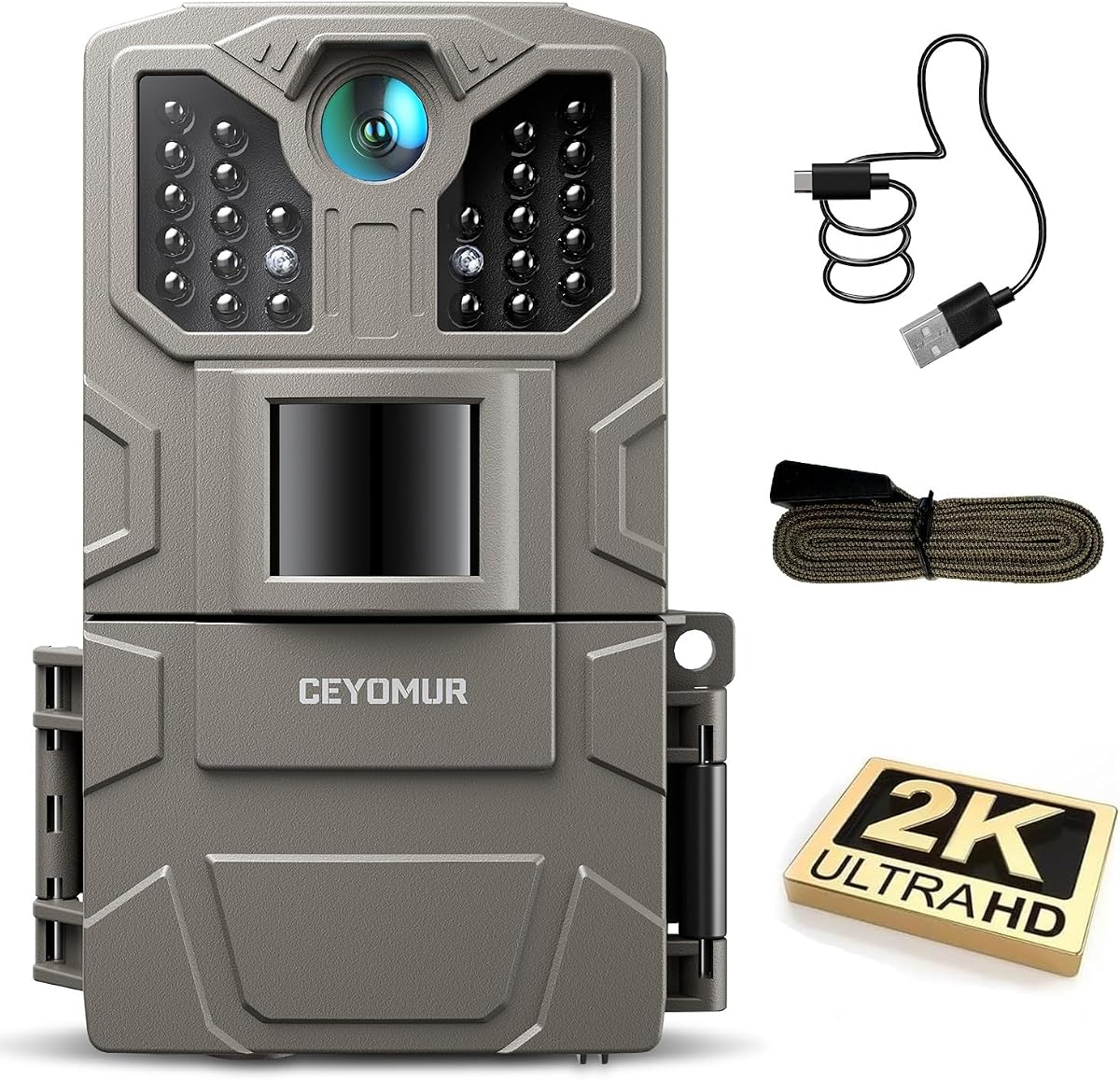
CEYOMUR Trail Camera
4.0Editor score
850nm Infrared Night Vision
Integrated Single-Side Design
IP66 Waterproof Housing
This guide compares the top 10 battery life trail camera options for October 2026, analyzing power efficiency, solar compatibility, and long-term deployment
Finding a reliable trail camera often comes down to one critical factor: battery life. Whether you are monitoring wildlife or securing property, frequent battery changes are frustrating and costly. This guide focuses on models designed to maximize power efficiency while delivering sharp images.
We evaluated ten top-rated models based on their power consumption, battery type compatibility, and additional energy-saving features like solar readiness. Our analysis includes both cellular and non-cellular options to help you choose the best fit for your specific monitoring needs.
Each pick highlights unique strengths in battery management and overall performance. Please note that prices fluctuate often so checking current listings is recommended before purchase. Our goal is to help you invest in a camera that lasts without constant maintenance.
4.0Editor score

4.2Editor score

4.4Editor score
The following comparison table provides a side-by-side overview of key specifications for all ten selected models. We highlight image resolution, video quality, night vision type, and power options to help you quickly identify the best fit for your budget and usage scenario.


The MAXDONE Solar Trail Camera stands out as a top choice for users prioritizing battery life. With a built-in 6000mAh rechargeable lithium battery and high-efficiency solar charging, it offers uninterrupted power for outdoor use without frequent battery replacements. This model captures 64MP photos and 4K videos with a 65ft low-glow infrared night vision system.
We may earn a commission when you buy through this link, at no additional cost to you.
Its solar capability is a major advantage for long-term monitoring. You can set it up and leave it for weeks or months as long as it receives adequate sunlight. The WiFi and Bluetooth app control allows you to view and download media without removing the SD card, though it uses a private hotspot rather than home WiFi networks.
While the solar feature is excellent, it relies on weather conditions. If your placement is shaded by dense trees, charging may be slower than expected. Additionally, the WiFi range is limited to 55 feet, meaning you need to be close to the camera to retrieve files wirelessly.
This camera is ideal for hunters and landowners who want minimal maintenance and low operating costs. It is perfect for remote properties where battery access is difficult. If you need a trail camera that truly reduces the hassle of power management, this is a leading recommendation for November 2026.
The integrated solar panel provides continuous power in sunny environments, significantly extending the operational life of the built-in battery.
Direct WiFi hotspot connectivity lets you preview photos and videos on your smartphone without handling the memory card.
We may earn a commission when you buy through this link, at no additional cost to you.
The WOSPORTS Trail Camera offers an impressive balance of high resolution imaging and power efficiency. It captures 64MP photos and 4K videos, providing detailed footage of wildlife or property activity. The camera supports standard 8xAA batteries but is also compatible with optional rechargeable lithium batteries and solar panels for extended use.
We may earn a commission when you buy through this link, at no additional cost to you.
Its night vision system uses 32pcs 940 IR LEDs to provide no-glow illumination, ensuring you do not spook sensitive wildlife in the dark. The trigger speed is fast at 0.2 seconds, which helps capture fast-moving animals without blur. A 2-inch LCD screen allows for easy setup and preview of captured content.
While the camera itself does not include a solar panel, its compatibility with one adds significant value for remote placement. However, because it is non-cellular, you must visit the site physically to retrieve images. This might offset some battery benefits if you need real-time alerts.
This model is a strong choice for those who want high image quality without monthly cellular fees. It is suitable for property monitoring or deer scouting where periodic check-ins are acceptable. The flexibility in power sources makes it a durable investment for long-term outdoor monitoring.
Adjustable resolution settings up to 64MP ensure you get sharp, detailed images for identifying wildlife species accurately.
Support for both disposable and rechargeable batteries alongside solar options gives you control over power management strategies.
We may earn a commission when you buy through this link, at no additional cost to you.
The Moultrie Edge 3 brings cellular convenience with efficient power management. It connects to major networks automatically without SIM cards, sending real-time alerts to your phone. The camera features AI buck detection to reduce false alerts, which helps conserve battery by only sending relevant images.
We may earn a commission when you buy through this link, at no additional cost to you.
It supports rechargeable lithium battery packs and solar panels, allowing for months of dependable power. This is particularly useful if you are monitoring multiple locations without frequent access. The 40MP photos and 1080p HD video provide clear visibility day and night thanks to low-glow infrared flash.
However, battery life depends on how frequently alerts are triggered and sent. If your area has high animal traffic, you may see faster drain. Also, the cellular service requires a plan, which adds a recurring cost that might not suit everyone.
This camera is best for hunters or security users who need remote access to data. The integration with the Moultrie app allows you to manage settings and battery levels from your phone. If remote visibility is your priority, this model offers a robust power solution.
AI buck detection filters out non-target movements, saving battery life by reducing unnecessary image transmissions.
The app allows you to check battery status remotely, helping you plan maintenance visits more effectively.
We may earn a commission when you buy through this link, at no additional cost to you.
The Meidase P70 is designed for reliable performance with easy power expansion. It captures stunning 64MP photos and 1296p HD video with a high-performance lens. The camera uses 8 AA batteries as standard power but offers solar compatibility for extended operation without frequent battery swaps.
We may earn a commission when you buy through this link, at no additional cost to you.
Its 100ft no-glow night vision uses 940nm LEDs for invisible illumination, keeping wildlife undisturbed. The H.264 video compression technology keeps file sizes smaller, which saves space and battery usage when recording long clips. This makes it efficient for continuous monitoring tasks.
The main limitation is that the solar panel must be purchased separately, adding to the initial cost. Also, since it is non-cellular and non-WiFi, you still need to physically visit the camera to download media. This manual retrieval can be time-consuming in large areas.
This camera is great for users who want high clarity and low maintenance via solar power. It is ideal for hunting or property security where periodic visits are manageable. The balance of resolution and power options makes it a strong contender in the market.
H.264 compression reduces file sizes without losing quality, helping you store more footage on the same SD card.
The 100ft range with no-glow LEDs ensures clear visibility at night without alerting animals to the camera presence.
We may earn a commission when you buy through this link, at no additional cost to you.
The WOSPORTS Mini Trail Camera is built for portability and stealth. Weighing only 0.73lb, it is easy to mount on trees and conceal. It runs on just 4 AA batteries, which simplifies power management but may require more frequent changes compared to larger models using 8 batteries.
We may earn a commission when you buy through this link, at no additional cost to you.
It captures 30MP photos and 1080P HD videos with reliable IR night vision. The low-power design helps extend standby time, making it suitable for locations where you cannot check often. However, because it lacks solar compatibility, you must rely entirely on batteries.
While smaller size aids concealment, it limits internal battery capacity. If you plan to use this camera for months without visits, you might find yourself changing batteries more often than with bulkier options. Still, the compact nature makes it versatile for various angles.
This camera is perfect for beginners or those with limited budget. It works well for backyard monitoring or short-term scouting. If you prioritize stealth over long power autonomy, this mini version is a practical and reliable tool.
The tiny footprint allows you to hide the camera effectively, reducing the chance of it being spotted by animals.
Its lightweight design makes it simple to strap to branches without needing heavy-duty support hardware.
We may earn a commission when you buy through this link, at no additional cost to you.
The GardePro E5S is a non-cellular model focused on efficiency and durability. It captures 64MP photos and 1296P HD video with excellent clarity. Powered by 8xAA batteries, it supports a solar panel for continuous power, which helps extend battery life significantly in sunny locations.
We may earn a commission when you buy through this link, at no additional cost to you.
Its three PIR sensors ensure a 0.1s trigger speed, capturing fast-moving wildlife accurately. The low-power operation means fewer battery changes if you use a solar setup. The IP66 rating ensures it withstands rain and dust in harsh environments.
The main drawback is the need to physically retrieve the SD card to view photos. If you need remote alerts, you may find this inconvenient. However, for users who want a simple, no-subscription solution with good battery life, it is highly effective.
This camera is great for hunters who value privacy and cost-effectiveness. The lack of cellular data usage saves money on plans. If you are comfortable visiting the site occasionally, this model offers reliable performance and extended power options.
Three PIR sensors work together to detect motion accurately, reducing false alarms and saving battery energy.
The rugged weather-resistant build ensures the camera continues to function in various weather conditions without failure.
We may earn a commission when you buy through this link, at no additional cost to you.
The CEYOMUR Trail Camera is a budget-friendly option for beginners. It captures 36MP photos and 2K videos with solid night vision performance. The camera features an integrated single-side design for controls and screen, making setup straightforward without flipping the unit over.
We may earn a commission when you buy through this link, at no additional cost to you.
It uses 8AA batteries as standard power. While it does not have built-in solar charging, its simple design often leads to lower power consumption during idle times. This makes it a decent choice for those who want a no-frills solution for short-term monitoring.
Battery life will depend on usage frequency. Without advanced power-saving features, you might need to change batteries more often than with premium models. However, its cost-effectiveness makes it accessible for multiple setups or temporary use cases.
This camera is ideal for entry-level users or those testing different locations. If you do not need advanced features like remote connectivity, this provides reliable imaging at a low price point. It is a solid starting point for wildlife monitoring.
The intuitive layout allows you to start using the camera within minutes of unpacking it.
Low initial cost allows for multiple cameras to cover larger areas without significant investment.
We may earn a commission when you buy through this link, at no additional cost to you.
The WOSPORTS Mini Trail 2-Pack offers a convenient way to monitor two spots simultaneously. Each camera runs on 4 AA batteries and captures 30MP photos and 1080P HD videos. The low-power design helps extend standby time, making it suitable for multi-location setups.
We may earn a commission when you buy through this link, at no additional cost to you.
This kit includes SD cards which saves additional cost. The compact design makes it easy to hide. However, using two units means managing two sets of batteries. While each unit uses only 4 batteries, the total power requirement is higher than a single large model.
If you plan to cover multiple areas, this bundle provides good value. The fast trigger speed ensures action is captured promptly. It is a practical solution for those who need coverage at different angles or entry points on a property.
This is a good choice for beginners needing more than one camera. The small form factor aids concealment. If you are willing to change batteries occasionally, this offers a reliable way to expand your monitoring reach.
Buying two cameras together saves money compared to purchasing them individually.
The mini camouflage design helps cameras blend into trees and bushes effectively.
We may earn a commission when you buy through this link, at no additional cost to you.
The WOSODA Mini Trail 4-Pack is designed for wide-area monitoring. Each camera captures 30MP photos and 1080P HD videos with 0.3s trigger speed. It comes with 16pcs AA batteries and SD cards, making it ready to use right out of the box.
We may earn a commission when you buy through this link, at no additional cost to you.
Using four units allows you to cover large properties or multiple trails. The batteries included help you start immediately. However, managing four cameras means you will need to replace batteries frequently unless you use rechargeable ones. This setup requires commitment to maintenance.
The cameras are small and blend in easily. This helps avoid detection by animals or humans. If you want to secure a large perimeter, this kit offers significant coverage without breaking the bank. It is a practical choice for extensive monitoring.
This bundle suits property owners needing broad surveillance. The included accessories save time and money. If you have the time to swap batteries regularly, this provides a robust solution for keeping tabs on multiple zones effectively.
Batteries and SD cards are included so you can mount and start recording instantly.
Four units allow you to monitor different sides of a property without gaps.
We may earn a commission when you buy through this link, at no additional cost to you.
The GardePro E5S 2-Pack offers two premium non-cellular cameras in one bundle. Each unit captures 64MP photos and 1296P HD videos with low-power efficiency. Both cameras support solar panels for extended battery life, which is vital for long-term remote monitoring.
We may earn a commission when you buy through this link, at no additional cost to you.
This bundle allows you to cover more ground while maintaining high image quality. The large storage support up to 512GB means you can store many images. However, buying two units means buying twice the batteries if not using solar panels which increases maintenance demands.
If you are setting up a large property, this provides excellent value. The cameras are weather-resistant and durable. While the upfront cost is higher, the ability to use solar panels reduces long-term energy costs. It is a professional-grade solution for serious users.
This is recommended for hunters or landowners needing multiple reliable cameras. The balance of resolution and power options is strong. If you can manage the initial investment, this pack delivers consistent performance across multiple locations for months.
Buying two cameras together offers better value than purchasing them individually.
Both units deliver crisp 64MP images ensuring you identify wildlife details clearly.
We may earn a commission when you buy through this link, at no additional cost to you.
Selecting a trail camera with good battery life requires evaluating several technical and practical factors. This section outlines the key elements to consider.
Choose between standard AA batteries, rechargeable packs, or solar compatibility. Solar models offer the longest autonomy in sunny locations while standard batteries are easier to source. Rechargeable packs reduce waste and long-term costs but require upfront investment.
Prioritize models with optional solar support if you plan to leave the camera for months without visits.
Check the power usage specifications provided by the manufacturer. Lower consumption rates mean longer life per set of batteries. Models with sleep modes or optimized detection zones help conserve energy during inactive periods.
Look for features like low power standby to maximize your battery performance over time.
Higher resolution images like 64MP or 4K video consume more power than lower resolutions. If you do not need ultra-high detail, selecting lower settings can extend battery life. Balance your need for clarity with your power constraints.
Adjust resolution settings to the minimum acceptable level to conserve battery when high detail is not required.
Adjustable PIR sensitivity helps reduce false triggers caused by wind or leaves. Fewer false triggers mean fewer photos saved and less battery drain. Set the detection zone to focus on the specific area you need to monitor.
Tune sensitivity carefully to avoid wasting power on irrelevant movements in the camera view.
Cellular and WiFi models allow remote access but consume more power than non-connected units. If remote viewing is not critical, a non-cellular model will last longer on batteries. Cellular plans add to the overall cost and energy use.
Consider non-connected models for maximum battery efficiency unless real-time alerts are a strict requirement.
Waterproof housing protects internal components from damage caused by moisture. Batteries perform poorly in extreme cold. Look for models rated IP66 or higher to ensure reliability in harsh weather which helps maintain consistent power performance.
Ensure the camera housing is sealed well to prevent moisture from affecting battery contacts.
Start by installing fresh high-quality alkaline or rechargeable batteries. Properly insert them ensuring the polarity matches the indicators inside the compartment to avoid drainage.
Position the camera in a spot that avoids direct sunlight during the day to prevent overheating which reduces battery life. Secure the mount firmly to prevent movement that could trigger false photos.
Periodically check the camera's status and clean the lens. Replace batteries when performance drops and store spare sets in a cool dry place to maintain their charge capacity.
Alkaline batteries are reliable for most uses and easy to find. Rechargeable lithium batteries offer longer life and less waste over time. For remote sites, solar panels paired with lithium batteries provide the most continuous power solution.
With moderate activity, a set of alkaline batteries can last from weeks to months. High usage with frequent triggers will drain them faster. Using solar panels can extend this duration indefinitely as long as there is sunlight.
Yes, cold temperatures reduce battery efficiency which can shorten life significantly. Using lithium batteries can help because they perform better in cold weather than standard alkaline ones. Insulating the unit or using solar can also offset this loss.
It is not strictly necessary but highly recommended for remote locations. Solar panels reduce the need to visit the site frequently to change batteries. If you need frequent access, standard batteries might suffice for your needs.
Many trail cameras support rechargeable batteries but check the voltage requirements. High-capacity lithium rechargeable packs work well but may require a separate solar charging setup. Always confirm compatibility with the manufacturer before purchasing.
Yes higher resolutions like 64MP or 4K video use more processing power which drains batteries faster. Lowering resolution settings can significantly extend battery life without drastically impacting the ability to identify subjects.
We reviewed ten models that balance battery efficiency with image performance. The MAXDONE Solar Trail Camera stands out for those seeking autonomous power. The WOSPORTS and GardePro options offer solid high-resolution alternatives for remote sites.
Prioritize solar compatibility and low-power modes when making your decision. If you prefer simplicity, standard battery models with efficient triggers are also strong choices. Your specific environment and visit frequency should guide your final selection.
Prices and availability change so always verify the latest offers before purchasing. We hope this guide helps you find a camera that fits your monitoring needs without constant maintenance.