
EinScan Rigil
4.7Editor score
Wireless hybrid light source
Onboard computing power
Sunlight outdoor scanning
Discover the top 3D scanner for reverse engineering tools compared for precision, speed, and software compatibility in this comprehensive expert guide.
Selecting the right 3D scanner for reverse engineering requires balancing precision, speed, and workflow integration. These devices capture real-world objects into digital models for analysis or reproduction.
We compared ten leading handheld and desktop scanners based on accuracy, scanning modes, and software ecosystem. Each entry features real specifications and verified capabilities for industrial and design use.
Every pick highlights key strengths, trade-offs, and ideal use cases. Note that availability and pricing vary by region and retailer, so confirm details before purchasing.
4.7Editor score

4.8Editor score

4.9Editor score
The following table provides a side-by-side overview of the ten selected scanners, highlighting core specifications and key capabilities relevant to reverse engineering workflows.


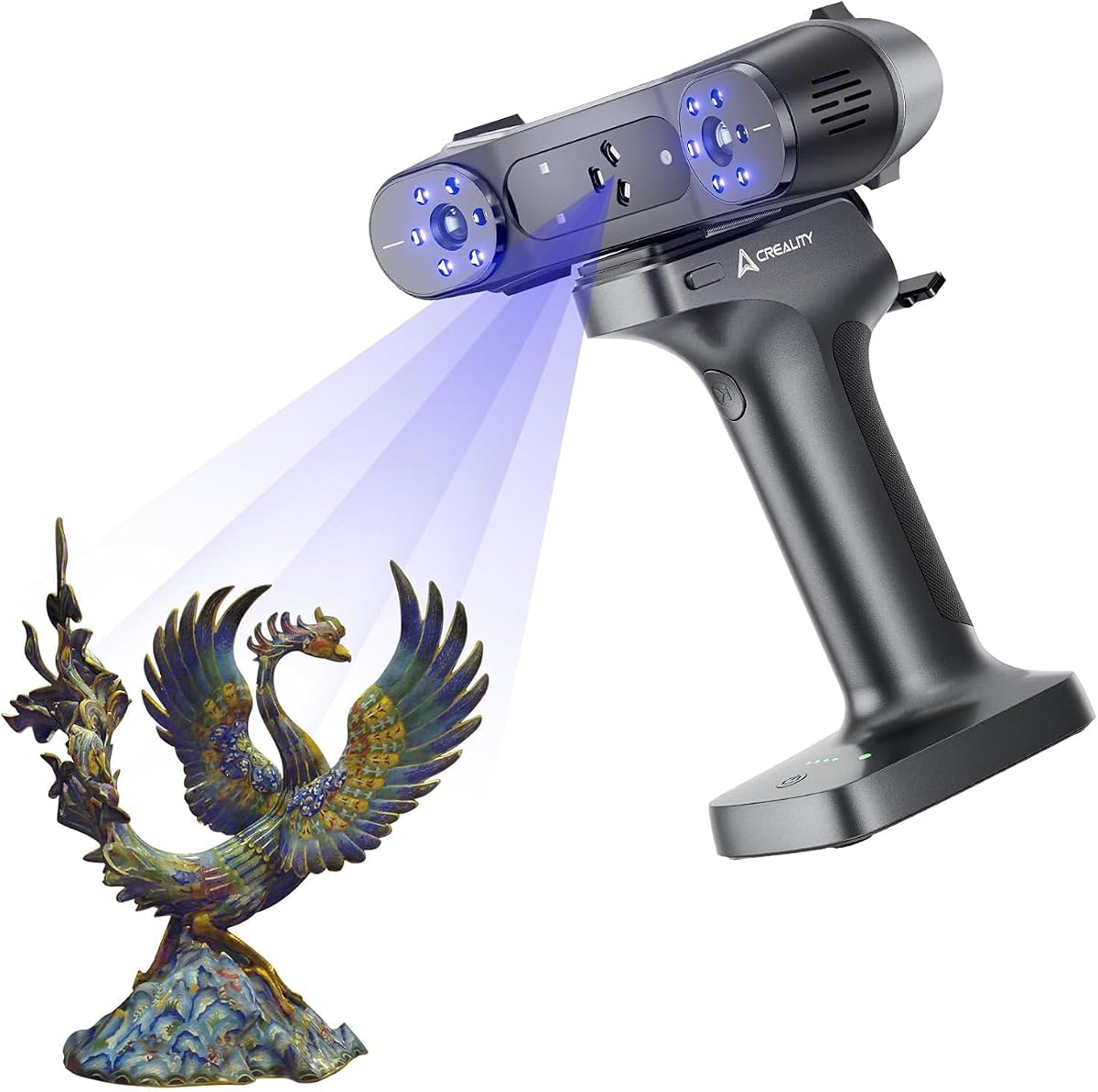

The Revopoint MetroX Pro delivers industrial-grade scanning with 0.01 mm precision, making it ideal for reverse engineering. Its blue laser ensures stable capture across materials.
We may earn a commission when you buy through this link, at no additional cost to you.
It captures up to 7 million points per second using full-field structured light, while cross-line and parallel modes handle dark or reflective surfaces without spray. Real-time streaming via Revo Mirror app enhances workflow flexibility.
Though Revo Design and Revo Measure are sold separately for Windows, the included Revo Metro tools provide robust point cloud editing. The auto turntable feature speeds up repetitive scans.
This model suits professionals needing high accuracy and flexibility for prototyping or inspection. It balances performance and usability, delivering clean data for CAD workflows.
The blue laser system ensures consistent performance on complex geometries and reflective materials without requiring spray.
Multiple laser configurations allow users to adapt quickly to different object sizes and surface conditions.
We may earn a commission when you buy through this link, at no additional cost to you.
The MetroY Ultra pushes speed and portability, offering up to 90 FPS scanning on compatible systems. It targets users who need rapid, accurate captures in varied environments.
We may earn a commission when you buy through this link, at no additional cost to you.
With five scanning modes including cross-line and parallel lines, it handles large objects and fine details efficiently. The 5500 mAh battery and Wi-Fi 6 support enable field use without cables.
Outdoor performance reaches 100,000 lux, allowing work under direct sunlight. However, full frame rates require a GPU, and pricing is higher than entry models.
It is ideal for mobile inspection teams or industrial engineers needing high throughput. The combination of speed, wireless freedom, and accuracy stands out for professional use.
High frame rates significantly reduce scan time for large parts without sacrificing detail resolution.
Built-in battery and wireless connectivity let users scan anywhere without relying on lab infrastructure.
We may earn a commission when you buy through this link, at no additional cost to you.
The EinScan Rigil integrates scanning, processing, and wireless output in a portable handheld device. Its hybrid light source ensures stable capture on reflective or dark surfaces.
We may earn a commission when you buy through this link, at no additional cost to you.
With onboard computing and a large SSD, it avoids reliance on PCs during fieldwork. The 5MP camera captures vibrant textures for realistic modeling.
Sunlight compatibility and replaceable batteries support extended outdoor sessions. However, pricing remains high and users must follow calibration procedures for accuracy.
This model fits mobile teams or designers needing autonomy and speed. Its all-in-one nature reduces workflow friction for reverse engineering tasks.
Integrated compute and storage allow users to scan and edit without tethering to a computer.
Hybrid lasers and high-resolution cameras ensure consistent results across challenging materials.
We may earn a commission when you buy through this link, at no additional cost to you.
The CR-Scan Raptor Pro balances speed and size coverage, supporting objects from 5mm to 4 meters. Its 22+7 laser array ensures comprehensive capture with minimal passes.
We may earn a commission when you buy through this link, at no additional cost to you.
Full-color textures and infrared structured light improve detail and realism. Temperature compensation maintains stability across environments, while anti-shock algorithms smooth handheld use.
Users need to manage GPU and OS compatibility for peak performance. The learning curve may be steeper for casual users compared to simpler models.
This scanner suits automotive, design, and prototyping teams needing flexibility. It delivers reliable data for reverse engineering and large-scale inspection tasks.
Supports both tiny components and full vehicle scans within one handheld device.
Built-in RGB camera ensures true-color modeling for visual documentation and design work.
We may earn a commission when you buy through this link, at no additional cost to you.
The INSPIRE 2 weighs only 190g and suits mobile scanning tasks. Infrared lines reduce reflections without spray, and optical zoom captures fine surface details.
We may earn a commission when you buy through this link, at no additional cost to you.
Dual modules handle varied materials and sizes effectively. The lightweight aluminum alloy ensures durability while remaining easy to carry.
Accuracy is slightly lower than industrial models but sufficient for general reverse engineering. Windows-only advanced software may limit Mac users.
This model fits field engineers and designers prioritizing portability. It delivers reliable scans for prototyping and inspection in diverse environments.
A lightweight, durable build makes it ideal for travel and on-site inspections.
Adjustable zoom allows focus on small features for higher resolution data capture.
We may earn a commission when you buy through this link, at no additional cost to you.
The Otter Lite Basic offers an affordable entry to reverse engineering scanning. It covers both close-range and long-range needs with consistent 0.05mm resolution.
We may earn a commission when you buy through this link, at no additional cost to you.
Full-color textures and a simple workflow make it suitable for hobbyists or small teams. The kit includes calibration tools and carrying cases for convenience.
Precision is lower than industrial models and advanced editing tools are limited. It may not suit high-accuracy tolerance work.
This scanner is ideal for education, prototyping, and light inspection. It balances ease-of-use and value for budget-conscious users.
Plug-and-play design with included accessories reduces barriers to starting scans.
Supports scanning of both small parts and larger objects with one device.
We may earn a commission when you buy through this link, at no additional cost to you.
This standard version of the MetroX Pro delivers the same precision and speed as the advanced model. It offers 0.01 mm precision and up to 7 million points/sec.
We may earn a commission when you buy through this link, at no additional cost to you.
Blue laser modes handle dark and reflective surfaces without spray. Real-time streaming and auto turntable enhance workflow efficiency.
Revo Design and Revo Measure remain separate purchases for advanced CAD integration. This version suits users needing reliable accuracy without extra features.
Ideal for small manufacturers or design teams, it provides consistent results for reverse engineering tasks. The workflow remains streamlined and dependable.
Consistent accuracy across multiple scans supports repeatable quality control workflows.
Real-time data preview enables quick gap detection and adjustment during scanning.
We may earn a commission when you buy through this link, at no additional cost to you.
The Raptor Pro combines metrology-grade accuracy with outdoor and wireless flexibility. Its 22+7 laser setup ensures stable capture on complex industrial parts.
We may earn a commission when you buy through this link, at no additional cost to you.
CrealityScan provides accessible workflows with tutorials and editing tools. Body scanning modes reduce time for human subject captures.
Mac support remains limited compared to Windows, and system requirements demand robust PCs. Users must plan accordingly for field work.
This scanner suits industrial inspection and design teams needing reliability. Its speed and coverage make it effective for reverse engineering tasks.
Laser configurations maintain accuracy under bright outdoor lighting without data loss.
Comprehensive tools guide users from capture to refined mesh ready for CAD.
We may earn a commission when you buy through this link, at no additional cost to you.
The Raptor X uses 34 cross laser lines for fast, accurate capture. Wireless data transmission and lossless compression support seamless workflow.
We may earn a commission when you buy through this link, at no additional cost to you.
One-shot imaging and anti-shake algorithms ensure smooth handheld use. A large airplane-safe battery supports long sessions without interruption.
Pricing reflects its premium specs and advanced features. Users should confirm compatibility with macOS workflows.
Ideal for engineers and designers needing speed and precision, it delivers consistent results. Its wireless features simplify complex reverse engineering tasks.
More laser lines increase detail capture and reduce passes for large parts.
Low-latency Wi-Fi 6 streaming keeps devices connected during capture.
We may earn a commission when you buy through this link, at no additional cost to you.
This Raptor Pro model delivers metrology-grade accuracy and fast capture for industrial use. Dual blue lasers and infrared structured light provide stable performance.
We may earn a commission when you buy through this link, at no additional cost to you.
It supports full-size scanning and seamless integration with design software. Wireless capability enhances field inspection flexibility.
High-resolution scans demand powerful PCs. Mac users may find fewer advanced features compared to Windows.
This model fits automotive and industrial teams needing precise, repeatable data. Its reliability and speed support critical reverse engineering workflows.
Precision ensures reliable measurements for tolerance checks and part validation.
Compatibility with CAD tools streamlines export and further analysis.
We may earn a commission when you buy through this link, at no additional cost to you.
Selecting the right scanner depends on accuracy, workflow, and environment. Consider these factors to match capabilities with project needs.
For reverse engineering, accuracy must align with tolerance requirements. Industrial models offer sub-0.05 mm precision, while budget units suit non-critical applications.
Prioritize scanners with verified volumetric accuracy for consistent results.
High frame rates reduce capture time, essential for production environments. Look for units supporting 60+ fps with stable tracking.
Faster scanning increases throughput without compromising detail.
Reflective or dark surfaces challenge optical sensors. Laser-based scanners or those with infrared modes minimize reflection and noise.
Avoid models requiring spray if time and cleanliness matter.
Post-processing tools affect usability and output quality. Ensure the scanner supports file formats compatible with your CAD software.
Check if advanced editing tools require additional licenses.
Field use requires lightweight, battery-powered devices with wireless connectivity. Confirm battery life and charging options for unplanned environments.
Consider wireless modes to reduce cabling during capture.
Choose scanners covering both small parts and large assemblies. Multi-mode devices allow switching between macro and wide-range scanning.
Verify scan size limits match your typical project scope.
Outdoor work demands sunlight tolerance and temperature stability. Models with high lux ratings or temperature compensation perform reliably outside labs.
Confirm operational ranges suit your intended environments.
Manufacturers offering training and responsive support reduce setup friction. Look for online resources or one-on-one guidance included with the package.
Reliable assistance ensures faster adoption and fewer workflow interruptions.
Start each session by calibrating the scanner using the provided board. Ensure clean lenses and secure mounts before capture.
Keep environments well-lit but avoid direct glare or heat sources. Maintain consistent distance and slow, steady movement during scans.
Regularly clean optics with a soft cloth and store in the carrying case. Update firmware and software to retain optimal performance.
Most modern laser-based scanners do not require spray, especially on dark or reflective surfaces. Infrared or blue laser systems handle these materials efficiently.
Common formats include STL, OBJ, PLY, and ASC. Advanced tools may require proprietary or paid software for CAD-ready output.
Many models support outdoor use with sunlight tolerance. Check lux ratings to ensure stable performance under direct light.
Industrial handheld scanners reach 0.01 to 0.05 mm accuracy. Tolerance needs determine which class fits your project best.
Most professional suites prioritize Windows. Some offer limited macOS compatibility; verify before purchasing if you use Apple systems.
High-end GPUs and 16 GB+ RAM ensure smooth post-processing. Minimum requirements vary by software complexity and scan size.
The top picks deliver industrial-grade precision and flexible workflows. MetroX Pro, EinScan Rigil, and Otter Lite Basic lead in performance, value, and mobility.
Prioritize accuracy, software compatibility, and surface handling based on project needs. Speed and portability matter for field or production environments.
Always confirm current prices and regional availability before purchase. These models remain among the most capable options for reverse engineering tasks.