
AURSINC ZK09‑UM LNA Module
4.9Editor score
100kHz to 10GHz range
USB powered with low noise
Compact shielded metal housing
This guide compares the top ten ham radio amplifier for boosting signal options to help operators choose the right model for their specific transmission and
Finding the right amplifier is crucial for clear communication. A good unit boosts weak signals without adding noise or distortion. It ensures your voice travels further and stays crisp over long distances.
We evaluated ten top models based on gain, frequency range, and reliability. Each product offers unique strengths for different setups. Our comparison helps you match the right tech to your station.
Every pick includes detailed specs and real user insights. Prices fluctuate often so check current listings before buying. We aim to provide clear, honest data for informed decisions.
4.9Editor score

4.2Editor score
4.2Editor score
Here is a side-by-side look at all ten models. We highlight key specs like frequency range and output power. This view helps you quickly spot the right fit for your station.


This RF amplifier stands out for its incredibly wide band coverage. It handles signals from 0.1MHz all the way up to 2000MHz. The rating of 4.2 suggests reliable performance for general use.
We may earn a commission when you buy through this link, at no additional cost to you.
Its 32dB gain is a key strength. This level of amplification helps pull in weak signals without adding much noise. It works well with CB radios, SDRs, and shortwave listeners.
The low noise figure ensures clarity. You get better reception even in noisy environments. The power draw is very low, making it suitable for battery setups.
Hams needing a simple preamp for reception will find it useful. It is not for high power transmission but excels at boosting front-end sensitivity.
It covers almost every band you might tune. From shortwave to FM to VHF/UHF it handles them all.
With only 27mA draw it saves battery. Great for field day operations without heavy power demands.
We may earn a commission when you buy through this link, at no additional cost to you.
The GPA100 delivers clean power for HF operators. It boosts QRP radios to 100W with low distortion. The rating of 4.2 reflects its stability.
We may earn a commission when you buy through this link, at no additional cost to you.
Smart features like auto band switching save time. You move between modes without manual tweaking. BT control adds convenience for cable-free setups.
Protection systems keep it safe. Overheat and overcurrent risks are managed automatically. This extends the life of the unit.
Hams with QRP transceivers will appreciate this upgrade. It turns a portable station into a powerful HF beast.
It tracks your radio band changes. Auto mode simplifies operation for fast DXing sessions.
100W on HF is robust. SSB and digital modes get the boost they need.
We may earn a commission when you buy through this link, at no additional cost to you.
This LNA is rated 5.0 which is rare. It handles 10MHz to 6GHz. SDR users love its sensitivity boost.
We may earn a commission when you buy through this link, at no additional cost to you.
The 30dB gain strengthens weak signals. NF of 5dB keeps the noise floor low. Clear reception across a broad spectrum.
Aluminum alloy helps with heat. SMA connectors fit most standard setups. Type C power is modern and easy.
If you use SDRs for monitoring this is a top pick. It improves detection of distant signals without clutter.
Low noise figure is key. It filters out interference better than standard amps.
6GHz coverage means future proofing. Use it for many types of RF tasks.
We may earn a commission when you buy through this link, at no additional cost to you.
Designed specifically for TinySA Ultra this LNA boosts weak signals. It handles 100k to 10GHz. The battery helps field testing.
We may earn a commission when you buy through this link, at no additional cost to you.
Its flatness ensures consistent gain. You see faint signals clearly without distortion. A great addition to a field kit.
The battery allows standalone operation. No need for USB power during quick checks. The case is tough against interference.
Operators doing field testing need this. It turns a small tool into a powerful analyzer.
Battery means you are free. No cords for remote tuning sessions.
Enhances sensitivity significantly. Distant signals become visible on the screen.
We may earn a commission when you buy through this link, at no additional cost to you.
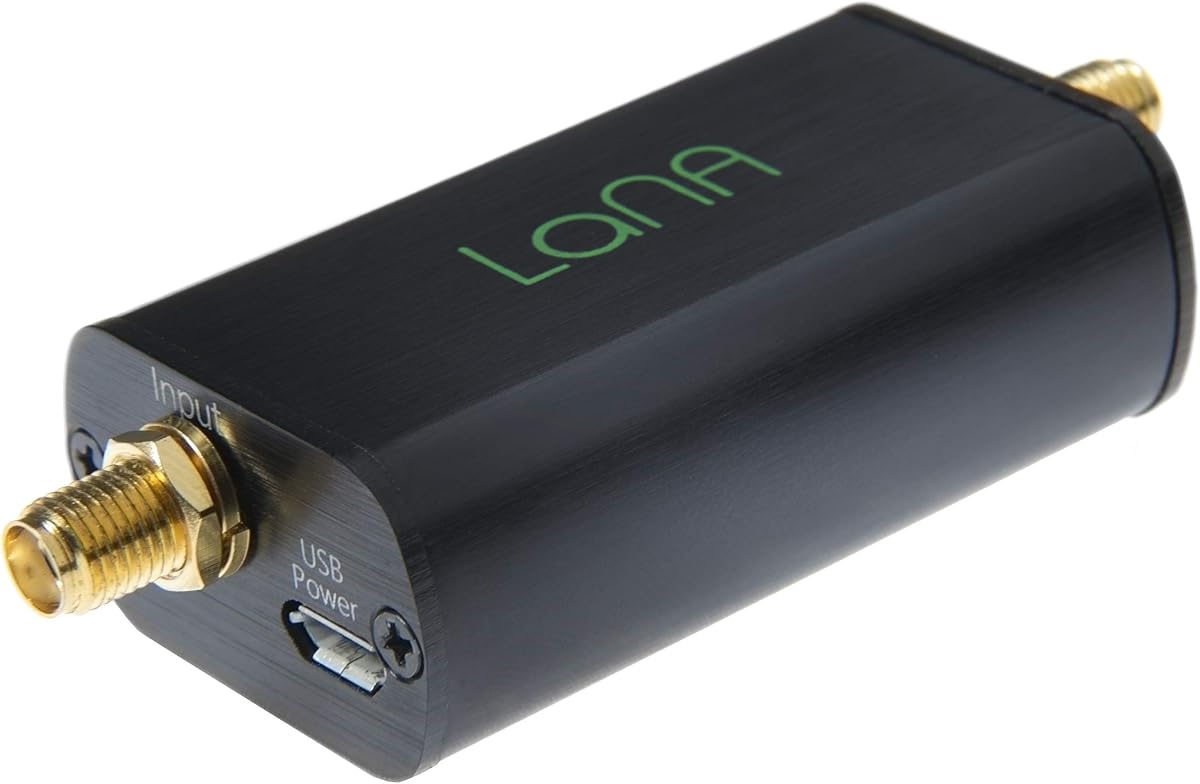
The Lana is a favorite among SDR users. Its low noise figure stands out. The rating is 4.2 for good reason.
We may earn a commission when you buy through this link, at no additional cost to you.
It improves SNR significantly. Higher gain than standard modules. Power consumption is kept low.
Bias tee options make it easy. Use USB or DC power as needed. Includes SMA adapters for setup.
Hams using RTL-SDRs need this. It is a robust upgrade for reception quality.
Noise floor drops visibly. Weak signals become clear and usable.
Bias tee or USB. Works with most radio setups.
We may earn a commission when you buy through this link, at no additional cost to you.
This preamp is tailored for scanners. It covers 25 to 2000MHz. Gain ranges from 6 to 20dB.
We may earn a commission when you buy through this link, at no additional cost to you.
Battery operation makes it handy. PP3 is easy to find. BNC lead is included for setup.
It is simple to use. No complex settings. Great for quick boosts on portable scanners.
Scanner users looking for easy boosts should pick this. It is reliable and straightforward.
Designed for scanner receivers. Boosts weak broadcasts clearly.
Battery pack is small. Fits on a belt or in a bag.
We may earn a commission when you buy through this link, at no additional cost to you.
This amp handles high power well. 150W SSB output. Great for extending range.
We may earn a commission when you buy through this link, at no additional cost to you.
Fan cooling keeps it stable. Multiple modes supported. Polarity protection is included.
Setup is straightforward. Works with CB and walkie talkies. Heat sink is large.
Users needing extra power will like it. Ensure you have proper cooling for use.
150W pushes distance. Weak signals get stronger.
Protection prevents damage. Correct wiring is simple.
We may earn a commission when you buy through this link, at no additional cost to you.
This module has a 4.9 rating. It covers 100kHz to 10GHz. USB power makes it easy.
We may earn a commission when you buy through this link, at no additional cost to you.
Noise floor improvement is clear. Bias solution built in. TinySA ULTRA benefits greatly.
Shielded housing helps. Avoid high input power. Dry environment for best use.
Testers needing high frequency boost should get this. It is precise and low noise.
LDO suppresses supply noise. Better clarity on weak bands.
No need for wall adapter. Connect via standard cable.
We may earn a commission when you buy through this link, at no additional cost to you.
This amp is built for CB and HAM. 150W SSB output. Cooling fan keeps it safe.
We may earn a commission when you buy through this link, at no additional cost to you.
Input is 13.8V standard. Supports AM FM SSB and CW. Dual fuses offer safety.
Controls are simple. HI LO switches and power button. Heat sink is effective.
CB users wanting more range should use it. It is rugged and reliable.
Works with most walkie talkies. Boosts voice distance.
Dual fuses protect. Wiring is standard.
We may earn a commission when you buy through this link, at no additional cost to you.
This model outputs 150W max. It suits HF transceivers. Input is low power.
We may earn a commission when you buy through this link, at no additional cost to you.
HI LO switches adjust strength. Overvoltage and polarity protection. Aluminum sink.
No fan means quiet. But watch heat on long runs. Ports are standard.
Transceiver owners will find it useful. It boosts output well for HF.
150W helps reach. Great for SSB modes.
No fan noise. Good for studio use.
We may earn a commission when you buy through this link, at no additional cost to you.
Selecting the right unit depends on your needs. We break down key factors to consider.
Ensure the unit covers your target bands. Ham radio spans HF VHF and UHF. Some amps cover 0.1 to 2000MHz others 10MHz to 6GHz.
Match the range to your usage.
Gain determines how much signal is boosted. 20 to 32dB is common. Too much gain can cause feedback.
Choose based on your receiver sensitivity.
Noise figure affects clarity. Lower is better. A low noise figure means less interference.
Prioritize low NF for weak signals.
Some units boost transmission power. 100W to 150W is typical. Others are receive-only.
Know if you need TX boost.
Check input voltage. 12V DC or USB is common. Battery operation helps field work.
Ensure you have the right source.
High power units need heat management. Fans or heat sinks are key. Continuous use demands cooling.
Look for active or passive cooling.
Polarity reversal protection is vital. Overheat and overcurrent protection extend life. Safeguards prevent damage.
Always check for protection circuits.
Aluminum alloy helps with heat. Shielded housing prevents interference. Durability matters for field use.
Pick a rugged case.
Always connect cables securely. Check polarity before powering on. Use shielded cables to reduce noise.
Ensure proper ventilation. Do not block vents or fans. Place in a dry location.
Clean dust from fans and sinks. Regular checks prevent overheating.
The best depends on your needs. For SDRs try Nooelec Lana. For HF TX try Xiegu GPA100. For budget try Low Noise RF Amplifier.
For high power units yes. Fans prevent overheating. For LNA units passive cooling is enough.
Yes for receive-only units. USB power is convenient for SDRs. Ensure noise is filtered.
20 to 30dB is typical. More than that may cause feedback. Check your receiver specs.
Yes it prevents damage. A short circuit can destroy components. Always check protection features.
HF is 3 to 30MHz. VHF is 30 to 300MHz. UHF is 300MHz to 3GHz.
We compared ten models for every need. From USB to 150W TX units there are options.
Prioritize noise figure for SDR. For TX prioritize power and cooling.
Prices change so check current listings. We hope this guide helps you pick.